
Tourism in Europe to surge 3.1% in 2026; Malta at 16.8% growth: WTTC
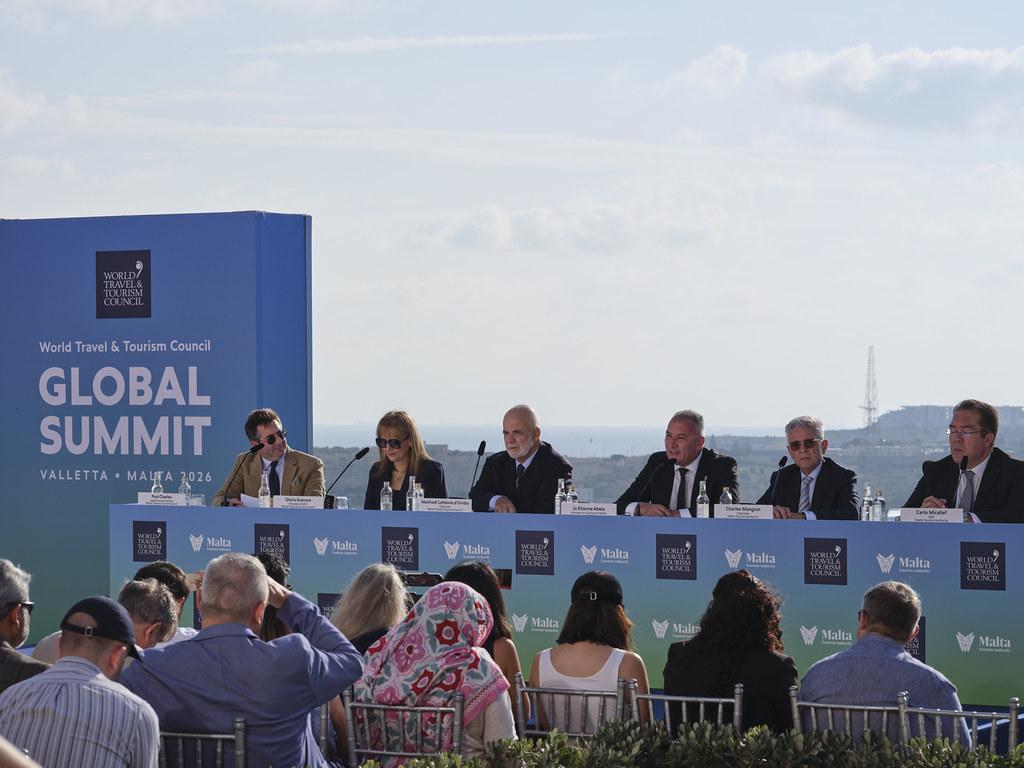 Snapshot from Press Conference at the Saluting Battery, Valletta
More than 200 CEOs, 60 government leaders and 1,000 delegates gather in Valletta as WTTC puts investment, sustainability, connectivity and destination stewardship at the centre of its global tourism agenda. WTTC’s latest research figures, revealed during a pre-event press conference, also show that the sector is forecast to contribute USD 4.9 billion to Malta’s economy in 2026.
Europe is entering a stronger tourism growth cycle than anticipated, with the region’s travel and tourism sector forecast to grow 3.1% this year, ahead of the 2.5% global growth projected for the sector. Globally, the WTTC figures show the sector contributing USD 11.6 trillion to the economy last year, representing 9.8% of global GDP, and supporting 366 million jobs, nearly one in every nine jobs worldwide.
Opening the 26th World Travel & Tourism Council Global Summit at Saluting Battery in Valletta, during a pre-event press conference, WTTC President and CEO Gloria Guevara said Europe’s outlook had improved significantly from last year, when growth stood at 2.6%. “The sector contributed USD 3 trillion to Europe’s economy in 2025, supporting 40.7 million jobs, while international visitors spent USD 835 billion across the continent. International visitor spending in the region is further projected to rise 5.8%, while leisure and business travel spending are expected to grow by 3.2% and 4.2%, respectively,” she added.
Tourism to inject USD 4.9 billion into Malta’s economy in 2026
Malta, meanwhile, has emerged as the standout performer in Europe, recording 16.8% growth last year, compared with the European average of 2.6%, shared Guevara.
“Malta was the best performer in Europe, and the country definitely knows the benefits of the sector. Travel and tourism’s contribution was at 16.6% of the country’s GDP, with one in five jobs dependent on the sector,” Guevara said, attributing the result to the country’s policies and, importantly, its partnership with the private sector.
WTTC’s latest Economic Impact Research also shows that the sector is forecast to contribute USD 4.9 billion to Malta’s economy in 2026, representing 16.9% of the country’s GDP.
Notably, Valletta is hosting one of the global tourism industry’s most influential gatherings, with over 1,000 delegates from around the world attending the programme. More than 200 CEOs, 60 government leaders and 1,000 delegates are expected to gather in Valletta’s Mediterranean Convention Centre from October 7 to 9, 2026.
For Malta, however, the ambition is no longer to grow visitor numbers. Malta Tourism Authority CEO Carlo Micallef said the country's objective is to build a tourism model that is “high-value, year-round, sustainable and community-positive”, rooted in Malta's identity while using innovation to strengthen resilience.
“The strategy centres on five priorities: shifting from volume to value; distributing tourism more intelligently across seasons, geography and visitor segments; investing in quality and distinctive experiences; accelerating digital and sustainable transformation; and building resilience through partnerships and talent,” he added.
For a small island destination, Micallef stressed that tourism could no longer be treated as a standalone sector. “Tourism cannot sit in a silo. It must be integrated into how we plan our country's future. Tourism today must be looked at strategically, not seasonally,” he shared, outlining a strategy that places tourism alongside national priorities including climate, infrastructure, resident well-being, culture, digitalisation and education. He said the tourism authority is also partnering on training, skills upgrading and career development to ensure tourism is an inspirational professional path for our young people.
Micallef also emphasised that the next chapter for the destination will depend on stronger collaboration with airlines, cruise lines, OTAs and other partners to maintain and diversify connectivity, particularly during shorter periods and in new source markets.
Dr Charles Mangion, Chairman, Malta Tourism Authority, said, “Tourism has always been central to Malta's economic and social development. It has opened our islands to the world, created opportunities for our people and businesses, enabled millions of visitors to experience our history, culture and the Mediterranean way of life. But tourism is about much more than just numbers and economic performance. It is the sector that creates connections. It brings people together; encourages understanding between cultures, supports communities, creates employment and investment, and gives destinations the opportunity to share their identity with each other.”
For Malta, said Mangion, hosting a gathering of this significance is a moment of great pride. “It is an opportunity to reflect on how we can continue to grow and strengthen our tourism sector while remaining mindful of our responsibilities to the people and communities that make Malta what it is. Above all, we must ensure that the well-being of our communities remains at the heart of this progress, so that the benefits of growth are shared and our development remains sustainable for generations to come.”
WTTC Chairman Manfredi Lefebvre said that Malta was selected to host the summit from a field of more than 20 countries, with him citing its location between Europe and Africa, its history and its tourism proposition as key factors. “The WTTC Global Summit brings together the leaders shaping the future of Travel & Tourism. Malta’s Government has shown strong leadership and commitment to our sector, making it an ideal host for these important discussions,” he said on the sidelines of the programme.
Deliberations on what makes a destination competitive
After the press conference, WTTC also convened ministers and global business leaders from 24 countries in Valletta for the Global Leaders Dialogue, held as part of WTTC’s Global Summit.
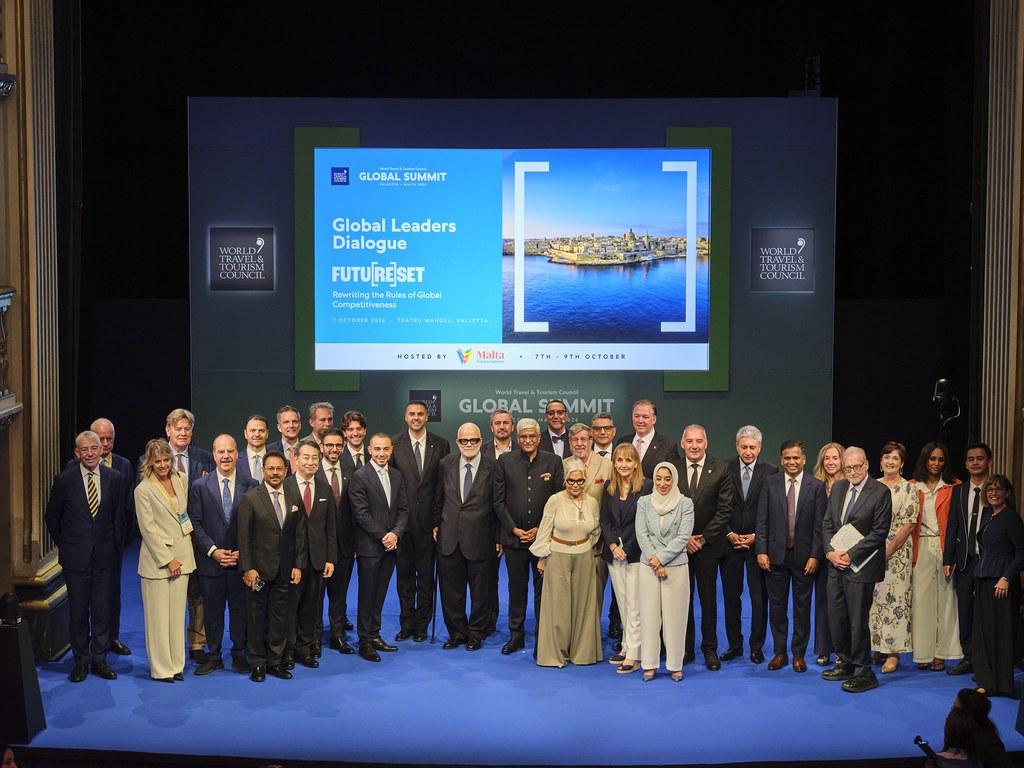
Held under the theme Rewriting the Rules of Global Competitiveness, the Dialogue challenged traditional assumptions about what makes a destination competitive, exploring how connectivity, ease of travel, investment, regulation and public-private collaboration are increasingly determining where travellers, businesses and capital choose to go.
Participants included Sherif Fathy, Minister of Tourism and Antiquities of Egypt; Rosario Sánchez Grau, Secretary of State for Tourism of Spain; Fatima bint Jaafar Al Sairafi, Minister of Tourism of Bahrain; Jo Etienne Abela, Minister for Tourism of Malta; Robert O'Leary, U.S. Department of Commerce; and Gajendra Singh Shekhawat, Union Tourism & Culture Minister of India along with Suman Billa (IAS), DG & AS, Ministry of Tourism (India), among others.
Representing the private sector were global leaders including William Heinecke, Founder and Chairman of Minor International; Eijiro Yamakita, Chairperson of JTB Corp; Zubin Karkaria, Founder and CEO of VFS Global (WTTC’s Mobility Partner); Maher Koubaa, President EMEA of Amadeus; Paolo Barletta, CEO of Arsenale; Senthil Gopinath, CEO of ICCA; and Laura Sileo Pavat, Global Brand Homes Director at Pernod Ricard.
As the event now continues across three days, the leaders will discuss investment, connectivity, technology and artificial intelligence, workforce development, destination competitiveness, sustainable growth and more, all of which will play a critical role in determining how the sector responds to evolving traveller demand and global economic change.