

Star Air plans 50-aircraft scale up in next 5 years; aims to become the largest regional player
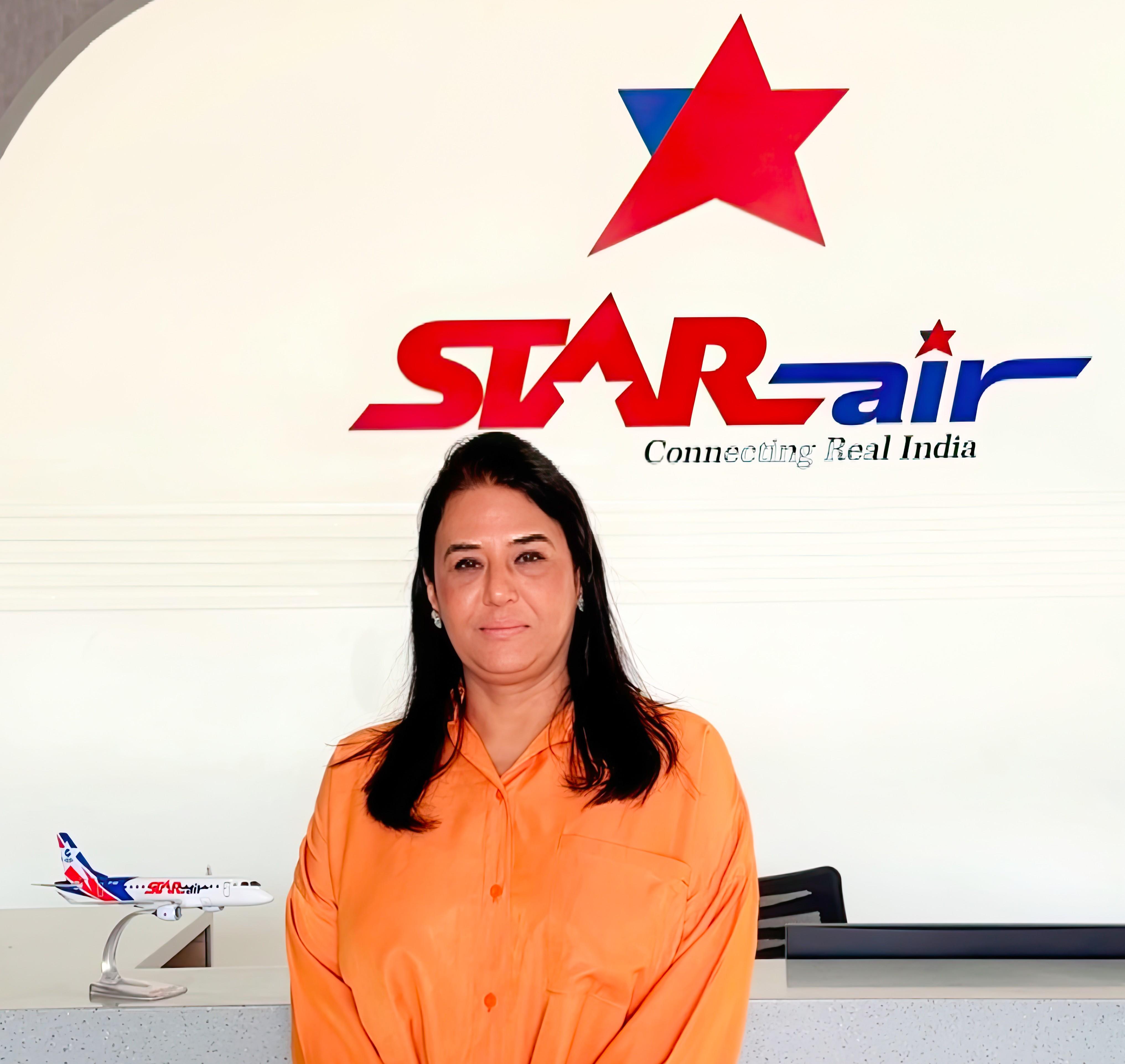 CCMO of Star Air-Shilpa Bhatia.jpg
Backed by a 32-destination network, recent new weekly flights, 55% revenue growth and plans to induct six aircraft this year, Star Air is accelerating expansion in unserved markets while evaluating larger 100+ seater jets in longer term to up the regional game.
India’s aviation growth has historically been concentrated on trunk routes, but these markets somehow are now nearing saturation, with intense competition and pricing pressure. In contrast, many of the tier II and III cities, home to a large share of India’s population, remain under-served. It is here where the regional airline like Star Air is carving a niche: deepening connectivity in these underserved and unserved markets.
With a reported 55% jump in revenue in 2025 and plans to expand its fleet manifolds over the next five years, the airline is positioning regional aviation as a serious growth engine, not a peripheral play, says Shilpa Bhatia, Chief Commercial and Marketing Officer, Star Air, in her conversation with T3.
“We wanted to grow in segments where others have not ventured… our focus is to connect the real India,” Bhatia said.
Since its inception in 2019, Star Air, an aviation arm of Sanjay Ghodawat Group, has deliberately avoided the overcrowded metro routes, instead focusing on building connectivity across tier II and III cities. At a time when India’s aviation landscape is dominated by narrow-body expansion and international ambitions, this regional-first approach stands out, as per Bhatia.
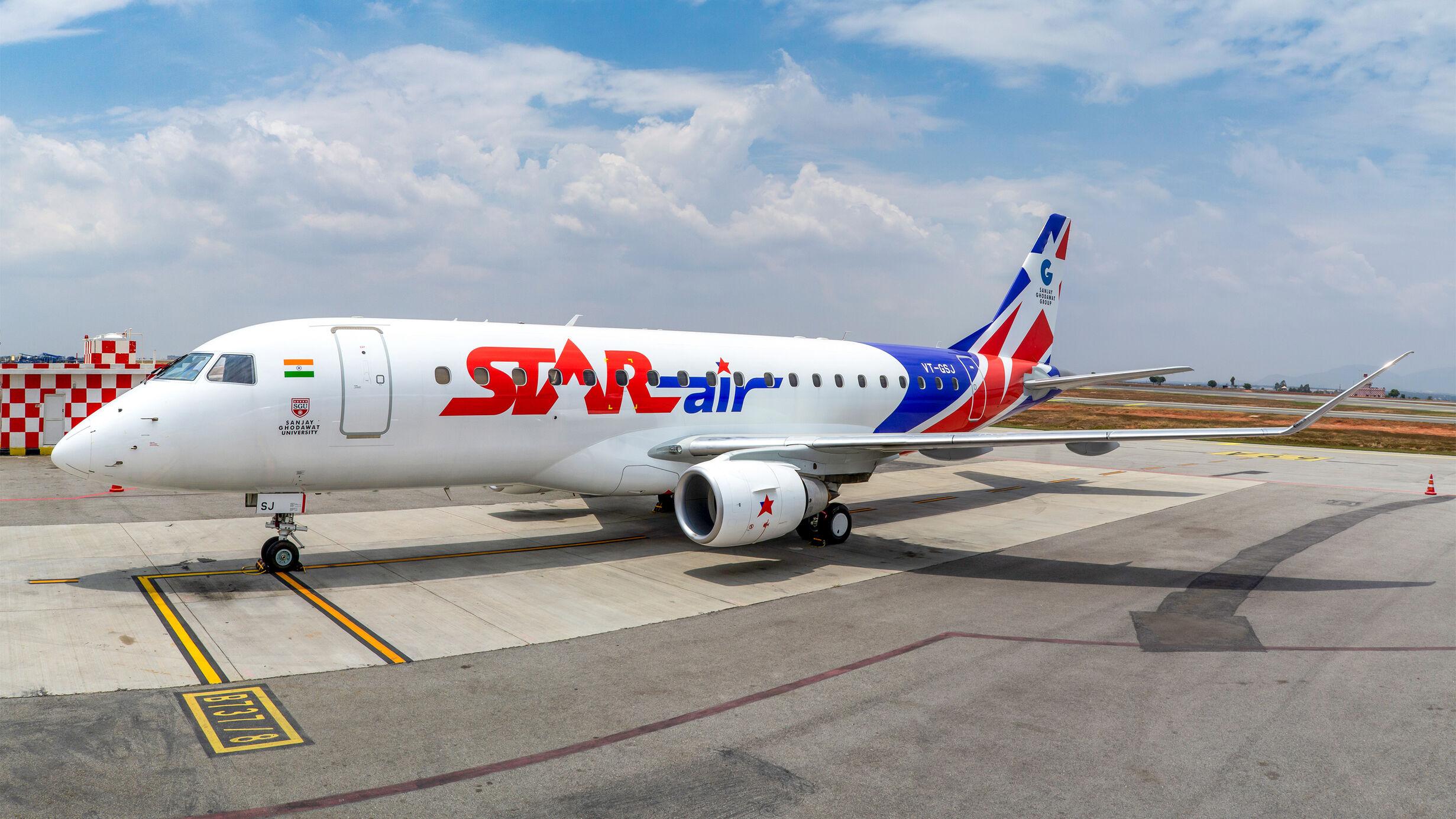
Currently, Star Air operates a fleet of 12 aircraft, including 8 Embraer E175s and 4 Embraer E145s and is planning to induct at least six more this year. The longer-term roadmap is significantly more ambitious. “Our vision is to scale to about 50 aircraft in the next five to six years,” Bhatia said, adding that capacity upgrades to 100+ seater aircraft are also being evaluated.
Unlike most regional operators relying on turboprop fleets, Star Air operates Embraer jets, offering higher speeds and improved passenger comfort. “We are offering a near business-class experience in regional markets. This includes 2x2 seating configurations, better seat pitch, and a focus on onboard comfort: factors that are increasingly influencing repeat travel, especially among first-time flyers transitioning to frequent travel,” Bhatia highlighted.
Growth despite volatility
The past year and even the current have been anything but stable for aviation: geopolitical disruptions, rising fuel costs, and episodic demand shocks impacted air traffic across markets. In India, disruptions ranging from Kashmir-related travel slowdowns to broader safety concerns affected traffic across key sectors.
Yet Star Air claims to have outperformed the market. “While several airlines saw pressure on performance, we grew by close to 55% in revenue and margins,” Bhatia said.
This growth, however, comes in a segment traditionally characterised by thin yields and high operational risk. Regional routes typically take longer to mature, with uncertain demand curves and limited pricing flexibility. Star Air’s approach has been to prioritise consistency over aggressive expansion, Bhatia asserted.
“We have focused on customer retention, comfort, continuity, and network reliability. Every touchpoint is designed to ensure passengers come back,” she said.
Expansion, but with guardrails
The airline’s recent announcement of 17 additional weekly flights and the introduction of Mundra as its 32nd destination reflects a clear shift towards infrastructure-led route planning. From this April, Star Air will operate 38 direct weekly flights and a total of 54 weekly connections, linking Mundra to six key cities across Western and Northern India.
Mundra, a major port and industrial hub in Gujarat, is not just another destination, it represents a new category of demand. “It’s not even underserved, it’s unserved. Connecting such cities has a direct impact on the local business ecosystem,” Bhatia said.
This approach positions the airline as a feeder and enabler within India’s evolving hub-and-spoke aviation model, linking regional economies to larger metro networks.
Alongside network expansion, Star Air continues to maintain a broad-based distribution strategy, working closely with travel agents, online travel platforms, corporates and retail channels.
For now, Star Air is also consciously holding back on international expansion. “It is too early to talk about international; we still have significant opportunity within India,” Bhatia said while answering a question posed by T3.
Instead, the airline is doubling down on domestic regional connectivity and preparing for the next phase of UDAN, where it expects to remain a key participant.
The UDAN scheme, she added, has helped de-risk regional operations through viability gap funding and infrastructure support, encouraging airlines to enter markets that would otherwise be commercially unviable in the short term. “It gives airlines the confidence to enter new markets. “Without that handholding, many of these routes would not have been explored.”
However, she also pointed to the scale of the untapped opportunity.
“In 10 years, about 1.3 crore passengers have travelled on these routes. Compare that with India’s population of over 140 crores—there is still massive headroom for growth,” added Bhatia, sharing that better air connectivity could significantly enhance regional economies and per capita income, especially in agriculture-driven regions.
Aiming to be the largest
Outlining the airline’s long-term vision, Bhatia said the strategy remains firmly anchored in connecting 3 million flyers across 31 destinations in India, even as larger carriers continue to prioritise metro and international expansion.
“We want to be the largest and the best regional airline, connecting the real India with a comfortable and personalised experience,” she said.
Bhatia further added that the airline remains committed to strengthening its presence in underserved markets, with new routes such as Mundra expected to commence shortly, despite minor operational delays.