
RDTM, MTM drive trade focus on Rajasthan’s beyond-the golden-triangle offerings
Federation of Hospitality and Tourism of Rajasthan in partnership with Rajasthan Tourism Department concluded 6th edition of Rajasthan Domestic Travel Mart in Jaipur, while it hosted the debut edition of Marwar Travel Mart in Jodhpur
India is targeting a rise in tourism’s contribution to national GDP from the current 5.2–5.6% to 10% by 2047. Rajasthan is already ahead of that curve, with tourism contributing more than 5.5% to the state’s domestic economy and accounting for roughly 10% of Rajasthan’s GDP directly. Against this backdrop, the Federation of Hospitality and Tourism of Rajasthan (FHTR), in partnership with the Rajasthan Tourism Department, concluded two B2B travel marts within the same fortnight. The 6th edition of the Rajasthan Domestic Travel Mart (RDTM) was held in Jaipur from September 17–19, followed by the first edition of the Marwar Travel Mart (MTM) in Jodhpur from September 20 22, under the unified theme ‘Stories, Journeys, and Smiles: One Stage, Two Marts, and Endless Opportunities’. Together, the two marts served as platforms for the domestic tourism industry, bringing together hotels, travel agents and destination management companies (DMCs), while extending the trade’s reach from Rajasthan’s established circuit into the state’s less-explored western belt.
RDTM’s focus on the new destinations
The inaugural ceremony of RDTM was held at Amber Fort on September 17, with the trade exhibition, inaugurated by V. Shrinivas, Chief Secretary, Government of Rajasthan, following at the B.M. Birla Convention Centre over the next two days. Spread across four halls with 160 pavilions, the exhibition drew around 200–220 exhibitors, approximately 300 hosted buyers, 400 non-hosted buyers, and 25 media delegates. This year, the focus of the mart was to promote the untapped destinations and experiences.
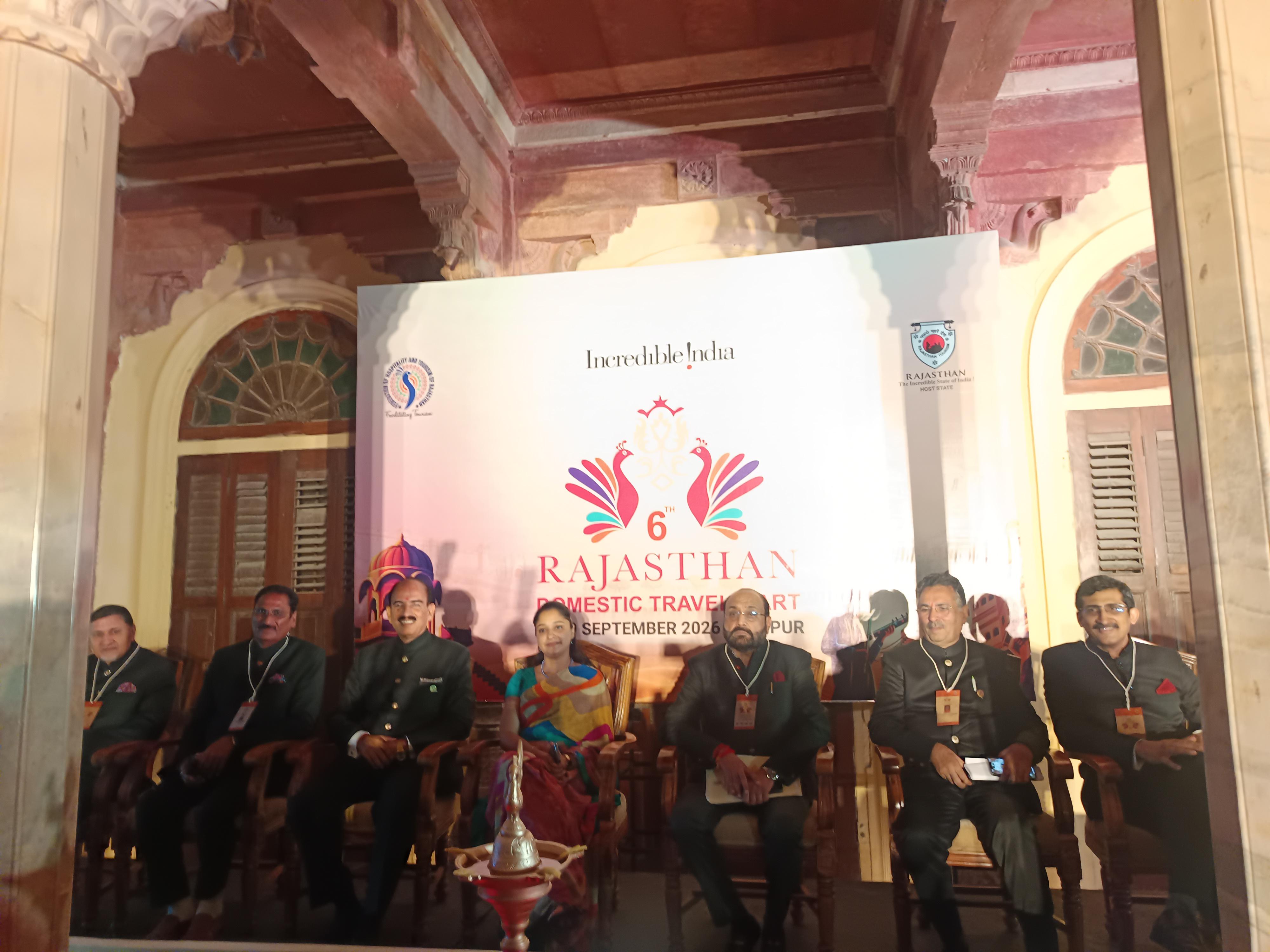
Rukmani Riar, IAS, Commissioner, Rajasthan Tourism, emphasised that the scale of the opportunity ahead is substantial, pointing out that Rajasthan already exceeds the national GDP-contribution average from tourism, even as the Centre pushes to double that share nationally within a decade. “There is immense opportunity looking at Rajasthan not just as an established tourism site, but as a site that has potential not just as traditional forts and palaces destination, but also as a destination to promote ecotourism, wildlife tourism, rural tourism, and cultural experiential tourism,” she said, while urging FHTR members to work toward making Rajasthan a more affordable destination to counter competition from lower-cost alternatives.
Suchi Tyagi, Secretary of the Tourism, Art, Culture and Archaeology Department, Government of Rajasthan, in her keynote address said, “The traveller and the industry want experience, they want authenticity, they want to connect with local community, want to discover lesser-known destinations, experience food, local culture, and travel in a more responsible and sustainable manner,” she said. She added that Rajasthan continues to draw steady interest from traditional international markets such as the US, UK and France, even as the state works to diversify its visitor base further. Pointing to the growing number of tourism projects coming up across the state, Tyagi noted that the government is leveraging this investment momentum to attract more visitors, encourage greater local participation, longer stays, and build a stronger value ecosystem within the tourism sector.
Emphasising the need to promote the state’s untapped destinations, FHTR President Surendra Singh Shahpura urged tour operators and travel agents to widen their itineraries beyond the familiar circuit. “The Rajasthan government has developed approximately 171 panoramas across the state; make sure to integrate them into your itineraries as well. Today’s generation, the Gen Z, can be strongly connected to our culture and history through the tourism industry. The responsibility rests on you and me regarding what we choose to showcase to them,” he said.
FHTR General Secretary Tarun Bansal placed the industry’s stakes in sharper economic terms. “10% of the GDP, 10% of the employment roughly, directly in our state stems from tourism. Indirect opportunities and revenue is much more,” he said, describing tourism as a “soft industry” capable of protecting natural and cultural assets that would otherwise go undervalued.
On the ground, exhibitors echoed the same optimism. Asked what the biggest business opportunity emerging from this edition of RDTM was, Hameer Singh Shekhawat from SajjanBagh Resort & Spa, said, “RDTM connects us with our old and new clients, agents, wedding planners, corporates and makes the existing connections stronger. RDTM serves as a platform for us.” Neeraj Sharma, General Manager, Sarovar Premier, Kota, said, “Everybody is interested in lots of verticals, the social bias or leisure for that matter. We met a lot of people from inbound market after a long time, signalling the inbound is back in Rajasthan.”
Gyan Prakash, Vice President, FHTR, told T3 that the response on ground had exceeded expectations. “The feedback is prominently very good and response is enthusiastic. The stalls are fully packed. Approximately 25,000 meetings have happened in two days of RDTM,” he said. Asked what set the sixth edition apart from previous ones, both Bansal and Prakash pointed to stronger representation from newer and not well-known regions such as Jawai, Jaisalmer and Barmer.
Khalid Khan, Founding Member, FHTR, added that this edition also saw a notable push from the wedding industry, with around 50 stalls and roughly 60 MICE and wedding planners in attendance, a segment Prakash confirmed FHTR is deliberately prioritising this year.
On the sidelines, FHTR also organised a polo match on the evening of the second day, featuring Sawai Padmanabh Singh, polo player and head of the Kachhwaha clan of Jaipur.
MTM: Region’s first regional mart
Where RDTM consolidated Rajasthan’s established trade circuit, MTM was conceived to extend that momentum into Marwar’s less-explored geography including Jawai, Godwar, Jaisalmer, Barmer, Kumbhalgarh and Sirohi, among the regions highlighted. The inaugural ceremony of the maiden edition took place at Umaid Bhawan Palace on September 20, followed by the exhibition at Amritam Palace over September 21–22. The mart saw participation from around 170 exhibitors, more than 300 non-hosted buyers, 200 hosted buyers, and 21 media delegates.
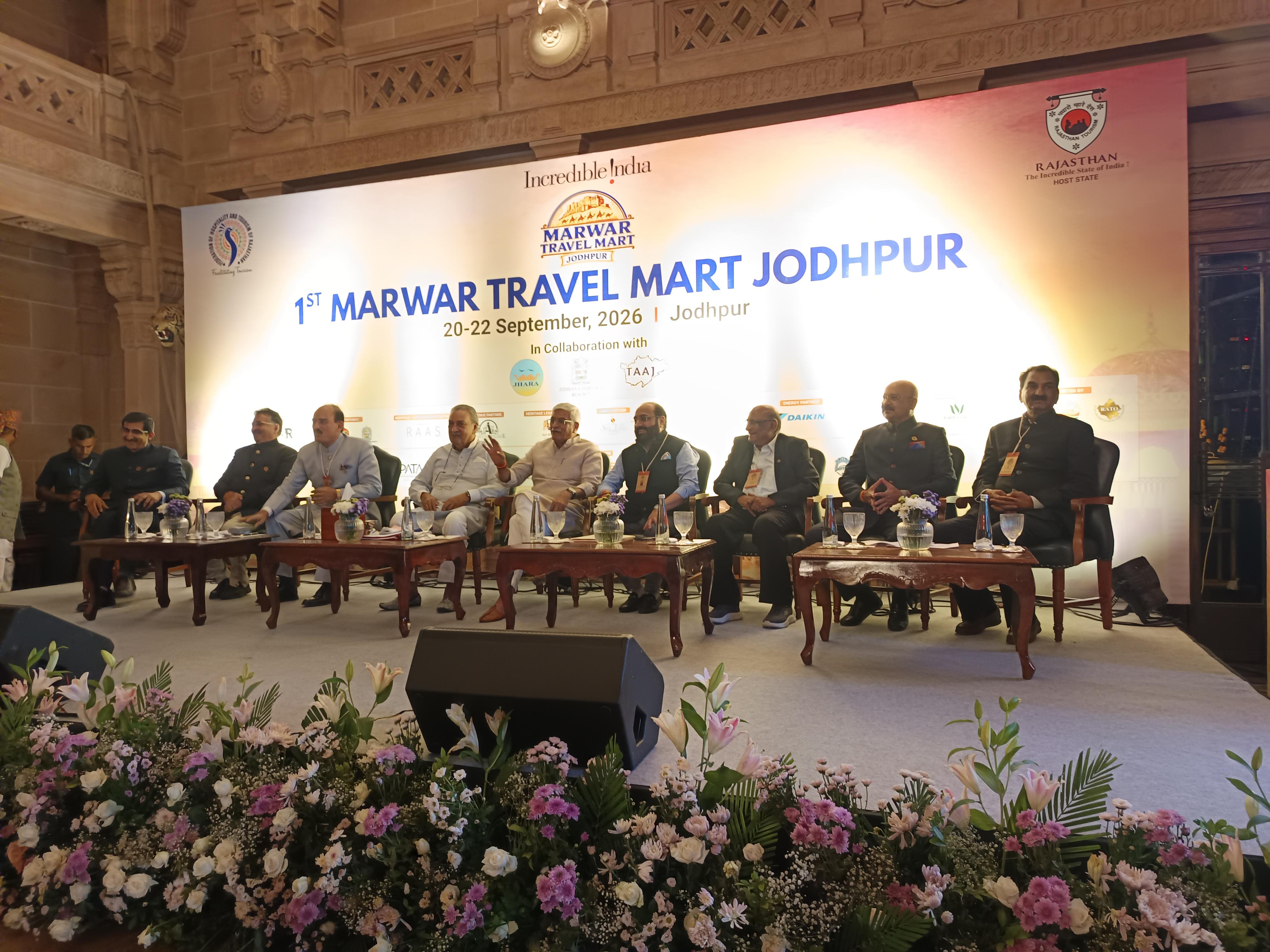
Gaj Singh, Maharaja of Jodhpur, opened proceedings by calling on the industry to look beyond Marwar’s most celebrated monuments toward its villages, crafts and desert landscapes, arguing that a more distributed model of tourism would create opportunities across the region while giving visitors a deeper, more authentic understanding of the area — provided locals are brought directly into the value chain as guides, transport providers and experience hosts. “Marwar is much larger than its most celebrated monuments. There is more, there are villages, smaller towns, and unknown places, as well. Therefore, this play today, historic sites, traditional crafts, and desert landscapes are waiting to be discovered,” he said.
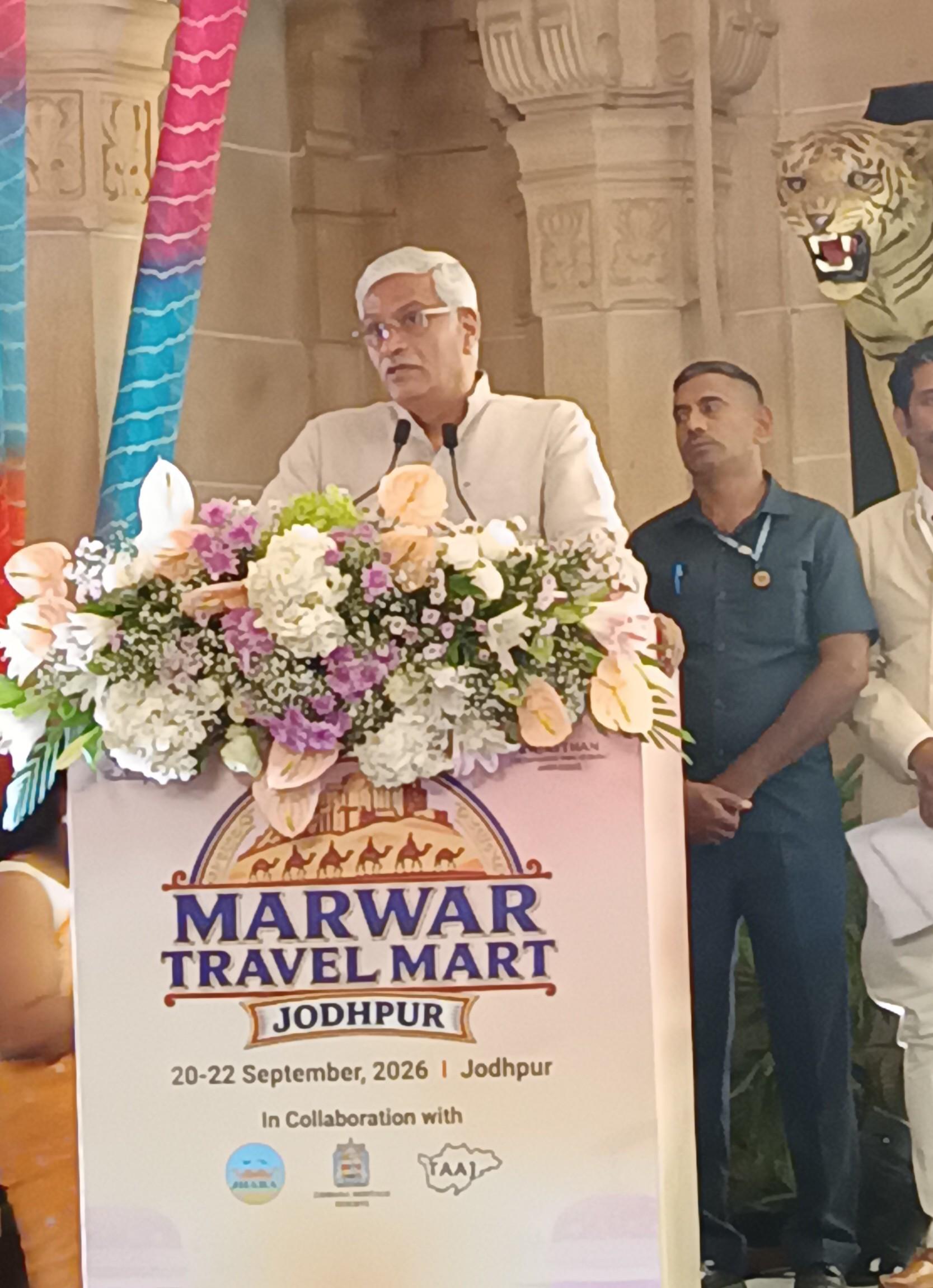
Union Tourism & Culture Minister, Gajendra Singh Shekhawat was also in attendance. Despite global GDP growth remaining capped at around 2.5% amid geopolitical uncertainty, the minister noted, the global tourism sector still recorded growth of over 4% this past year, with global tourist trips exceeding 1.52 billion in 2025 and the sector continuing to outpace global GDP growth into the first quarter of 2026. India, he said, defied global apprehensions by registering growth exceeding 7.5% in the first quarter, offering considerable relief to the tourism sector. He argued that today’s traveller who is armed with AI-assisted planning tools and shaped by social media is increasingly evaluating destinations on authenticity, storytelling and service quality rather than monuments alone, making destination management and human warmth, rather than infrastructure alone, the decisive differentiators going forward.
He added that against 1.52 billion global international trips, India recorded over 4.2 billion domestic journeys in 2025 across leisure, spiritual visits, weddings, medical travel and official tours involving at least one overnight stay, domestic movement within India, he pointed out, was nearly 2.75 times the total volume of global cross-border travel, underlining the scale of purchasing power still to be tapped.
Riar from Rajasthan Tourism described MTM as a natural evolution of the state’s trade-platform strategy. “This is a very important and an appropriate step and progression in the right direction, a state-level platform that would bring industry partners from across Rajasthan to a regional platform to promote the immense potential of Marwar and the western region of Rajasthan,” she said, noting that Rajasthan’s domestic tourist visits crossed 250 million over the past year, reflecting year-on-year growth exceeding 10%.
Speaking to T3 on the sidelines of MTM, Shahpura said the region’s newer experiences still need stronger visibility, night polo, in particular, remains under-promoted, and Bikaner, too, needs a fresh push. Marwar, he said, has no shortage of distinctive experiences to offer, but the region needs sustained promotion and momentum-building to fully recover its post-COVID pace, with more work required to create real buzz around it.
Exhibitors were equally forthcoming about the opportunity the debut edition presented. Asked about the biggest business opportunity MTM offered, Vishal Gautam from Pal Hotel, said, “This gives us the opportunity to showcase our tourism product not only to Jodhpur but to entire Marwar. We have seen a lot of footfall from pan-India who are interested in the properties.”
Aditya Vyas, representing Lakhamana Desert Camp shared that the platform gave his property the chance to present its packages directly to a domestic audience for the first time.
On the sidelines of the mart, FHTR also organised a desert safari and a heritage city walk, designed to showcase the region’s tourism offerings beyond the exhibition floor.