
Malaysia retains its 2.1mn India target; expands focus on sports & niche tourism
 Tourism Malaysia trade engagement in Mumbai
Tourism Malaysia is intensifying its focus on India through stronger B2B engagement, new product development and expanded connectivity, as it works to rebuild momentum following a softer first half of 2026.
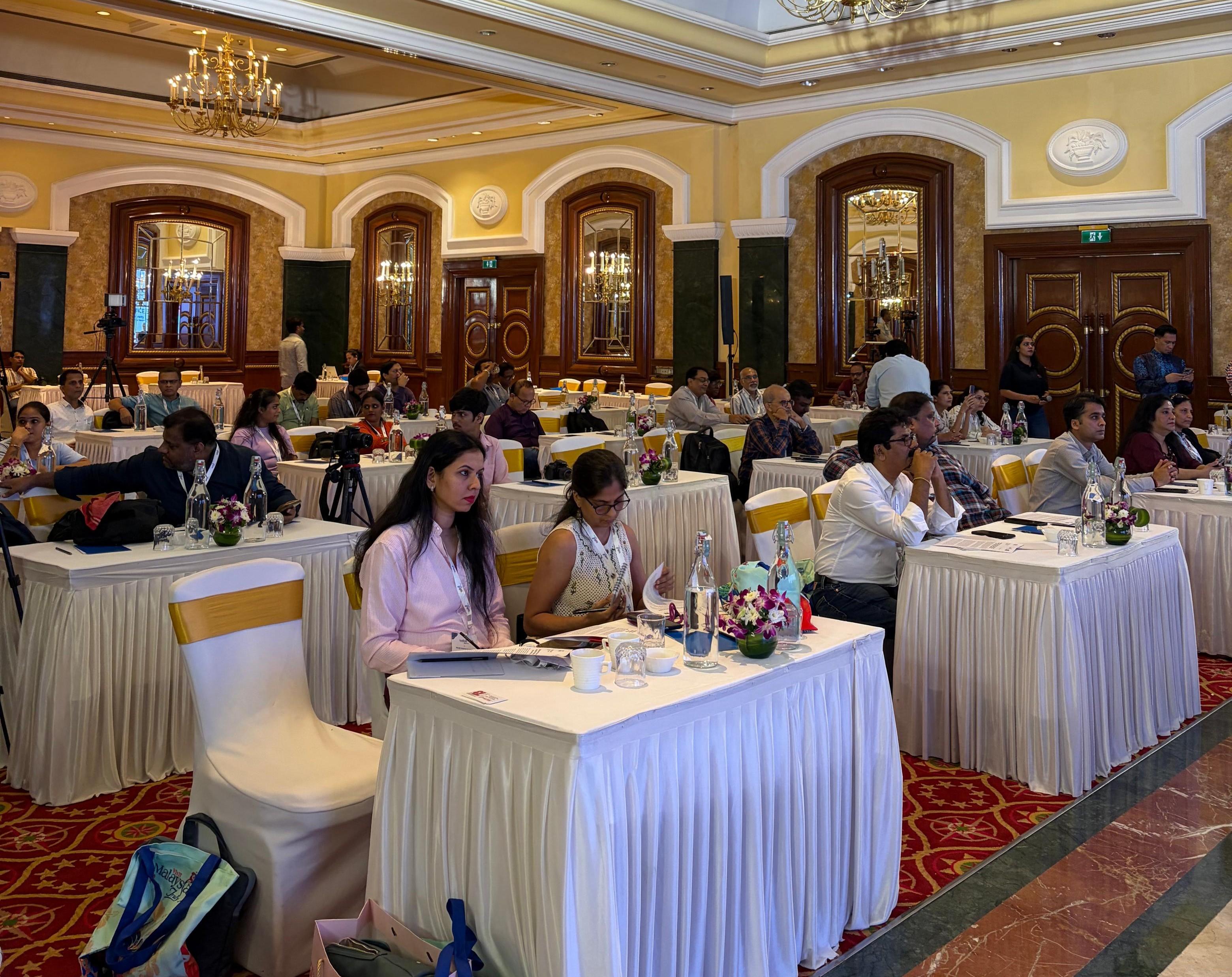
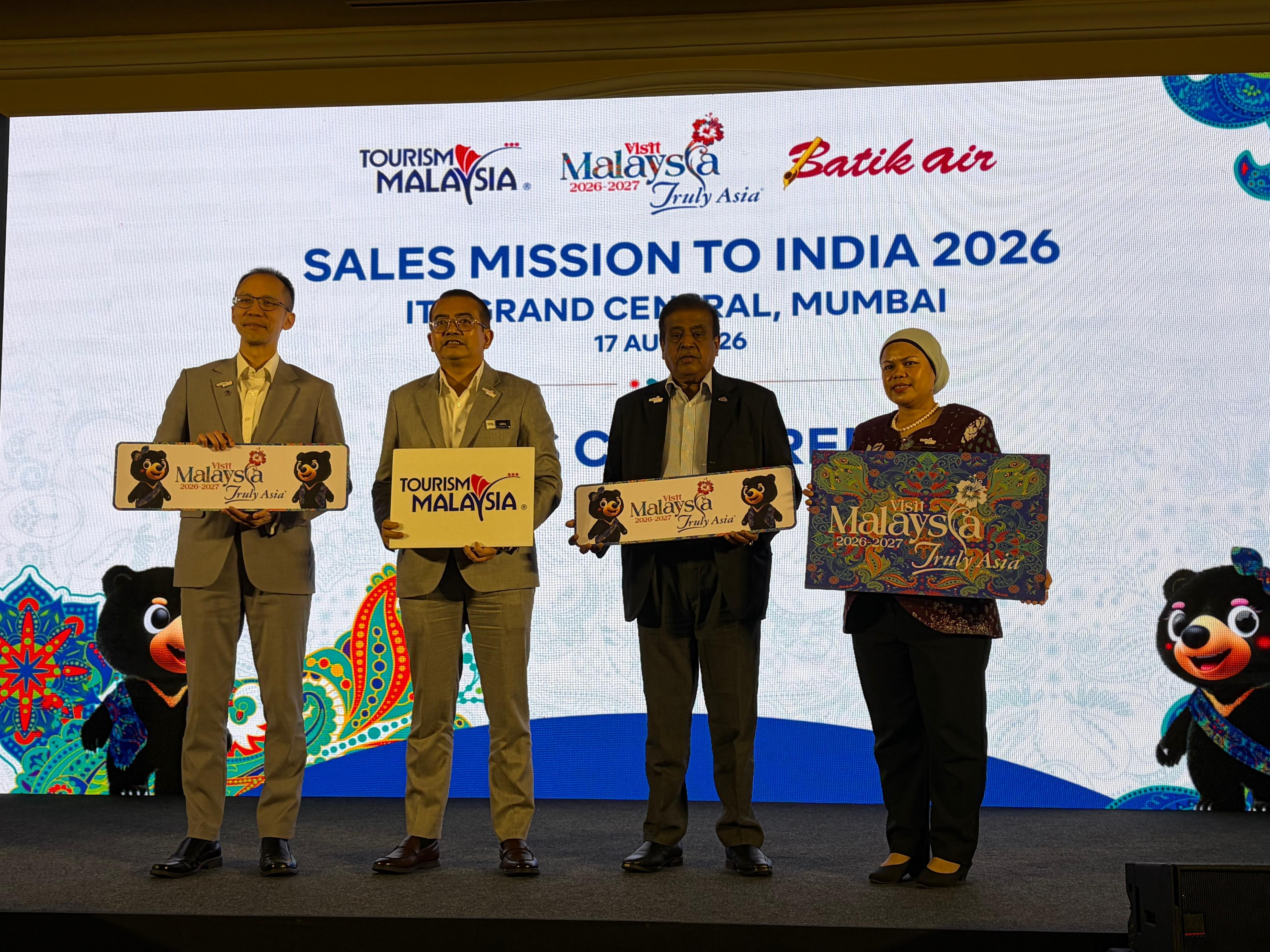
Hosted a three-city sales mission across Mumbai, Chennai and Delhi in August, aimed at deepening trade relationships and creating new business opportunities. The initiative brought together around 40 Malaysian tourism stakeholders, including hoteliers, tour operators and airline partners, for direct engagement with the Indian travel trade.
India in top 5; maintains 2.1mn target
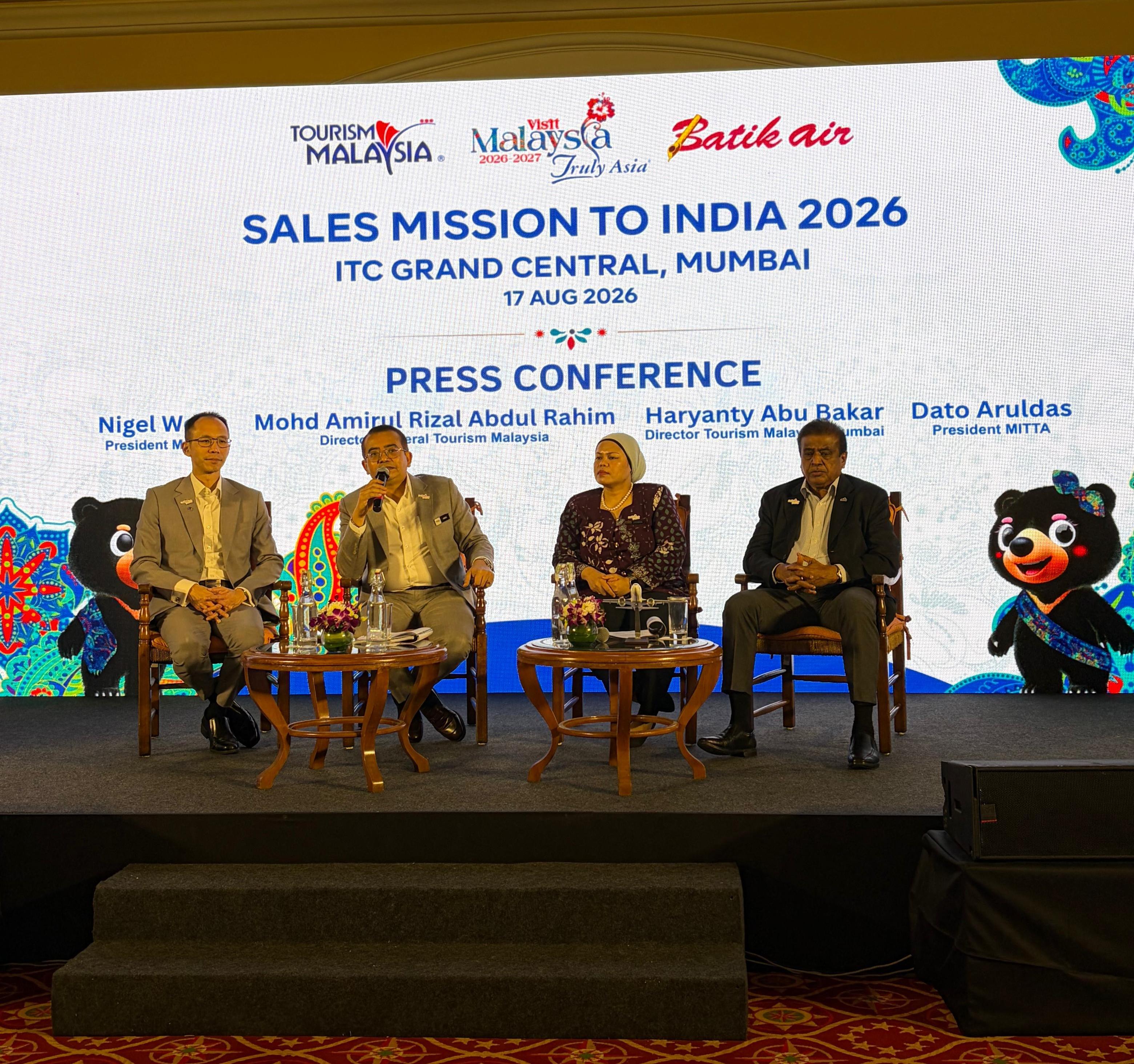
Mohd Amirul Rizal bin Abdul Rahim, Director-General, Tourism Malaysia, shared that India remains a very important market for Malaysia. “We want to enforce a stronger bilateral connect between Malaysia and India,” he said, adding that he views tourism as a two-way relationship encompassing both inbound and outbound travel. India is currently among Malaysia’s top five source markets, following Singapore, China, Thailand and Indonesia.
Tourism Malaysia is also working under the extended Visit Malaysia campaign, the logo now is changed to Visit Malaysia Year 2026-2027.
Rahim acknowledged that the first half of the year had been challenging, with the war affecting Malaysia as well as other destinations. “Overall, Malaysia still received positive growth, 1-2%, January to June. But coming from the Indian market, we registered a drop.”
He attributed part of the decline to Indian citizens residing in GCC countries, where the regional situation has also affected travel patterns. However, he expects the market to recover during the second half of the year, with indicators already pointing towards an improvement.
Despite the challenges, Tourism Malaysia is maintaining its target of 2.1 million Indian visitors for 2026. “Earlier this year, we were targeting 2.1 billion,” said Rahim. “We touched 1 million in 2024, in 2025, we touched 1.5 million. I could challenge my officers that we must target 2.1 billion, and suddenly, the war hit. But I am very hopeful still, I am maintaining the target 2.1 billion,” he added.
Targeting market through sharper segmentation
For Tourism Malaysia, understanding the Indian traveller is central to the market strategy. The destination is looking to develop more products and experiences specifically for the Indian market. This also means looking beyond the traditional Malaysian destinations of Kuala Lumpur and Penang, with Sabah and Sarawak emerging as areas of focus. For first-time Indian visitors, Kuala Lumpur, Penang and Langkawi remain key target destinations.
“If you know already, you want to target millennials,” said Rahim, pointing to the younger Indian traveller’s interest in new experiences, food, ecotourism and experiential products. He added that different segments require different products. “Sometimes you target the family, you sell different products.”
The sales mission, therefore, is aimed at ensuring that Tourism Malaysia and its industry partners understand the right target markets.
The trade perspective
Nigel Wong, President, Malaysian Association of Tour and Travel Agents (MATTA), also underlined India’s importance to Malaysia, shared that MATTA has been working closely with its Indian counterparts to strengthen bilateral understanding and promote cross-country travel. According to him, Malaysia can cater to the Indian market across a wide range of segments, “from business travel down to niche tourism”.
Dato Aruldas, President, Malaysian Indian Travel and Tours Association (MITTA), highlighted the association’s focus on the Indian subcontinent. He attributed the first-half slowdown primarily to uncertainty arising from the regional situation rather than a fundamental decline in demand from India. Travel decisions were affected, while higher airfares and reduced airline frequencies also created additional pressure.
However, he is optimistic about the remainder of the year. “But the second six months, looks very good in the book. And I am sure we will overcome that shortage whatever we have after six months.”
Connectivity; unveiling ‘Chalo Malaysia’
Haryanty Abu Bakar, Director, Tourism Malaysia Mumbai, outlined Tourism Malaysia’s three-office structure in India. The Chennai office covers southern India, Mumbai covers West and Central India, while the New Delhi office looks after the northern market.
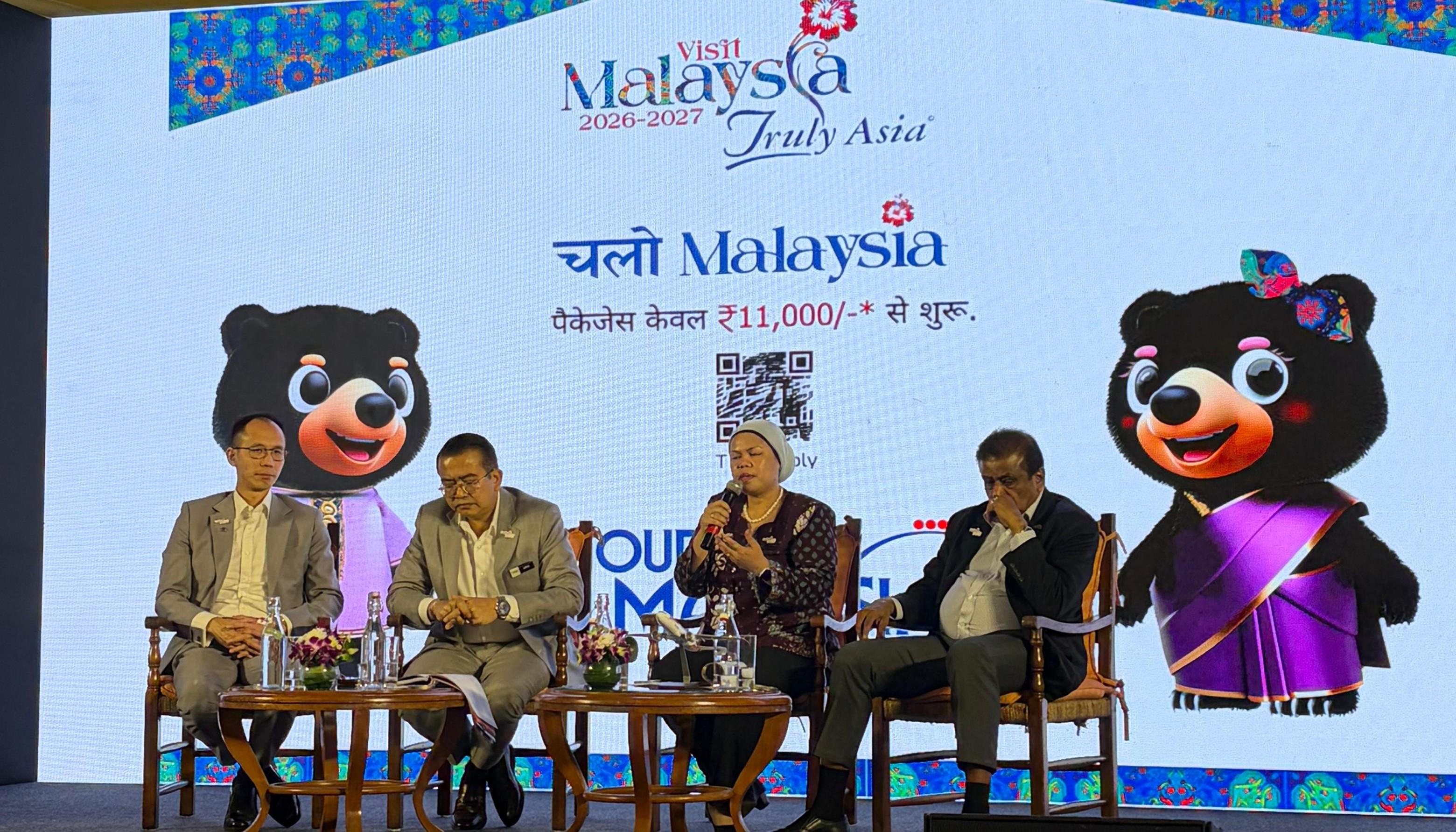
She pointed to connectivity as an important factor in addressing the recent decline in Indian arrivals. “Throughout India, we have connections from 16 cities of India into Malaysia into three main major entries, which are Kuala Lumpur, Langkawi and Penang. We have strong support from the airlines and also looking forward apart from these three major entry of Malaysia,” Bakar said. The capacity is supported by Malaysian and Indian carriers, including Indian airlines such as IndiGo and Air India, and Malaysian partners such as Batik Air and Malaysia Airlines.
The regional airline, Batik Air is preparing for its next phase of growth in India, with plans to restart the Amritsar route while keeping the door open for additional Indian destinations as fleet availability and regulatory conditions improve.
Speaking to T3, Suresh Vanan, Head of Communications & Promotions at Batik Air said the airline has rebuilt its India network to five cities after serving nine destinations before the pandemic. While demand remains strong, expansion is being paced by aircraft availability, operational costs, and India's tightly regulated bilateral framework.
"We definitely see potential in India. Maybe not this year, but next year we'll look at other cities," he said, adding that the Amritsar sector is likely to resume later this year. The airline currently connects India with its wider network of 60 destinations across 20 countries, with Bali and Australia emerging as key onward markets.
According to Vanan, 50–60% of Indian passengers travel onward to Bali during peak wedding and holiday seasons. For now, however, Batik Air has no immediate plans for new Tier-II or Tier-III Indian cities beyond the proposed Amritsar restart.
Bakar also highlighted Tourism Malaysia’s ‘Chalo Malaysia’ branding campaign on Mumbai Metro Line 1 (Blue Line), which is running from August 10 to September 10, 2026, to promote travel ahead of the festive booking season. Travellers can also discover Malaysia holiday packages starting from INR 11,000, with details and promotional offers available as part of the campaign.
Niche products gain prominence
Tourism Malaysia and its industry partners are also looking beyond conventional leisure travel, with niche segments emerging as an important avenue for generating additional arrivals.
“The niche market is very important. Especially F1, even though it’s a one-off 2026 Bahrain Grand Prix, but it will help Malaysia.” He further highlighted “We have MotoGP coming soon, during November,” and pointed to increasing interest from Indian motorsport enthusiasts.
The strategy is to use niche markets alongside established segments such as weddings and MICE. He also highlighted that Malaysia has a strong supply of golf courses in scenic locations, offering an alternative for Indian travellers amid accessibility constraints in the domestic golf market.
Wong said, “The infrastructure is there, the authorities are well-versed in these kinds of events, and one thing we would probably like to see is to perhaps encourage some of the Indian companies or event organisers to consider Malaysia as one of those sporting destinations.”