
Finding India’s next 10 million international travellers
 Cover Image-7
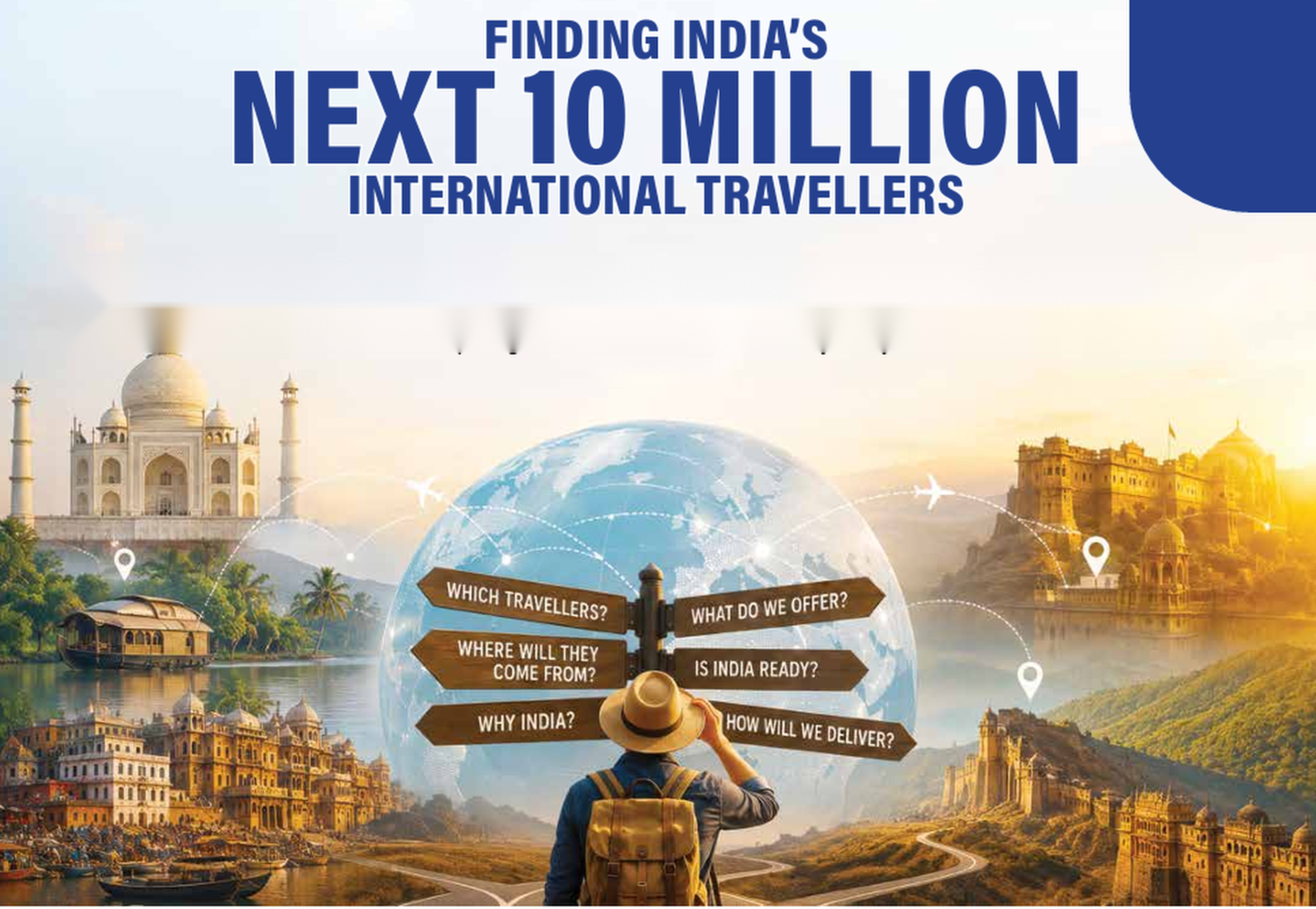
For years, the industry has put a spotlight on one question: how many tourists can India attract? The conversation now needs to shift to a more strategic one: which tourists does India want, where will they come from, why will they choose India over competing destinations, and is the country ready to deliver?
For decades, India’s international tourism ambition has been framed around a deceptively simple question: How many foreign tourists can the country attract? And if India has everything the world says it wants from a destination, why isn’t the world coming in greater numbers?
That is perhaps the uncomfortable question India’s inbound tourism sector needs to confront before it starts talking about the next 10 million international travellers. The country has scale, diversity, heritage, spirituality, wellness, wildlife, cuisine, luxury, beaches, mountains, tourism infrastructure and whatnot. Yet tourist arrivals into India have still not decisively broken through the pre-Covid benchmark.
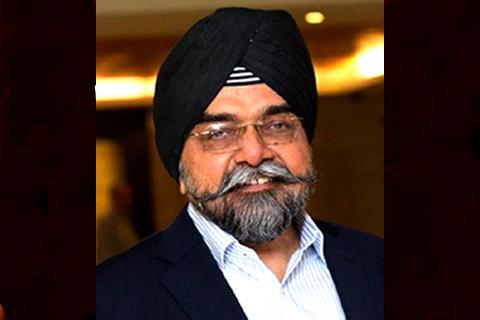
Sarab Jit Singh, Managing Director, KTC India Pvt. Ltd., believes this is the question that needs to be asked more directly. “The international marketing and promotion of India as a tourism destination, which was undertaken systematically by the Ministry of Tourism for several decades, has now virtually come to a halt. This is clearly reflected in the sharp reduction in Government expenditure on overseas tourism promotion from approximately 600 crores earlier to barely a few crores today.”
He said the consequences are visible. “Inbound tourism has suffered considerably over the last several years, and international tourist arrivals have still not meaningfully surpassed the 2019 pre-Covid level.”
This throws open an uncomfortable paradox. At a time when India’s tourism proposition has arguably never been richer, is the country doing enough to sell it internationally? And can individual hotels, tour operators and state tourism boards realistically substitute for a sustained national destination-marketing effort?
Singh argues they cannot—and explains why. “Destination promotion is fundamentally different from the marketing of an individual tourism product. A private company can promote its own hotel, tour or service because the resulting business accrues to it. However, when a company spends money promoting India as a destination, the business generated may ultimately go to any hotel, airline, tour operator, state or other tourism service provider.”
The country may have no shortage of things to sell, but it may still lack the machinery required to sell India consistently, competitively and intelligently to the world. And the opportunity is too large to be reduced to a race for arrival numbers.
India recorded 9.95 million Foreign Tourist Arrivals in 2024, still below the 10.93 million recorded in 2019 (a dip of 8.4%). The latest Ministry of Tourism data puts FTAs at 9.15 million in 2025. At the same time, India’s domestic visitor economy has become enormous, while Indians themselves are travelling abroad in record numbers.
India is becoming one of the world’s biggest tourism markets but has yet to fully realise its potential as one of the world’s biggest international destinations. The opportunity, therefore, is not simply to add another few million arrivals to the tally. It is to understand what kind of traveller India needs to win next and what will make that traveller choose India over the growing list of destinations competing for the same global traveller.
That brings the conversation to the next 10 million. Who are they? Where will they come from? What will they be looking for and, more importantly, what does India need to offer differently and fix to convince them to get on a plane?
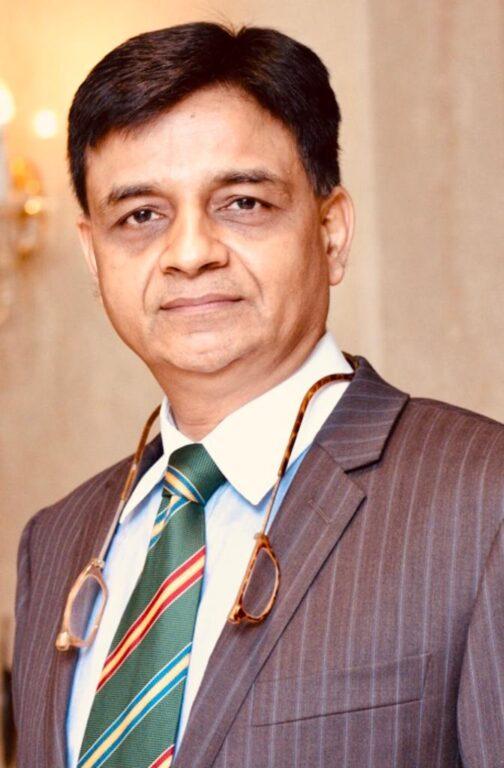
“Realistically, the next 10 million will not come overnight. While the Government's ambition of reaching 100 million international visitors is commendable, that number is still quite some distance away! But I believe, however, that doubling inbound tourism to 20 million is absolutely achievable—provided we take a series of positive and sustained steps,” said Rajnish Kaistha, Sr. Vice President of IATO.
That is the central argument emerging from the inputs we took from the senior and experienced voices across the tourism industry. While their priorities and market preference differ slightly, there is striking convergence on the larger strategy: target travellers by value and motivation, not simply nationality; pursue volume and value together; make India easier to reach, travel across and buy; and move from selling destinations and monuments to selling bookable experiences.
HOW DOES INDIA TURN POTENTIAL INTO DEMAND?
This is where the story’s central question becomes most urgent. India has scale and assets. But attractions do not automatically become products. And products do not automatically become bookings.
Singh warned that India’s inbound tourism performance may be significantly weaker than headline foreign-exchange figures suggest, estimating that the country could be around 30% below where it should have been and facing a potential USD 10 billion shortfall in tourism forex earnings in 2025 alone.
He said the gap also represents lost economic activity, jobs and tax revenues, raising a larger question for the government: “Who is promoting India internationally, what is India’s inbound tourism strategy, and how does the Government intend to regain the international tourism market that India has lost?”
Besides, the marketing model definitely needs to change. Instead of episodic destination advertising, India needs continuous, digital-first, data-driven and market-specific storytelling. It needs stronger partnerships with airlines, tour operators, OTAs, global travel distributors and overseas sellers.
“India needs to move from simply showcasing India to actually selling India,” said Ravi Gosain, President, Indian Association of Tour Operators (IATO). “We should identify traveller segments in each source market and build products around their motivations - wellness, cuisine, wildlife, spirituality, luxury, adventure, culture or slow travel.”
Seamless visas, better last-mile connectivity, cleanliness, trained guides, tourist safety and consistent service standards, govt-industry collaboration, are equally important, stated Gosain.
Echoing his thoughts, Rajiv Mehra, Immediate Past President, IATO & Gen. Secretary, FAITH, said India needs to move from generic destination promotion to market-specific, digital-first and data-driven marketing, supported by stronger partnerships with airlines, OTAs, tour operators and global travel distributors. He also stressed the need to create professionally packaged, easily bookable experiences while improving connectivity, visas, cleanliness, safety and service standards to ensure the on-ground experience lives up to India’s tourism promise.
Gloria Guevara, President & CEO, World Travel & Tourism Council (WTTC), makes the same argument from a global perspective: “India needs to move from marketing a collection of iconic attractions to selling complete, bookable experiences.”
WTTC CEO said India must respond to travellers’ growing demand for personalised, seamless and convenient journeys by strengthening destination infrastructure, connectivity and globally competitive products across wellness, luxury, nature, culture, food, spirituality and MICE. She also called for sharper, data-driven and market-specific marketing, backed by closer government-industry collaboration to convert India’s tourism potential into actual international demand.
IHCL’s Managing Director & CEO, Puneet Chhatwal, argues that tourism growth must be accompanied by infrastructure, last-mile connectivity, access to capital and new destination development. Tourism, he says, should be viewed as a strategic investment because of its multiplier effect on employment, regional development and economic activity.

Chhatwal added that the opportunity is ultimately linked to India’s extraordinary diversity. “India stands at a pivotal moment in its tourism journey. With its unmatched diversity of experiences spanning heritage, culture, spirituality, wellness, nature and cuisine, the country has the potential to build a USD 3 trillion tourism and hospitality economy.”
Viney Tyagi, Hony. Joint Secretary, IATO identifies simplifying the e-visa process as an immediate intervention. He terms this crucial so that it becomes shorter, faster, mobile-friendly and transparent.
Pricing is another major issue, as per Tyagi. He argues that India can sometimes appear expensive compared with smaller Asian competitors once hotel rates, taxes, airfares and destination costs are combined. Improving competitiveness, therefore, cannot be separated from the tourism product itself.
“Our overseas marketing should also therefore be based on market segmentation and targeted campaigns,” he added.
Kaistha makes the aviation case strongly. India’s newly commissioned international airports at Jewar and Navi Mumbai, he argues, can substantially expand aviation capacity, but domestic connectivity and competition will be equally critical if visitors are to move beyond the major gateways. “We cannot afford a situation where one or two airlines dominate the market. More competition, better service, greater connectivity and competitive pricing are essential if India is to distribute international visitors beyond the major gateways,” he said.
Sanjay Razdan, Vice President- IATO reiterated that the country needs sustained global campaigns backed by better air connectivity, simpler visas and stronger infrastructure. Razdan stressed that lesser-known destinations must be packaged into seamless multi-region itineraries, while digital distribution and transparent, bookable products should make India easier for today’s international traveller to discover and buy.
On similar lines, Sunil Mishra, Hony. Secretary, IATO, said India’s next tourism push must go beyond generic destination advertising, with year-round, market-specific campaigns designed to convert interest into bookings. He also called for closer government-industry coordination, sharper international distribution and better packaging of emerging destinations, alongside easier visas, stronger connectivity and consistent service standards. The bigger shift, he said, is to make the entire journey—from discovering India to booking and experiencing it—safe, seamless and reliable.
WHO WILL THE NEXT 10 MILLION BE?
The next 10 million international travellers will not arrive merely because India has more monuments, more beaches or a longer coastline. They will arrive when India understands why a particular traveller wants to travel, creates the experience around that motivation, makes the journey seamless, markets it in the right market and — critically — makes it easy to buy.
The next generation of international travellers cannot be defined by a single nationality, age group or travel purpose. WTTC’s Guevara puts the proposition succinctly: “India’s next 10 million international travellers should not be defined simply by nationality, but by value, propensity to travel and the experiences they seek.”
That means a much broader canvas: high-spending leisure and luxury travellers, wellness seekers, multi-generational families, MICE and business visitors, younger travellers seeking culture, food, spirituality and transformative experiences, as well as repeat visitors, Guevara shared with T3. Geographically, she sees significant opportunity across established markets such as the US and UK, while Europe, the Middle East and Asia offer further potential.
Gosain sees a similar opportunity among “high-spending experiential travellers, millennials and Gen Z, luxury FITs, families, MICE groups, wellness and spiritual seekers, adventure travellers and the growing segment of active senior travellers who stay longer.”
The repeat traveller may be particularly important. Someone who has already seen Delhi, Agra and Jaipur cannot be won back by simply selling the same India again.
As Gosain observes, “Our opportunity lies in positioning lesser-known destinations, nature, wildlife, cuisine, festivals, wellness, and community experiences.”
Razdan makes the same case for the traveller who has already completed the conventional itinerary: “The repeat visitor is particularly important: someone who has already experienced Delhi, Agra and Jaipur should be encouraged to discover India’s Northeast, Central India, Textiles in Gujarat and around, tribal regions, wildlife, Himalayas, Ayurveda, cuisine and living heritage.”
The demographic opportunity runs in both directions. Kaistha highlights the value of the 50-plus and retired traveller — a segment with greater flexibility, disposable income and an appetite for luxury, culture, wellness and slow travel. At the same time, he identifies the 25–50 age group as critical for future volume: travellers who are more independent, digitally influenced and experience-driven.
The opportunity, therefore, is not simply young versus old or luxury versus budget. It is about matching the right Indian experience with the right traveller motivation.
Mishra argues for precisely this approach, identifying culturally curious repeat visitors, luxury travellers, wellness and spiritual seekers, millennials, families, MICE groups, cruise passengers and long-stay seniors, while also bringing the Indian diaspora and its wider social networks into the equation.
For Chhatwal, India's economic growth, rising global profile and evolving traveller preferences create a strong foundation for long-term tourism demand. “Increasingly, travellers are seeking authentic and immersive experiences that foster a deeper connection with the places they visit. India's strengths align naturally with these aspirations, positioning the country favourably on the global tourism map,” he said.
MORE TOURISTS — OR MORE VALUE FROM EVERY TOURIST?
The apparent choice between volume and value is rejected almost unanimously by the respondents. India needs both, they asserted.
Gosain argues that arrivals alone are no longer enough. Length of stay, visitor spending, geographical dispersal and the economic benefit reaching local communities should all become part of the tourism scorecard.
A traveller who stays two or three weeks, travels across multiple states and spends on hotels, guides, restaurants, transport, crafts and experiences creates a fundamentally different economic footprint from a visitor who spends a few days in a single gateway city.
Kaistha’s formulation is more direct: “The ambition should really be more visitors with longer stays, higher spending and wider geographic distribution.”
That is especially relevant because India already possesses one of the strongest foundations for a value-led strategy: long stays. WTTC’s latest EIR shows just how powerful India’s domestic market already is: domestic visitor spending reached USD 203 billion in 2025, representing around 86% of total Travel & Tourism spending. And WTTC’s latest research puts the average international visitor stay at 18.5 days.
The challenge is to ensure that those days translate into wider economic activity. “The objective should therefore be quality growth: more international demand, higher visitor value and stronger benefits for communities across India,” shares Guevara.
Tyagi takes a slightly different position on the volume question. He believes that India should continue to attract large numbers of medium-budget travellers who stay longer and travel across multiple destinations, while also simultaneously pursuing high-value tourists willing to spend on luxury accommodation, bespoke itineraries and exclusive experiences.
India’s competitive advantage, he asserts, is precisely that it can offer both ends of the spectrum.
Mishra also said that India should pursue both volume and value but stop measuring inbound success by arrivals alone. The focus, he said, must shift towards longer stays, higher visitor spending, repeat travel and wider geographical dispersal, with differentiated products encouraging travellers to move beyond established circuits and spend more across local economies.
As Mehra also puts it, the objective should be to attract travellers who “stay longer, explore beyond the established tourist centres and contribute more widely to the tourism economy.”
This also changes the geographical equation. If the next 10 million simply add pressure to the same destinations, airports and circuits, the gains will be narrower and the strain greater. But if they are encouraged to discover new regions, tourism becomes a mechanism for spreading economic opportunity.
WHICH MARKETS SHOULD INDIA CHASE?
Here the consensus becomes particularly interesting.
During a recent roundtable conversation with T3, WTTC CEO Guevara had warned that India’s inbound tourism weakness is not a fallout of the latest Middle East crisis; it predates it, pointing instead to deeper gaps in source-market strategy and international promotion. She urged the Indian Tourism Ministry to target the world’s highest-spending outbound markets and tailor campaigns to specific geographies, age groups and travel interests.
In addition, when T3 asked Guevara, Gosain, Mehra and Razdan, they pointed to the United States, the United Kingdom, Germany, Australia and Japan as the five priority markets.
These markets, according to them, combine purchasing power, outbound travel potential, existing awareness of India and the potential for longer and repeat visits.
But the respondents also made clear that India cannot sell the same India to all five.
They offered a useful segmentation: Americans may respond to luxury, wellness and transformative journeys; British travellers to heritage, culture and family connections; Germans to nature, sustainability and experiential travel; Australians to adventure, wildlife and longer itineraries; and Japanese visitors to spirituality, Buddhism, heritage and curated experiences. “India needs sharper market-specific campaigns, stronger direct connectivity, easier visas, multilingual information and internationally consistent standards of cleanliness, safety, interpretation, and visitor services,” Gosain said.
Kaistha argues for greater attention to China, Malaysia, Indonesia, the Philippines and other Southeast Asian markets, as well as Brazil, Argentina, Mexico and Africa. His proposition is built around a rapidly expanding upper-middle-class traveller who has already experienced established destinations and is now searching for something new.
Tyagi further suggests challenging the traditional market hierarchy, identifying China, Russia & CIS, Balkan countries and Latin America among the markets that deserve greater attention. Every market requires a different product proposition, he said.
China can be targeted around Buddhist circuits, heritage and leisure. Russia and CIS around beaches, Ayurveda, wellness and long stays. Latin America around culture, spirituality, wildlife and adventure. Germany may be more receptive to nature and sustainability; Japan to spirituality and curated heritage; Australia to wildlife and adventure.
MAKE INDIA EASIER TO REACH, EASIER TO TRAVEL ACROSS & FAR MORE REWARDING TO DISCOVER
“WTTC believes the greatest opportunities lie in improving international air connectivity, enhancing visa facilitation, investing in world-class infrastructure and increasing destination marketing. India already offers extraordinary tourism assets; the challenge is making travel more seamless and accessible,” said Guevara, adding that India should encourage visitors to explore beyond the traditional Golden Triangle, spreading tourism benefits across more destinations and communities.
Improving international air connectivity should become a national tourism priority and greater connectivity by international airlines can increase competition, improve seat availability and help bring down airfares, Tyagi suggested.
“India needs to make the world discover, desire and easily buy the extraordinary tourism product it already has,” said Kaistha, in his concluding thoughts.
Mehra added that the ambition should be clear: make India easier to reach, easier to travel across and far more rewarding to discover