

Emirates records surge of 7% with USD 6.6 bn profit in 2025-26
 Emirates Montreal
The airline reports revenue of USD 35.7 billion, an increase of 2% over last year. Notably, dnata also recorded revenue of USD 6.4 billion up 12%.
The Emirates Group released its 2025-26 Annual Report, achieving new record profit, revenue, and cash balance levels, despite a disruptive and challenging 12th month in its financial year.
The airline retains its place as the world’s most profitable airline, reporting record profit before tax (PBT) of USD 6.2 billion (AED 22.8 billion), up 7% from last year, and a PBT margin of 17.4%. The airline reports revenue of USD 35.7 billion (AED 130.9 billion), an increase of 2% over last year and highest-ever level of cash assets at USD 15.0 billion (AED 54.9 billion), 10% higher compared to March 31, 2025.
dnata reportedly delivered solid growth and performance across its business units, reporting record profit before tax (PBT) of USD 437 million (AED 1.6 billion), up 2% from last year, and a PBT margin of 6.8%. Also recorded revenue of USD 6.4 billion (AED 23.6 billion), up 12%, strong cash assets of USD 1.3 billion (AED 4.7 billion), up by 28%.
The group declares a dividend of USD 1.0 billion (AED 3.5 billion) to its owner, the Investment Corporation of Dubai (ICD). The UAE corporate tax rate applied to the Emirates Group increased from 9% to 15% this year, due to the adoption of Pillar Two tax rules in the UAE. After accounting for the tax charge, the group’s profit after tax is US$ 5.7 billion (AED 21.0 billion), up 3% from 2024-25.
Sheikh Ahmed bin Saeed Al Maktoum, Chairman and Chief Executive, Emirates airline and Group said: “Emirates and dnata have gradually restored operations at DXB. Although we are still operating at a lower passenger capacity than pre-disruption, cargo operations have ramped up to support the movement of essential goods into and through the UAE.”
In 2025-26, the group collectively invested USD 4.9 billion (AED 17.9 billion) in new aircraft, facilities, equipment, and the latest technologies to support its growth plans. The group’s total workforce grew by 8% to 130,919 employees, as Emirates and dnata continued recruitment activity around the world to support its expanding operations and boost its future capabilities. The group’s UAE national workforce also grew to surpass 4,000, showing the success of its programmes to attract, grow and retain local talent.
Commenting on the outlook for 2026-27, Ahmed said, “From a fuel perspective, Emirates is well-hedged until 2028-29; and we have worked with our suppliers to secure the volumes required to support our current operations and our scaling up to pre-disruption levels. The Emirates Group enters 2026-27 with very strong cash reserves, which enable us to progress with our plans to strengthen our business without knee-jerk cost control measures. Our aircraft deliveries and retrofit programme will continue apace, as well as our planned investments in new facilities and equipment."
During the year, the airline launched four new destinations – Da Nang, Hangzhou, Siem Reap and Shenzhen; and added services to existing destinations to meet customer demand. By March 31, airline’s global network spanned 152 cities in 80 countries. Emirates also grew its partnerships to 32 codeshare and 117 interline partners, providing customers smooth access to over 1,700 cities beyond its network
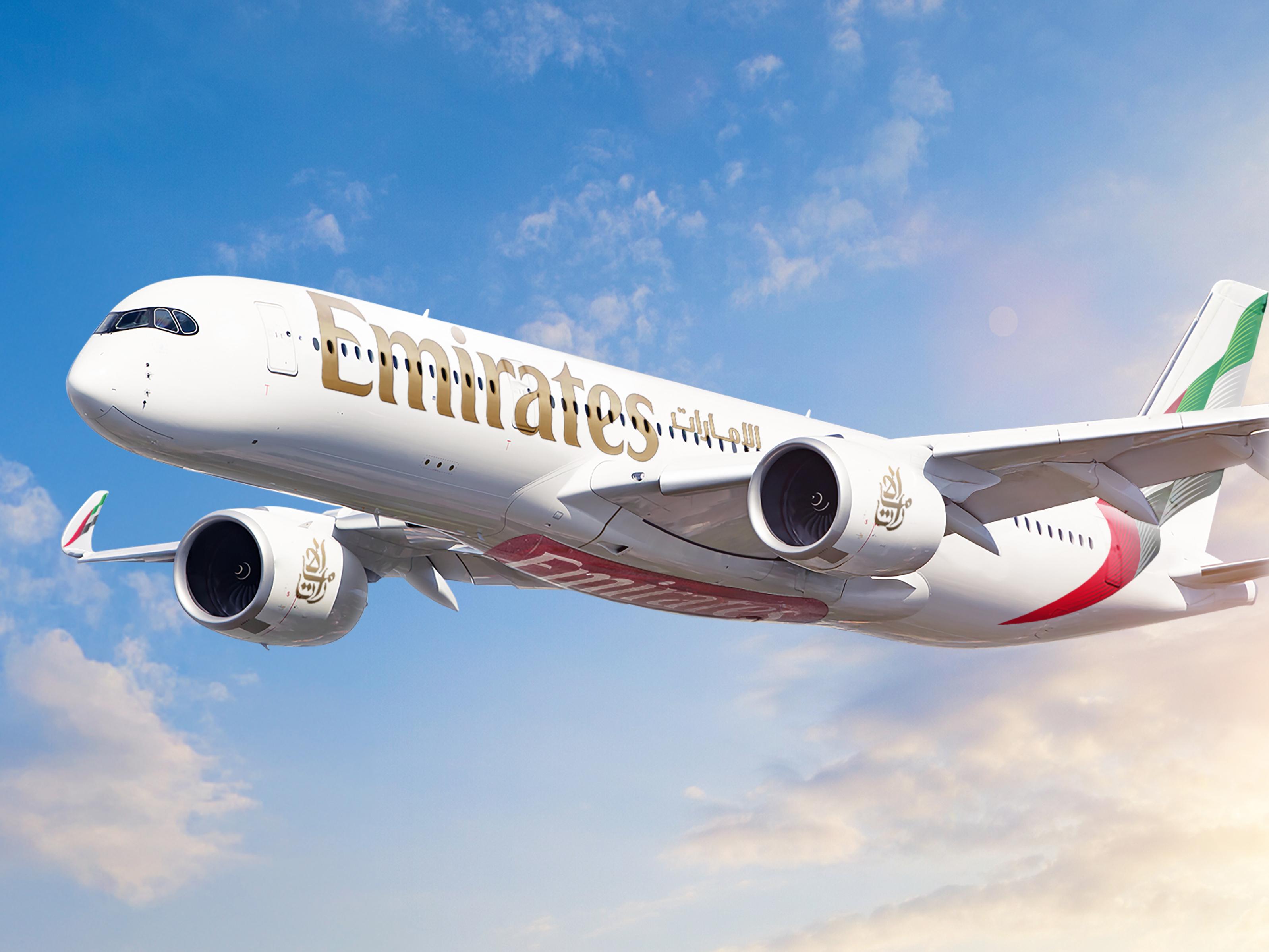
The airline grew its passenger fleet with the delivery of 15 Airbus A350 aircraft this year, enabling the airline to offer even more customers its latest products, including the popular Premium Economy Class and a new-generation inflight entertainment system. By March 31, Emirates had 19 A350s in its fleet flying to 21 destinations. Total fleet count at year end was 277 units, with an average fleet age of 10.8 years.