zingbus bets on premiumisation to make intercity buses a serious alternate to Indian low-cost carriers
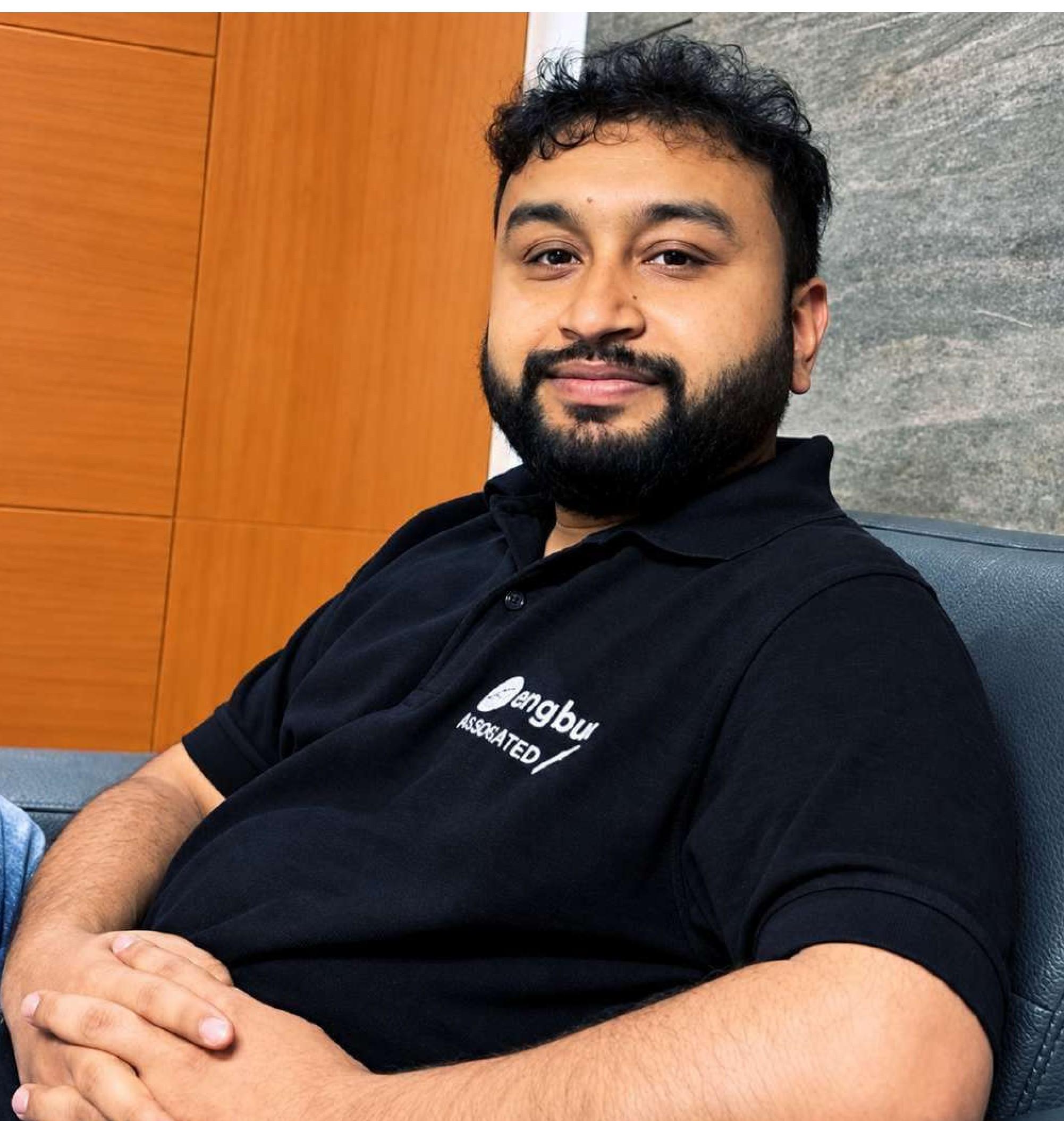 Prashant Kumar_zingbus Co-founder & CEO jpg
Targets 70 destinations with experiential travel arm, 70+ electric fleet by 2027. Prashant Kumar, Co-founder & CEO of zingbus, shares more.
For years, the Indian travel story has been written around airports, airlines and highways. The buses, despite carrying a vast share of the country’s intercity travellers, have largely remained the functional end of the market: a means to get from one city to another, rather than part of the travel experience itself.
Prashant Kumar, Co-founder & CEO of zingbus, India’s technology-enabled intercity bus mobility platform, believes that is beginning to change.
His argument is not simply that more Indians are taking buses. It is that the profile of the intercity traveller opting for buses is changing, spending power is rising, women are travelling in greater numbers, younger travellers are travelling more frequently, and a section of the market is willing to pay significantly more if the product gives them a reason to do so.
A market moving beyond basic mobility
“Premiumisation, of course, is a common theme across everything — be it hotels, intercity travel or even non-travel,” Kumar shares, pointing to what he sees as a broader shift in consumer behaviour. Post-Covid expectations, he argues, did not retreat as many had anticipated. “In fact, they have gone further up.”
That shift is visible in intercity travel. According to Kumar, domestic intercity bus travel has grown by around 80-82% between 2019 and 2025, compared with a 22% increase in flights over the same period. The comparison, he said, is not about replacing air travel altogether, but about recognising where buses make more sense, particularly on the 300-600 km corridors that connect India’s cities.
For zingbus, the trend has benefited leisure corridors such as Delhi-Manali and Delhi-Mussoorie. On the business travel side, the company has seen growth across several Maharashtra-originating routes, including Pune-Nagpur, Pune-Bengaluru, Mumbai-Goa, Pune-Goa and Pune-Indore, Kumar shared.
zingbus Maxx is central to this trend. The buses are fully furnished Volvo vehicles, with washrooms, welcome drinks and welcome kits containing snacks, face wipes and even items aimed at passengers experiencing motion sickness. Meals are served onboard, with overnight journeys potentially including multiple meals and a breakfast buffet.
Maxx is currently available on around 14 to 15 routes out of the roughly 40 routes on which the company operates, according to Kumar. Its growth has also been helped by travellers sharing videos of the onboard experience on social media, generating organic visibility for the product.
Kumar told T3 that the idea emerged from recognising that some customers were willing to pay more than the standard bus fare, provided the difference in experience was substantial. zingbus Plus, by contrast, is positioned as a reliable, clean and safe service without the additional frills.
Yet premiumisation alone will not determine whether buses can compete more effectively with flights. Convenience remains critical, added Kumar.
An airline on the road
zingbus started in 2019 with a fairly specific proposition: fix the service layer around intercity buses without necessarily owning the buses themselves.
The company now operates across more than 40 routes, 17 states and over 200 cities. Kumar points out that while IndiGo flies to around 82 destinations, Zingbus connects more than 800 destinations at the pin-code level, putting the company’s network within reach of a much wider geography.
Kumar also describes Max as “a full-service carrier” for the road, effectively an airline-style premium product translated into intercity bus travel.
He cited journeys such as Delhi-Jaipur, Delhi-Dehradun and Bengaluru-Chennai as examples where the time and cost involved in flying may not justify the choice, particularly when a bus offers an overnight journey.
“In Europe and the US, the sheer distances between major cities made flying a natural choice. India’s urban geography is different. Delhi, Agra, Jaipur, Lucknow, Kanpur, Bareilly, Dehradun and Chandigarh sit within a network of relatively short intercity distances. Why do we have to copy everything from the West? Why should someone spend more than necessary on a short-haul flight when a comfortable overnight bus can get them to their destination by morning?” he asks.
He also argues that buses have an environmental advantage over flights on comparable routes, although the actual benefit depends on factors such as occupancy, distance and vehicle technology.
The challenge is to change the perception that buses are merely a stepping stone to air travel.
Women travellers changing the equation
One of the more significant changes Kumar sees is the rise of women in intercity travel. When zingbus started, women accounted for around 17-18% of passengers on a typical bus. Today, the company says women account for more than 40% of zingbus Maxx passengers, while the industry-wide figure is above 30%.
Kumar believes that number could approach 50% by the end of the decade.
“The change is not simply about women having more disposable income. It is also the broader improvement in the travel ecosystem, greater participation of women in the workforce and efforts by operators and authorities to make intercity travel safer. At zingbus, some of those measures are deliberately built into the booking and operating experience.”
A woman travelling alone cannot have a male passenger book the adjacent seat unless it is part of a combined booking. The company also has single sleeper seats on a significant portion of its fleet, which women tend to prefer, shared Kumar.
Crew training is another focus. Staff are trained not only to respond to problems but also to create an environment in which a woman feels comfortable reporting one. The company has placed sanitary kits on its buses, chat-based customer support and is increasingly moving towards buses equipped with bio-washrooms. Around 65-70% of its current fleet has washrooms.
The company also worked with OEMs to encourage the development of bus models capable of accommodating washrooms. But perhaps the more interesting intervention is outside the bus.
zingbus is increasingly selective about where passengers are picked up. “We are okay losing out on some business. But we are not okay letting our female customers wait at a curbside location which is dark and unsafe in the middle of nowhere on a highway.”
The company is also working on giving passengers more information about pick-up locations through its app, including geolocation and, eventually, 360-degree imagery so that travellers can see what a location looks like at night.
Even delays are being treated as part of the safety equation. If a bus is running late, passengers are informed proactively so they do not end up waiting unnecessarily for long periods at night.
The Gen Z bus traveller
The other major change is generational. More than 80% of zingbus customers are aged 36 or below. Around 15-16% travel solo, about 40% travel as couples and the remainder in groups. On business routes, solo travel can rise to around 25%. But the most frequent users are younger still.
Kumar says the highest repeat travel comes from the 18-28 age group — college students and early professionals who travel frequently for holidays, family visits and short breaks. This is particularly visible in the hills.
“The old pattern of visiting Manali or Mussoorie once and ticking it off a bucket list is changing. Younger travellers may return several times a year, with different companions or even alone, exploring places such as Tosh, Shimla, Manali, Mussoorie, Dhanaulti, Nainital and Dharamshala.”
That frequency matters for a bus company because the young traveller may eventually graduate to air travel as income rises. zingbus, therefore, is trying to build a relationship with that traveller before that transition happens.
zingbus moving beyond the buses
Its latest bet, Chyll by zingbus, is an attempt to turn the company's transport network into a broader travel platform.
The proposition is deliberately different from conventional sightseeing packages. Chyll packages transport, accommodation, food and local experiences, but focuses on making travellers feel less like tourists and more like locals. “Showing India how it is” is how Kumar describes the core idea.
“Instead of taking visitors in Udaipur from one fort to another, for example, the company might take them to Chachakota. In the mountains, the idea is not simply to buy Maggi at a roadside stall, but to make it themselves,” he added.
Chyll currently operates across nine destinations, with a target of more than 70 destinations by next June.
Maharashtra grows; the Northeast can wait
zingbus is currently concentrating its expansion rather than trying to cover the entire country.
“Maharashtra-originating routes have seen strong growth over the last year, including Pune-Nagpur, Pune-Bengaluru, Pune-Latur, Mumbai-Goa, Pune-Goa, Mumbai-Ahmedabad and Pune-Indore. The evergreen leisure corridors remain Delhi-Manali and Delhi-Mussoorie,” said Kumar.
The Northeast, however, is not currently on the company’s immediate roadmap. Kumar says zingbus has its hands full with the North and West for the next two years and that some eastern markets still lack sufficient paying capacity for the model.
The company is nevertheless watching the market, including the emergence of stronger bus operators from Kolkata.
Another piece of the network is last-mile integration. In Amritsar, zingbus has begun integrating cabs into the bus booking, allowing passengers to add onward transportation to their destination.
50 operators, 200 buses and an e-fleet ambition
zingbus’ growth strategy continues to depend heavily on partnerships. The company has partnered with around 50 bus operators for the deployment of more than 200 buses over the next 12 months, including Maxx and electric vehicles. The arrangement is intended to bring local operators into the expansion rather than displace them, while allowing zingbus to avoid becoming overly asset-heavy.
zingbus currently operates 16 electric buses and plans to take that number to 70 by December 2027.
But Kumar is clear that electrification is not simply a matter of buying electric buses. Charging infrastructure, battery range and grid reliability all need to catch up.
The company's focus is therefore on routes that are currently ready for electrification while preparing for longer routes as battery and charging technology improves. Routes beyond 450 km, which are difficult to electrify today, could become viable as technology develops.
For all its focus on product design, Kumar believes some of the industry's biggest challenges sit outside zingbus. “Pick-up infrastructure needs to become more standardised. First- and last-mile connectivity needs to improve. Highway infrastructure and wayside amenities need further development. And then there is road safety. zingbus locks the speed of its buses at 80 kmph and works with OEMs and body builders to ensure fire-retardant elements and safety specifications are maintained,” he added, saying stricter enforcement is necessary across the industry.
Driver training and behaviour, road conditions, and the behaviour of other vehicles all contribute to the outcome. One particular gap, he argues, is the status and regulation of bus drivers and conductors. They also need to be recognised as a formal workforce, with identification, certification and defined standards, much like pilots are regulated within aviation.
For zingbus, then, the next phase is more about building an ecosystem around the intercity traveller: safer boarding points, better last-mile connections, electric fleets, premium services, curated destinations and a digital layer that makes the entire journey easier.
The company spent its first phase trying to prove that the product could work. Kumar believes that phase is now largely over. “We wanted to perfect the product. Product-market fit we achieved,” he says. “It is the right time for us to start investing in marketing the product.” That investment, he asserted, will become more visible over the next six to 12 months.