

Tamarind Global eyes 35% growth as business normalises; sees tier-2 & 3 cities as growth drivers
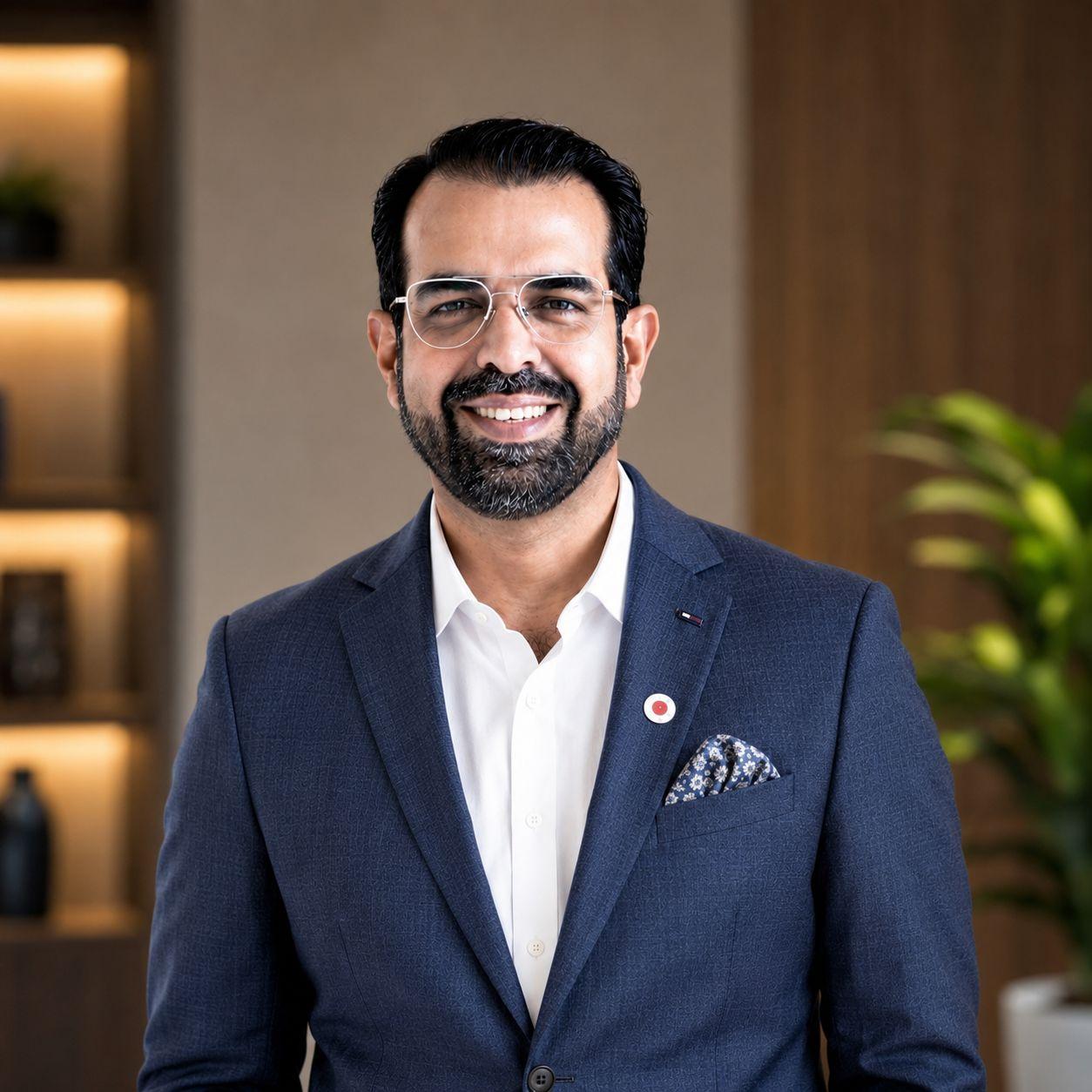 Louis D'Souza, Managing Partner, Tamarind Global-1
Louis D'Souza, Managing Partner, Tamarind Global, while speaking to T3, shared about navigating geopolitical disruption, business performance, changing traveller preferences, expansion into Tier-2 and Tier-3 markets, and more.
Full report below:
Navigating geopolitical landscape
According to D'Souza, “Disruption is not the exception nowadays. Disruption has become a part and parcel of work.” He expressed that while the geopolitical situation appears to have reached a kind of status quo, the expected rebound in business activity has not yet materialised. “People are still sceptical to travel via the Middle East, even though fares are very good.”
Tamarind Global’s diversified portfolio has helped the company navigate the uncertainty. The business operates across three key verticals: holidays, corporate and celebrations, both within India and overseas. “So, when something doesn't work, we just basically change gears and start focusing on what is actually working during that point of time. So, geopolitically, I believe that these gears will change post-November.” However, the situation remains difficult to predict.
Facing headwinds
Shedding light on the last financial year performance, D’Souza shared that the company’s India holidays business, is heavily driven by the summer vacation period, covering both domestic and international travel. However, the Pahalgam attack affected a significant amount of India business.
“People then started looking towards Europe, etc., but the visa situation is not very easy. And that resulted in us having a fair amount of dent in the first quarter, which was April to June,” he shared.
The second and third quarters subsequently began to stabilise. “But again, the fourth quarter, which is also constituting almost 30% of our business in the last few months of January, February and March, were hit very badly with the Iran-US war.”
Flight disruptions and the wider geopolitical situation impacted Tamarind’s numbers across both the holidays and corporate verticals. The celebrations business, however, remained comparatively resilient.
“The only thing that did happen at that point of time was the celebrations that we did. A lot of the weddings were taking place in India, luckily. So, those operated as usual,” D’Souza shared.
Positive outlook for growth
D'Souza described 2024 as ‘a fantastic year’ for Tamarind Global, with the company recording growth of close to 35%. In 2025, the business dipped by around 10%. “You need to look at it from a perspective of us growing on an average of 15-20% a year.”
The outlook for the current year is significantly more positive. “We are very positive because currently we are sitting in our fourth month and we are above our targets and I think all verticals are above their targets,” he noted.
Going forward, D'Souza expects the company to achieve significantly more than what it has budgeted for the year, provided the situation remains stable and business conditions return to normal.
According to him, a number of corporates are currently waiting for the situation to ease, with Tamarind receiving several queries from both corporate and leisure segments that remain affected by the geopolitical situation. “If we look at things going to normal by November, then we have got a very good December, Jan, Feb and March, which is also super peak season for us. So, that could go up to 35% again,” shared D’Souza.
Beyond weddings; unlocking new destinations
While celebrations vertical has traditionally been heavily focused on weddings, Tamarind is now making a strategic shift within the segment. “This year we are having a small change in gears. Because we are also looking at expanding our business in these social celebrations like birthdays and anniversaries also.”
In addition, experiential travel and exotic destinations are among Tamarind Global’s key focus areas as the company sees evolving traveller preferences. “While the conventional destinations could be Southeast Asia, etc., we are looking at slightly more experiential locations like Japan. Japan has been something that a lot of people aspire to go to,” he noted.
Africa is another area of focus, with destinations including Botswana, Zimbabwe and Zambia being showcased alongside more established markets such as Kenya. The same approach is being applied within established European destinations.
“People go to Spain but there are also smaller places in Spain like Seville, which a lot of people have not explored. So, for us, we are trying to tap into that,” D’Souza shared.
Further added, “Wellness also is a big thing that is happening. And we are focusing a lot on wellness because there are some great centres in India, across India, which are wellness related.”
The trend is not limited to international visitors seeking wellness experiences in India. D'Souza pointed to a growing realisation among Indian travellers themselves that they need to invest in their wellbeing.
Tour operators remain indispensable
Technology and artificial intelligence may be changing how travellers research and plan their journeys, but D'Souza believes the role of the tour operator remains critical. “Nowadays, ChatGPT is one’s best travel advisor. But I still feel that the tour operator is indispensable because the knowledge that we carry about the location and the experiences that we can share is completely different,” he expressed.
He pointed to Varanasi as an example. While travellers may visit the Kashi Vishwanath Temple, a tour operator can provide access to experiences that go beyond the standard itinerary. “We could actually set up a Kushti demonstration and even get you to witness that.”
Such personalised experiences are increasingly relevant, with D'Souza estimating that there has been a 20-25% shift in clients who do not want the standard template. He states, “They want something different.”
Tier-2 & 3 cities as growth drivers
While the West remains Tamarind’s largest region, the North is its second-highest market, followed by the South and East. The company has been investing significantly in the East, with a sales presence in Kolkata. Its next focus is the Seven Sisters, which D'Souza describes as relatively untapped by Tamarind.
Tamarind currently works with approximately 8,000 agents and expects its network to grow by at least 15% year on year. D'Souza sees significant potential in the smaller markets.
“Tier-2 and Tier-3 cities are actually great places to tap in for business. They have got a lot of spending power. They are very enthusiastic to try out different things,” D'Souza shared.
According to him, the volume in Tier-1 markets is not growing at the same pace as Tier-2 and Tier-3 markets. “I think Tier-2 and Tier-3 cities are aspirational travellers. So, they start off, of course, with the conventional destinations.”
Once these travellers have experienced the conventional destinations, they increasingly begin looking towards more exotic markets. This makes travellers from smaller cities increasingly inclined towards new and unexplored destinations.
D'Souza also highlighted a business opportunity for travel companies operating in these markets. “In Tier-1 cities, again, in terms of density of service providers, there's a lot of people who are catering to that audience. But Tier-2 and Tier-3 cities, there is scope for you to grow your business.”
Service remains the core USP
D'Souza believes Tamarind’s key differentiator lies in its service proposition and relationships built over the years.
In addition, the company also has a strong position when it comes to hotel business. “In terms of pricing, today if you go to see and ask any hotelier in India, you will know that Tamarind is among the top three. With the major players, I can confidently say with all the hotel brands within India as well as internationally, we are number one. In terms of business, in terms of volume that we do with them,” he added. The scale of business also enables the company to secure attractive pricing.
For Tamarind, service remains the primary reason agents choose to work with the company, with price also playing an important role. “You will have 10 agents, out of 10 agents, seven will come to you for price and they will go to anybody else who is giving a cheaper price. But another three will only come to you for service.”
The company’s repeat-agent ratio is particularly strong. “Actually 90% are repeat agents. Once they work with us, they work with us continuously,” D’Souza noted.