

Silence selling fast: Why Hushpitality is emerging as the next needed trend
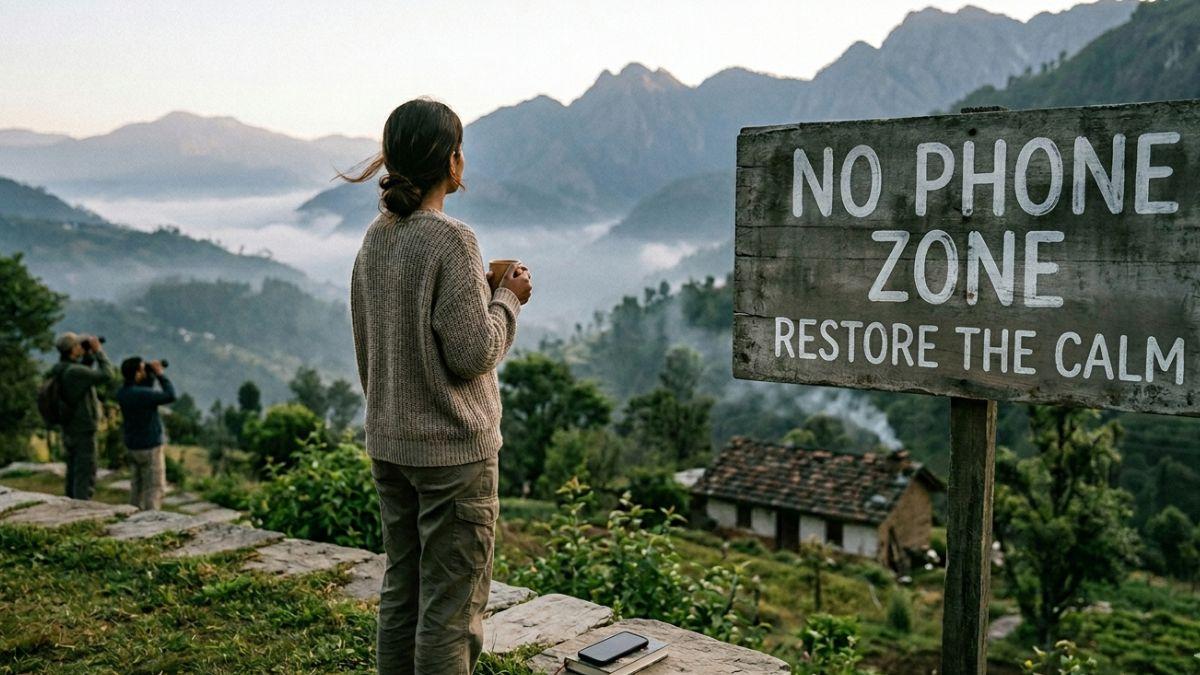 Image Credits - The Financial Express
Indian travellers are now increasingly seeking silence, solitude and sensory-light experiences, prompting hospitality brands and stakeholders to rethink the meaning of luxury. For decades, travel has largely been defined by movement, activity and accumulation: more destinations, more experiences and more moments to capture. Today, however, a growing number of travellers are moving in the opposite direction.
Silence is no longer incidental to travel, it is being intentionally designed, packaged, and sold. In an age of hyper-connectivity, algorithmic noise, and overtourism, a new trend is emerging: ‘Hushpitality’ - where quiet is not a by-product, but the core offering.
At its heart, hushpitality is about curated stillness. It moves beyond traditional wellness, spas, therapies, or nature breaks, and instead focuses on behavioural and spatial design. Phone-free zones, low-decibel architecture, silent dining, and no-interruption service models, and experiences engineered to minimise sensory overload.
According to Hilton’s latest global research, the top motivation for leisure travel in 2026 is “to rest and recharge,” cited by 56% of respondents. This is followed by spending time in nature (37%), improving mental well-being (36%), and prioritising “me time” (20%), clear signals that travellers are increasingly seeking space, slowness, and silence.
Similarly, Booking.com's Travel Predictions 2026 reveals that 56% of Indian travellers want holidays that help them reconnect with nature, while 23% are actively seeking quieter, mindful pursuits to manage stress.
Hushpitality – the next frontier of luxury
Industry experts believe hushpitality is rapidly evolving from a wellness niche into a defining feature of premium travel.
According to Booking.com, travellers are increasingly looking beyond indulgence and material luxury, placing greater value on experiences that feel restorative, intentional and emotionally meaningful.
"Quiet, space and time are becoming aspirational luxuries in themselves," said Santosh Kumar, Regional Head, South Asia, Booking.com. He noted that the challenge for brands lies in elevating ‘less’ into a premium proposition by creating environments where silence, slowness, and nature become curated, high-value experiences rather than passive amenities.
The trend is also reflected in the rise of what Booking.com describes as "Hushed Hobbies", where travellers are embracing quieter pursuits centred around patience, mindfulness and reflection.
For Devendra Parulekar, Founder of SaffronStays, the definition of luxury itself is undergoing a transformation. "Hushpitality is moving beyond a wellness niche and becoming part of how premium travel is being redefined. The new marker of aspiration is not always more service, more entertainment or more itinerary. It is space, privacy, lower sensory load and the ability to step away from constant stimulation," he said.
Parulekar added that travellers are increasingly willing to pay for experiences that deliver quiet as a complete offering through thoughtful design, private settings, natural surroundings, unhurried meals, and service that is present without being intrusive.
He added, “At SaffronStays, we see this especially among families, founders, senior professionals, and multi-generational groups who want time together without the noise of crowded destinations or over-programmed holidays.”
Vaibhav Kala, Founder of Aquaterra Adventures, believes the shift represents a broader cultural change. "Luxury hospitality in 2026 is shifting from abundance to restraint. Wealthy travellers are exhausted, overstimulated and willing to pay handsomely for relief. Travellers are paying a premium for dead zones where their digital presence can't follow, silence has become the ultimate status symbol over a 5G connection," he said.
According to Kala, privacy, slowness, silence, and authenticity are becoming lifestyle markers. “Luxury is less about where you went and more about how the trip made you feel,” shared Kala.
Industry responding to digital detox
As demand grows, hospitality brands are gradually embedding elements of hushpitality into their offerings.
Booking.com notes that the demand for no-phone zones and digital detox escapes is being taken increasingly seriously, though often in subtle and experience-led ways rather than strict enforcement. According to its Travel Trends 2026 research, 91% of Indian travellers want access to beautiful natural scenery, 90% are looking to boost their mood, 89% prioritise relaxation, and 87% aim to mentally unwind.
"In response, hotels are designing quieter physical spaces, encouraging outdoor engagement and introducing wellness-led programming such as guided walks, nature immersion and reduced in-room technology distractions," Kumar explained. Tour operators and travel planners are similarly building itineraries that naturally limit screen time through activity design rather than restriction.
He added that the trend is not limited to luxury hospitality, with mid-scale brands also able to participate by offering simple, scalable interventions: tech-light environments, curated nature-based experiences, or structured “slow day” itineraries, making hushpitality more accessible without heavy investment.
Parulekar believes travellers are not necessarily seeking enforced disconnection but rather environments that make switching off feel effortless.
"The response is becoming more practical than extreme. Most travellers do not want to be forced offline. They want spaces that make switching off feel natural. Hotels and private stay brands are responding through outdoor-led experiences, quiet dining formats, nature walks, stargazing, spa-led slow stays, reading corners, low-interruption service, and homes where the environment itself encourages conversation over screen time," he said.
Similarly, Kala points to a growing emphasis on what he describes as "acoustic luxury", with some hospitality brands engineering acoustic luxury through ‘sound sanctuaries’ with noise-absorbing materials and ‘dead-zone’ cabins with zero Wi-Fi or cellular signal.
However, he stressed that the entry point doesn't require structural overhaul. "Calm lighting, access to nature, reading corners, wellness menus and walking trails can matter as much as large pools or crowded sightseeing packages. Silent breakfast service, phone-free dining rooms, and noise-conscious room design are low-cost differentiators accessible across price tiers.
Destinations aligning with Hushpitality
According to Booking.com, destinations that naturally offer lower visitor density, scenic landscapes and slower rhythms of life are considered well-positioned to benefit from the rise of hushpitality. Indian destinations such as Rishikesh, Coorg, Alleppey, Spiti Valley and Gokarna already embody these attributes, making them appealing to travellers seeking disconnection and deeper immersion in nature.
“These places lend themselves to activities like river walks, forest trails, stargazing and backwater exploration; experiences that encourage stillness without needing extensive artificial curation,” said Kumar.
Beyond individual destinations, Kumar believes hushpitality also presents an opportunity to rebalance tourism flows. By shifting focus away from crowded, high-traffic destinations towards quieter alternatives, the trend can support more sustainable and distributed tourism, while helping reduce overtourism pressures and unlock economic potential in emerging destinations.
Parulekar sees strong potential in destinations that are scenic, culturally rooted and relatively untouched by mass tourism. “In India, the Konkan coast, Kumaon, Coorg, Tirthan, Kasauli, Mukteshwar and parts of interior Maharashtra fit this shift well. Konkan, especially, has the right ingredients: quieter beaches, forts, temples, local food, craft traditions, coastal villages and nature-led experiences,” he said.
According to Parulekar, hushpitality can also play a role in redistributing tourism demand as travellers increasingly seek destinations that offer depth and authenticity without the density associated with mainstream hotspots.

Taking a global view, Kala points to destinations such as the ancient forests of Japan, the Great Bear Rainforest in British Columbia and Nordic wilderness cabins as natural fits for hushpitality.
“Deep forests function as nature’s sound absorbers. Bhutan’s Gangtey Lodge and silent stargazing retreats in the Atacama Desert are also leading this space, pairing the absence of light pollution with the absence of digital noise,” he said.
Kala added that the redistribution opportunity is significant. “By marketing silence as a premium amenity, lesser-visited destinations - remote valleys, off-grid islands and slow-travel towns - can attract high-value travellers without competing on scale. Hushpitality's logic actively rewards distance from crowds, making overtourism itself a counter-signal. The quieter and more obscure the destination, the stronger the proposition.”
Marketing silence
For travel brands, one of the biggest challenges lies in communicating something as intangible as quiet. According to Booking.com, marketing silence requires a shift from showcasing places to communicating feelings, with the focus moving towards storytelling, atmosphere and lived experiences rather than simply highlighting scenic locations.
The trend appears particularly relevant among younger travellers. Booking.com’s Travel Trends 2026 reveals that 85% of Gen Z travellers in India are drawn to natural landscapes, while 84% prioritise relaxation and 85% actively seek new destinations, signalling demand for experiences that combine exploration with emotional wellbeing.
As a result, brands are increasingly leaning into content that visually captures stillness, whether through early morning light, empty landscapes, slow-paced activities or authentic local interactions. Experiences such as sunrise walks, quiet forest trails and stargazing help make silence feel tangible and shareable.
“Ultimately, successful marketing of hushpitality is less about promoting ‘quiet’ as an absence, and more about framing it as a richer, more immersive way to experience a destination,” said Kumar.
Parulekar agrees that silence itself is not what brands should be selling. “You do not market silence literally. You market the feeling it creates. A slow breakfast, a verandah with mountain views, a beach walk without crowds, children playing outdoors, a long meal with family, or the sound of rain can communicate quiet better than any tagline,” he said.
“In a visually overloaded world, calm has become distinctive. The brands that will win this space are the ones that sell pause, privacy and presence, not just rooms or amenities,” concluded Parulekar.