

Scoot sees strong rise in solo Indian travellers; Hanoi & Tokyo emerge as key hotspots
 Brian Torrey, General Manager for India and West Asia at Scoot
“About 40% of our travellers are travelling beyond Singapore. We have seen strong growth towards destinations like Phu Quoc in Vietnam.” - Brian Torrey
India continues to remain a key growth market for Scoot, with the Singapore-based low-cost carrier witnessing strong outbound demand in 2025 and rising interest among Indian travellers for unique and lesser-explored destinations across Southeast Asia.
Brian Torrey, General Manager for India and West Asia at Scoot, shared exclusively with T3, how Scoot sees strong alignment between India’s evolving travel preferences and its expanding Southeast Asian network.
“India is a key market for Scoot. We are a Singapore-based carrier and operate six destinations in India along with Singapore Airlines. With India’s growth story, our expansion across Southeast Asia directly benefits Indian travellers because the trend towards unique and off-the-beaten-path destinations aligns closely with Scoot’s network growth,” Torrey shared.
2025 growth momentum
According to Torrey, 2025 remained a strong year for outbound travel from India, particularly during festive seasons and school holiday periods. He pointed out that demand growth is not only concentrated on Singapore but increasingly extending to destinations beyond the city-state.
“About 40% of our travellers are travelling beyond Singapore. We have seen strong growth towards destinations like Phu Quoc in Vietnam. We are also seeing increasing traffic from Chennai to Taiwan and Cebu in the Philippines, which is another destination offering visa-free access for leisure travellers,” he said.
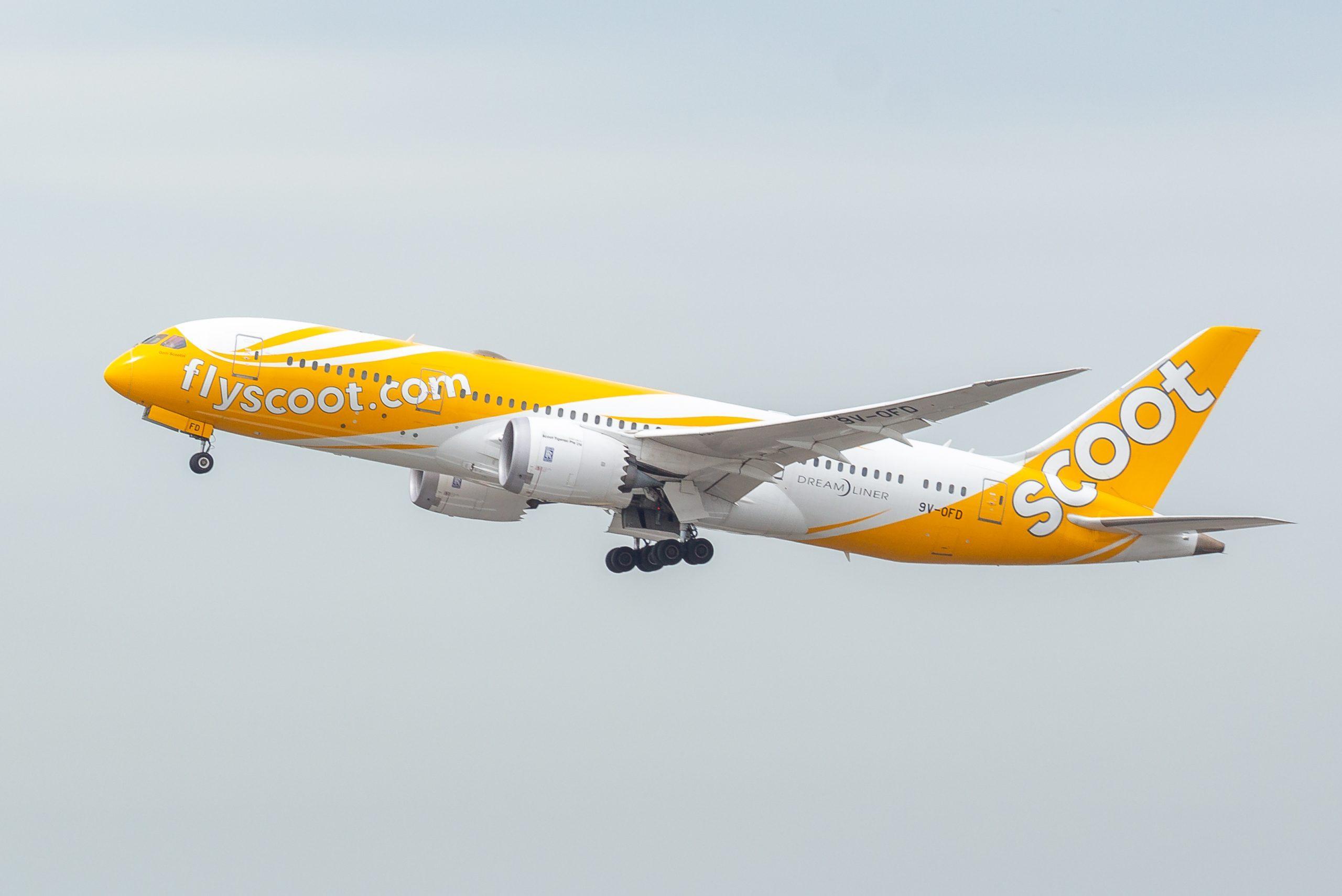
To support the rising demand, Scoot has deployed its A321neo aircraft on routes across South India, including Trichy, Trivandrum and Coimbatore, adding 56 additional seats per flight. The airline has also introduced supplemental flights during festive periods and is witnessing strong booking trends for school holiday seasons.
“Our overall capacity growth is around 5%, but on some individual routes, growth can go as high as 27% due to the additional seats introduced through the A321neo deployment,” Torrey added.
Shift towards authentic & solo travel
Scoot recently commissioned a study to better understand evolving travel behaviour among Indian travellers. According to Torrey, the findings revealed a strong preference for authentic and less crowded destinations, alongside a growing inclination towards solo travel.
“One of the key insights was the growing interest in offbeat and less crowded destinations where travellers can enjoy more authentic and personalised experiences,” he said. “What was particularly interesting was that almost 90% of respondents showed interest in solo travel, which is not traditionally stereotypical of Indian travellers.”
Torrey explained that Indian traveller profiles are becoming increasingly dynamic, with passengers choosing different travel styles depending on the purpose of travel. “Indian travellers are unique. They may travel with family, for work, for studies, or now increasingly for solo experiences focused on self-growth and self-paced travel. Leisure and VFR are very strong segments for the India market always,” he shared.
He added that around 40% of Scoot’s passengers from India are solo travellers, although the mix varies across destinations. Cultural destinations such as Hanoi and Tokyo tend to attract higher solo traveller volumes, while destinations like Koh Samui continue to see strong demand from couples and honeymoon travellers.
Expansion aligned with Indian preferences
Highlighting network expansion, Torrey said Scoot is seeing strong demand across all its destinations from India, including routes from Punjab and North India as well as South India. Traditional destinations such as Bangkok, Bali and Vietnam continue to perform strongly, while newly launched destinations are also witnessing encouraging response.
“As we launched new destinations, we have seen strong traffic flows into places like Iloilo City in the Philippines and Western Visayas. Phu Quoc almost became a viral destination despite limited connectivity, while Da Nang remains an important part of Vietnam itineraries,” he noted.
Scoot launched 12 new destinations last year, and according to Torrey, the airline’s expansion strategy remains closely aligned with changing Indian traveller preferences for newer and experiential destinations.
Unique proposition in global LCC segment
Speaking on competition within the low-cost carrier segment, Torrey highlighted Scoot’s extensive Southeast Asian footprint as one of its key differentiators.
“We are still a relatively young carrier, but we operate to 80 destinations across 18 countries and territories. When combined with the Singapore Airlines network, this gives customers even more connectivity through codeshare and interline partnerships,” he said.
He particularly pointed to Indonesia as an example of Scoot’s network advantage. “We operate to 15 destinations within Indonesia, which many competitors are unable to offer. As we continue expanding this footprint, it creates a very unique travel proposition.”
Travel trade’s crucial role
Despite changing consumer booking behaviour and the growing influence of digital platforms, Torrey emphasised that travel trade remains an important sales channel for Scoot in India.
“The Indian market has a very strong mix of sales channels, which is extremely important because we are not overly reliant on any single channel,” he said. “We continue to see strong demand across GDS, OTAs, our website, mobile platforms and group bookings.”
He noted that while travellers increasingly draw inspiration from social media and peer recommendations, newer tools such as AI and ChatGPT are also beginning to influence itinerary planning. “About a quarter of respondents shared that they are using ChatGPT and AI-based tools to plan their itineraries,” Torrey revealed.
He further added that Scoot continues to maintain close engagement with trade partners across India, particularly in Delhi and Mumbai, while also leveraging the wider Singapore Airlines sales network to drive traffic onto Scoot-operated routes beyond Singapore.