

T3 Exclusive: RTSOI & MoT put responsible tourism back on agenda; target 100 responsible tourism practices
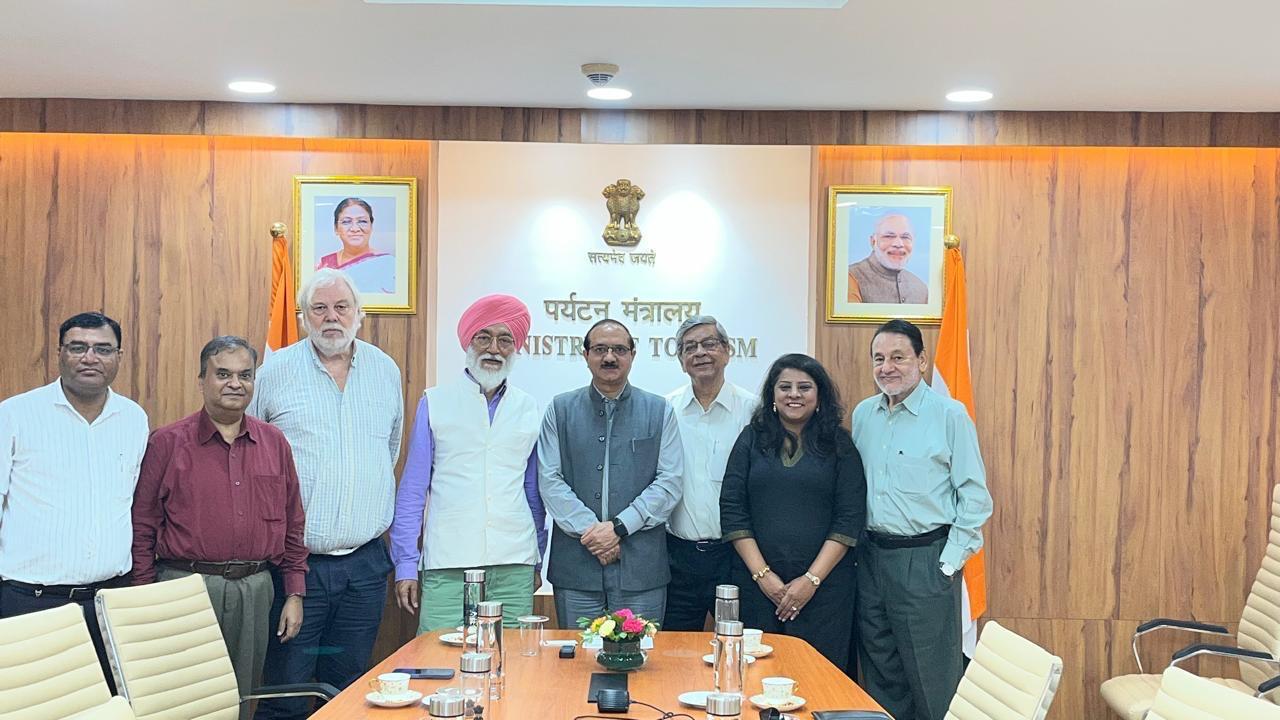 RTSOI Members meeting with Ministry of Tourism's Secretary
The organisation is looking at a renewed partnership with the Ministry of Tourism, with a focus on kickstarting the national Responsible Traveller campaign, reviving the National Sustainable Tourism Board, destination carrying-capacity studies and stronger industry and state-level participation. RTSOI’s Mandip Singh Soin speaks exclusively with T3.
The Responsible Tourism Society of India (RTSOI) and the Ministry of Tourism will soon renew their partnership, with the organisation looking to give a sharper push to responsible travel through a Ministry-led national campaign and destination-level interventions. Following a meeting with the Tourism Ministry, RTSOI said the renewed engagement is expected to include workshops and carrying-capacity studies, while one of the key deliverables will be a booklet documenting 100 responsible tourism best practices.
For RTSOI Founding President Mandip Singh Soin, the objective this time is to move beyond broad sustainability messaging towards a few focused interventions that can have an impact on the ground.
The partnership, which will be renewed through an MoU signing, marks the third engagement (is in its third year) between RTSOI and the Ministry. It is expected to take a more focused approach this time with the immediate priority being a national Responsible Traveller campaign backed by the Ministry. “We’ve already got about 30 videos that we’ve done in the past post-Covid. We will reuse them because we’ve got celebrities from Bollywood, industry-known faces, musicians and all types of people who are spreading this message. The idea is to sensitise all our travellers,” he shared with T3.
The next phase will involve creating new video messages with support from the Ministry and distributing them through government and industry social media channels. RTSOI also wants the campaign to eventually move beyond English and Hindi into other Indian languages, allowing responsible travel messaging to reach a broader domestic traveller base, as per Soin.
Not just this, RTSOI is looking at embedding responsible traveller guidelines into the traveller's journey itself, from hotel check-ins and airline tickets to OTA bookings and travel company websites. The idea is that travellers should encounter the guidelines at multiple points before and during their trip, rather than only through standalone awareness campaigns.
RTSOI is also seeking closer institutional links with major tourism associations and industry bodies representing hotels, restaurants, tour operators, travel agents and airlines. Soin said the organisation wants RTSOI to have a formal presence, potentially as an honorary member, within these bodies so that responsible tourism considerations remain part of their continuing discussions.
The larger ambition, he said, is for RTSOI to evolve into a national body that can guide responsible tourism across both policy and industry action.
Reviving the National Sustainable Tourism Board
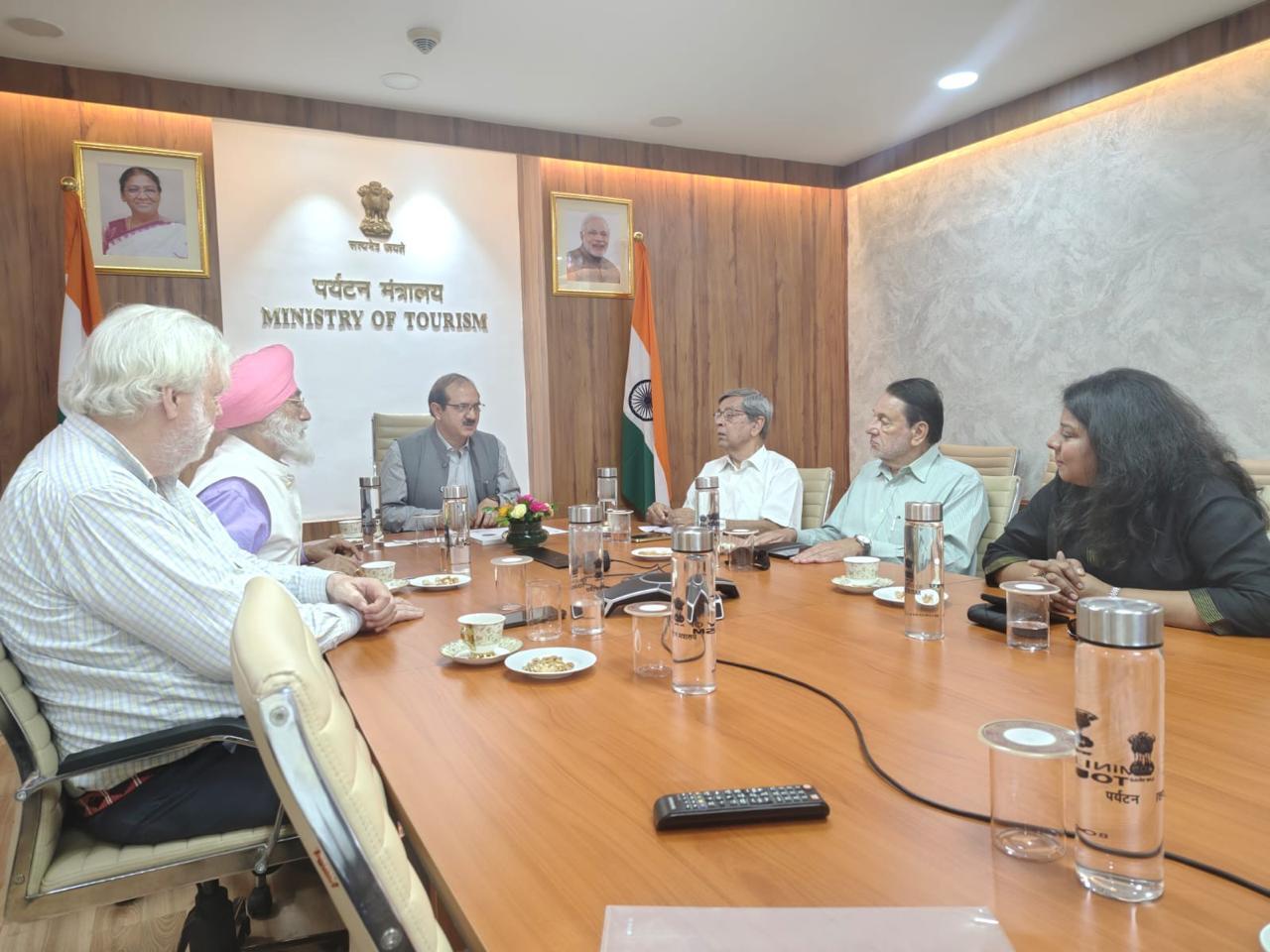
During the meeting, RTSOI has also called for the revival of the National Sustainable Tourism Board. “The Ministry had launched the National Sustainable Tourism Board about three or four years ago, but in the last two years or so it’s been dormant. There’s been no meeting. We requested that it be revived and that we have regular, continuing meetings so that we can bring up all issues and suggestions and really take some action on the ground.”
The proposed Responsible Traveller campaign could also eventually have a technology component. “RTSOI is discussing the possibility of an app or feature within the Incredible India platform that could allow travellers to report instances of irresponsible behaviour through photographs and GPS-enabled reporting,” he said.
The proposed mechanism would cover issues ranging from littering and inappropriate behaviour in destinations to violations in national parks and other sensitive areas. The intent, Soin said, is not merely to record violations but to create a deterrent by making travellers aware that such incidents can be reported in real time.
Building a bank of 100 best practices
Another key outcome of the discussions with the Ministry was also a proposed booklet documenting 100 responsible tourism best practices from across India. Rather than producing a generic sustainability manual, RTSOI plans to showcase specific initiatives that can be replicated by other tourism businesses, hotels and destinations, Soin told T3.
Supposedly, RTSOI President Rakesh Mathur is expected to set up a committee to compile these effectively and within 1-2 months’ time.
The examples in the booklet could range from hotel-level water conservation programmes to conservation initiatives undertaken by wildlife lodges or related sustainability initiatives by tour operators. Soin cited examples of lodges supporting forest guards with equipment such as torches, helmets and bicycles, arguing that such practical interventions can provide useful models for others.
The selection process will involve a committee drawing on the experience of RTSOI members and experts who have been involved in tourism and responsible tourism awards and initiatives. “Existing RTSOI members are likely to receive preference, although the organisation also plans to include organisations outside its membership that are demonstrating effective practices,” said Soin.
Carrying-capacity assessments a must for destination planning
Destination management is another major component of the proposed partnership. RTSOI is in discussions around working with a state government to develop a model destination where issues such as carrying capacity and tourism pressures can be studied more systematically.
Odisha is currently being considered, with Satapada-Chilika mentioned as a possible location for such a study. RTSOI proposes putting together a multidisciplinary team of experts, with funding potentially coming from the Ministry or the state government.
For Soin, the urgency is clear. “We’ve already got so many Himalayan destinations that are getting a bit overcrowded. Ladakh is already showing signs of the pressures associated with rapid tourism growth, including concerns around waste, landfills and water stress for local communities,” Soin shared his disappointment. He added that carrying-capacity assessments need to become part of destination planning before tourism growth begins to undermine the very destinations attracting visitors.
He claims that destination planning needs to go beyond simply determining how many tourists a destination can accommodate, and instead look at issues such as seasonality, local resources and the scientific basis for tourism development.
Associations contributing 1% of their revenue towards responsible tourism
The more fundamental challenge, Soin acknowledged, is that responsible tourism has been discussed for years without producing sufficiently consistent implementation across the industry. He described this as a source of frustration for RTSOI, arguing that individual examples of good practice will have limited impact if they remain confined to individual companies or properties.
“You can’t do it in pockets. You can’t have just one large hotel or one ITC doing something good in their hotel. You’ve got to have everybody being taken along.”
RTSOI has therefore proposed a stronger financial commitment from the industry, including the idea of tourism associations contributing 1% of their revenue directly to RTSOI. Being the national body, this will majorly help the organisation to take the responsible tourism agenda and the related initiatives forward, shared Soin, adding that industry commitment needs to move beyond statements of intent.
For RTSOI, this would also provide a more sustainable funding model for the organisation itself, allowing it to undertake destination work, provide industry guidance and support responsible tourism initiatives at a national level.
The organisation also wants to strengthen its role as a bridge between government and industry, providing technical and policy inputs, highlighting good practices and acting as a watchdog on responsible tourism issues, said Soin.
States & Sustainability to hold hands tightly
Another proposal emerging from our discussion was for state tourism plans to include a specific responsible tourism component. Soin said RTSOI is seeking a framework under which state tourism plans would have at least 30% of their operational fabric linked to sustainable tourism or responsible travel initiatives.
The organisation believes this could allow it to work more closely with state governments by bringing in its existing experience of preparing tourism plans, including work undertaken in Odisha, Himachal Pradesh and Meghalaya.
Soin also raised concerns about the way tourism development tenders are sometimes structured, arguing that sustainability considerations need to be built into projects before they are tendered rather than addressed after development has begun.
RTSOI has been raising this concern repeatedly, but Soin again cited the proposed development of water villas in Lakshadweep as an example. “In Lakshadweep, we decided that we wanted to give the Maldives competition, so we said we must do water villas. Firstly, water villas are not a great idea for a lagoon-like situation in Lakshadweep. If they ask for water villas, it’s going to have pylons, and the pylons are going to go and ruin the corals. Our ecosystem is much smaller. We can’t afford to sacrifice our areas that have been decided for tourism purposes.” RTSOI, he added, has already raised the issue with the Administrator.
The broader point is that responsible tourism cannot be an afterthought once a tourism project has already been designed, tendered and awarded.