

Over 50% of hotels use AI, but less than 10% see real impact: RateGain
 SoD-26-Launch
As per the findings, technology budgets are rising for most hotels, and their leading priorities are improving existing systems, increasing productivity, and reducing integration and vendor complexity rather than adding new platforms.
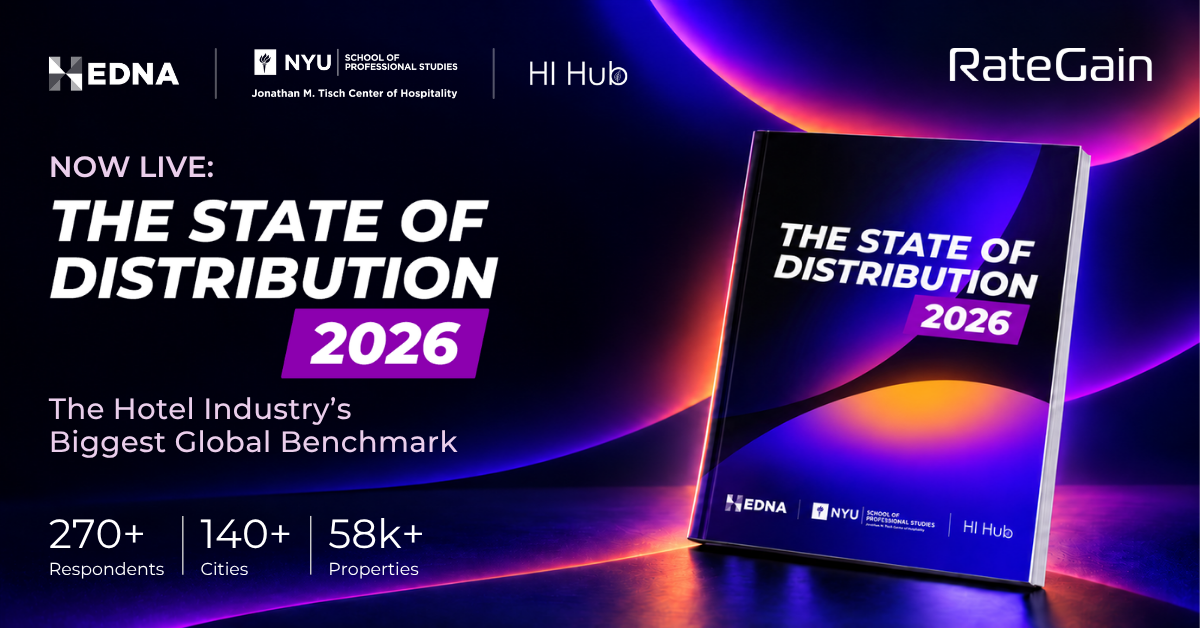
RateGain Travel Technologies Limited, together with the NYU School of Professional Studies (NYU SPS) Jonathan M. Tisch Center of Hospitality and its Hospitality Innovation Hub (HI Hub) Exchange, and HEDNA, announced the release of the third edition of the industry benchmark report, The State of Distribution 2026.
According to the study, based on insights from over 270 hotel brands and 58,000+ properties across 141 cities and 53 countries, over 50% now use or are procuring generative AI, a sign of how quickly technology has become part of everyday work. However, fewer than 10% (one in ten) of operators report reducing manual workloads by more than 30%. Most hotels are seeing small gains rather than a change in how their teams operate.
This gap between adoption and impact reflects more than a need for better tools. Trust, data privacy, and governance gaps are creating a ceiling on AI autonomy since hotels are increasingly willing to use AI for assistance but remain cautious about allowing it to make decisions or act independently. As a result, hotels are investing more in improving the systems they already have rather than simply adding new platforms. The market is evolving from systems of record that capture transactions and data to systems of work that help commercial teams interpret signals, coordinate decisions, and act with greater confidence.
Key findings from The State of Distribution 2026 include that marketing, sales, distribution, and revenue management teams of hotels are collaborating more closely and reviewing performance together more frequently. However, disconnected systems, disparate data, and vendor fragmentation continue to hold them back; More than 80% of commercial teams still spend one to two days a week producing and analysing reports manually, and fewer than 30% have invested in dedicated reporting tools; More than half of hotels use or are procuring generative AI, yet fewer than one in ten report reductions in manual work above 30%. Hotels increasingly trust AI for assistance, but not autonomy.
As per the findings, technology budgets are rising for most hotels, and their leading priorities are improving existing systems, increasing productivity, and reducing integration and vendor complexity rather than adding new platforms.
Core direct-booking infrastructure is nearly universal, yet OTAs generate close to twice the bookings of hotel-owned digital channels. AI-originated search now contributes a measurable share of reservations, while 55% of hotels report no or only a minor change to their distribution strategy.
The report also identifies mid-sized hotel chains as a potential commercial “sweet spot.” These organisations appear large enough to invest in systems and specialist capabilities, but agile enough to avoid some of the silos and integration complexity affecting larger chains. Mid-sized chains report stronger cross-functional alignment, greater reporting automation, more mature AI governance, and the highest incidence of meaningful AI-led reductions in manual work.
“Buying AI is easy. Getting value from it is not, and this report shows most of the industry is still stuck between the two. The advantage will not go to the hotels with the most tools. It will go to the ones that turn their technology into better decisions and give their teams their time back. That shift has not happened yet, and it is the single biggest opportunity in front of the industry,” said Bhanu Chopra, Founder and Managing Director, RateGain.
Vanja Bogicevic, Clinical Associate Professor and Director of HI Hub Exchange, NYU School of Professional Studies, Jonathan M. Tisch Center of Hospitality, added, “This third edition reflects how quickly hotel commercial operations are evolving. AI is reshaping how travellers discover hotels, how commercial teams work, and how pricing and demand decisions are made. This year, we expanded the research to examine these emerging realities, including zero-click search, AI governance, behavioural pricing, data privacy, and regulatory oversight. Together, these new benchmarks show where hotel commercial strategy is heading and where operating models have yet to catch up.”
“Unbiased data beats hype. HEDNA exists to give our industry a shared, honest picture of where distribution stands and why it matters. Three years of this research show that commercial teams are becoming more connected and technology investment is growing, yet fragmented systems and manual work remain deeply embedded. This report is not just data; it is our mission in action and a benchmark for where the industry must go next,” said Lisa Murphy, HEDNA President.
The 2026 survey examines hotel commercial operations for the period from December 1, 2024, to November 30, 2025. Respondents represented four core commercial disciplines: revenue management, marketing, distribution, and sales. The analysis also compares independent hotels, mid-sized hotel chains, and large hotel chains to understand how technology adoption, operating models, and commercial challenges vary by organisational scale.