
North-East records 1.51 crore domestic tourist visits with 58% growth since 2019: MoT
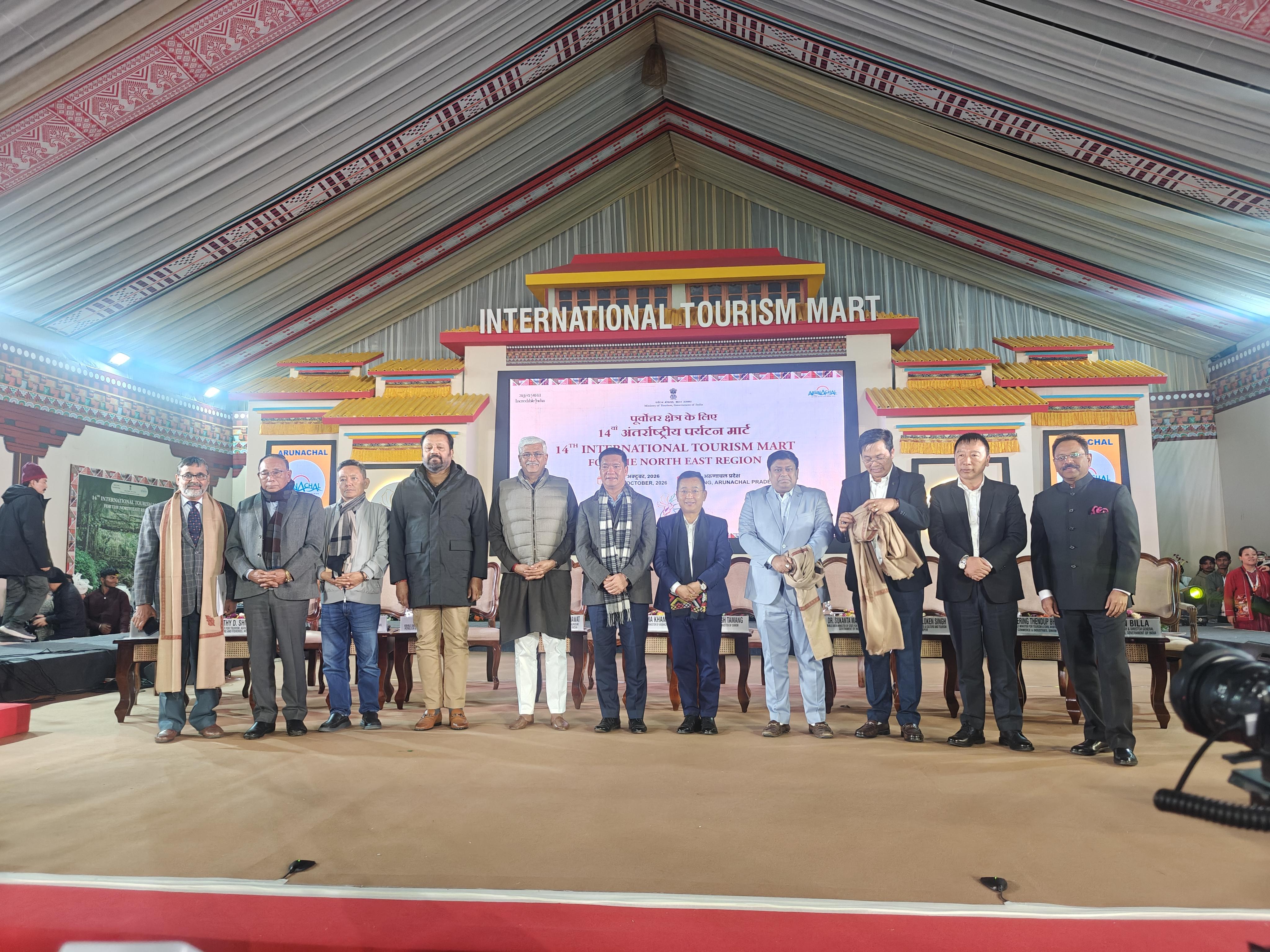 Snapshot from Inauguration ceremony of ITM 2026 in Tawang on October 29
With 43 international buyers from 22 countries, 42 domestic buyers and over 80 sellers participating in the 14th International Tourism Mart in Tawang, Arunachal Pradesh, the Centre is looking to convert the region’s growing domestic tourism demand into international business opportunities.
The North-Eastern states recorded a 58% increase in domestic tourist visits between 2019 and 2025, with numbers rising from 95.65 lakh to 1.51 crore, Union Tourism and Culture Minister Gajendra Singh Shekhawat said at a press conference ahead of the 14th International Tourism Mart (ITM) in Tawang.
“Before COVID-19, in 2019, the entire North-East recorded approximately 95 lakh domestic tourist visits. By 2025, this figure had increased to 1.51 crore. This growth indicates that tourism has regained momentum following the pandemic, when travel activity had virtually come to a standstill across the world. However, there is immense scope for growth, and we will all have to work together to realise this potential and contribute to the region’s prosperity.”
The region's biodiversity, Himalayan landscapes, cultural heritage and spiritual traditions, he said, offer scope to expand adventure, nature-based and experiential tourism. He also highlighted the potential of music festivals and concert tourism to attract new visitor segments and encourage longer stays.
The scale of the opportunity is further reflected in the Northeast’s tourism performance in 2024. The region recorded 12.8 million domestic tourist visits, registering a 5.54% increase over the previous year, but accounting for just 0.43% of India’s total domestic visits. Foreign tourist visits stood at approximately 240,000, up 10.43%, yet represented only 1.17% of the national total. For Suman Billa, IAS, Additional Secretary & DG, Ministry of Tourism, GoI, these figures underline the scale of the opportunity rather than the limitations of the market. The region has been recording growth, but from a relatively small base, leaving considerable headroom for expansion.
“The Northeast is truly starting now, and there is a very long runway for growth,” he said.
Further recognising connectivity and hospitality infrastructure as key requirements for tourism growth, Shekhawat also outlined the Centre's investments in tourism infrastructure across the North-East. According to the Ministry of Tourism, 16 projects worth INR 1,309 crore have been sanctioned under Swadesh Darshan 1.0, 17 projects worth INR 564 crore under Swadesh Darshan 2.0, and nine projects worth INR 139 crore under the Challenge-Based Destination Development initiative. Additionally, nine projects worth INR 790 crore have been sanctioned under SASCI and nine projects worth INR 258 crore under PRASHAD. Ten tourism routes in the region have also received support under the Regional Connectivity Scheme–UDAN.
Speaking on ITM’s significance for the region’s visibility, Shekhawat said ITM had evolved beyond a conventional tourism promotion event into an important platform for connecting destinations with global markets and creating business opportunities. The objective, he said, was to work with the North-Eastern states to identify emerging destinations, develop new tourism products and connect local businesses with international partners.
Northeast should no longer be viewed as a distant corner of India
Arunachal Pradesh Chief Minister Pema Khandu called for a coordinated approach to developing the Northeast as an integrated tourism destination, emphasising the need to connect the region's diverse landscapes, cultures and experiences through tourism circuits.
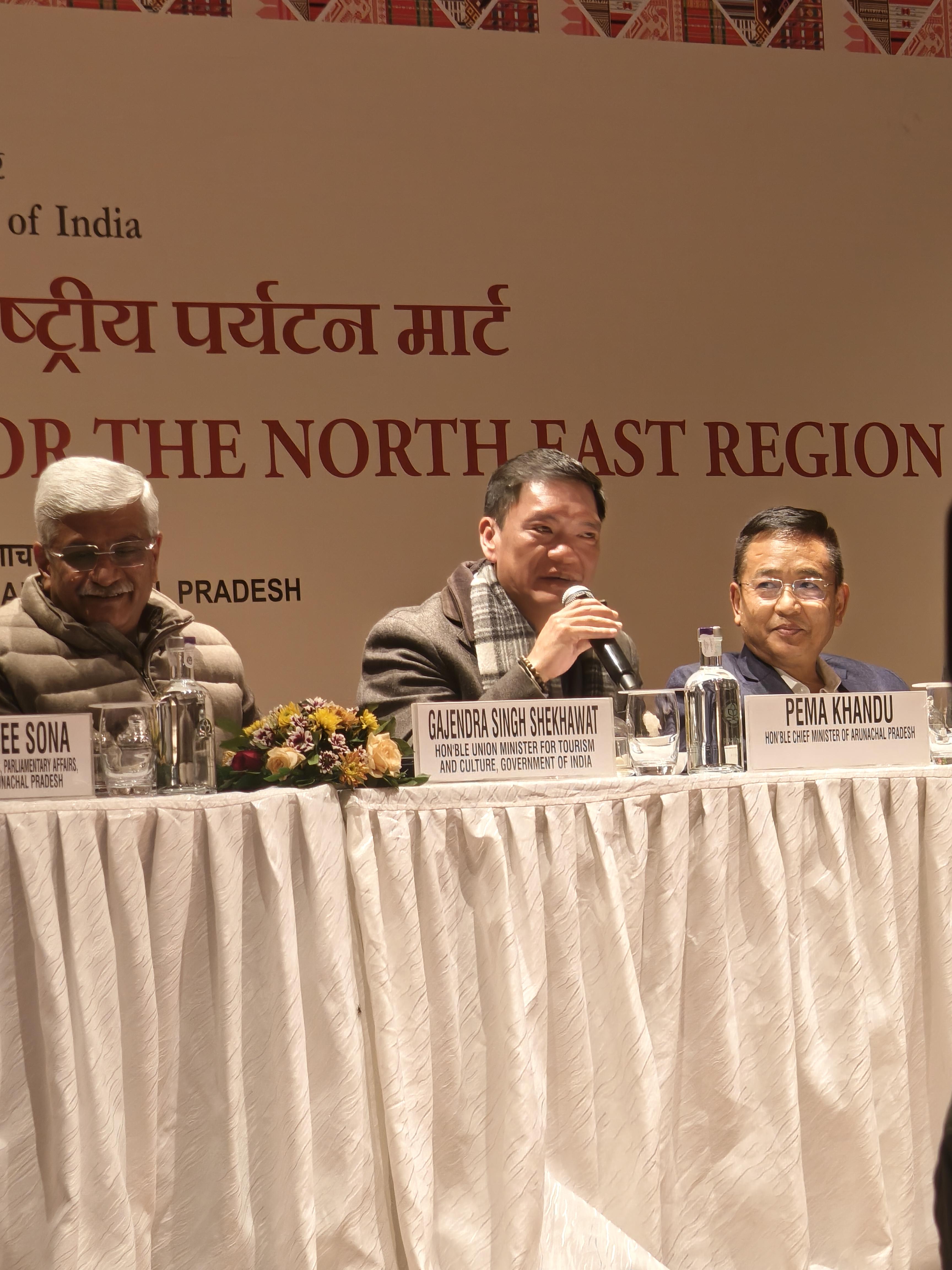
Addressing the 14th ITM, Khandu said the eight northeastern states collectively offer significant potential across nature, adventure, spirituality and cultural tourism. He stressed that the Northeast should no longer be viewed as a distant corner of India but positioned as one of the country's most compelling tourism regions.
"We should work towards developing an integrated tourism circuit that connects our landscapes, culture, festivals, museums and experiences," he said.
Highlighting Arunachal Pradesh's tourism offerings, Khandu pointed to its Himalayan landscapes, alpine lakes, forests, waterfalls, rich biodiversity and indigenous cultures as key differentiators. He said the challenge was to translate this natural and cultural wealth into sustainable economic opportunities while protecting the region's heritage and environment.
He also underlined ITM's role in bringing together governments, tourism professionals, investors and international buyers to strengthen business partnerships, attract investments and create employment and entrepreneurship opportunities.
The return of ITM to Tawang after 14 years, he said, was an opportunity to showcase the state's tourism potential to a wider global audience and build a stronger tourism ecosystem rooted in local culture, sustainability and inclusive growth.
Khandu also highlighted the role of the Vibrant Villages Programme in extending tourism opportunities to remote border settlements. He said the programme was helping bring previously lesser-known villages into the tourism landscape, creating opportunities for rural tourism and local communities.
Speaking on the sidelines, Dr Sukanta Majumdar, Minister of State for Education and Development of Northeastern Region, said that tourism is at the core of the ministry’s regional development strategy.
“It is an engine for socio-economic empowerment, creating sustainable livelihoods, preserving the local heritage, and opening new avenues of growth for our youth. The Ministry of DoNER remains steadfastly committed to augmenting the infrastructure, enhancing the connectivity with various schemes, and creating world-class tourist circuits across the eight sister states.” He further urged the stakeholders to look at the Northeast not just as a destination, but as an experience of a lifetime and called for stronger collaboration to build sustainable, community-driven, and responsible tourism models.
Sikkim Chief Minister Prem Singh Tamang also urged for greater participation from the younger generation and tourism stakeholders across the eight North-Eastern states. He described tourism as an avenue for entrepreneurship, employment and wider economic development, urging the states to work collectively to position the North-East as a unified tourism destination.
Suresh Gopi, Union Minister of State for Tourism, Government of India, spoke about the region’s opportunities in film tourism and other segments. “By championing film tourism, we can bring the breathtaking vistas and rich folklore of the Northeast onto global screens, turning cinematic wonder into real-world footfall, extending travellers' stays, and putting our unique stories on the world map.”
Beyond leisure travel, ministry’s vision is to make the Northeast a true year-round destination by uniting culture with business. “On one hand, festivals are the vibrant heartbeat of our region, bringing alive our traditions through world-renowned celebrations. On the other hand, through the 'Meet in India' initiative, we are actively promoting the Northeast as a premier destination for MICE—Meetings, Incentives, Conferences, and Exhibitions. By combining modern convention hubs with our rich calendar of festivals, adventure trails, and local cuisine, corporate and international delegates won't just come for business; they will stay to experience our culture and imbibe it.”
He stressed that this dual push will ensure steady, high-value footfall throughout the year, creating skilled jobs and empowering local entrepreneurs and artisans across every single state.
He also emphasised the significance of the Ministry’s ongoing initiatives, Dekho Apna Desh 2.0 and the National Digital Tourism Stack, in promoting lesser-known destinations and improving digital visibility and market access for local tourism service providers.
ITM 2026 strengthen the region’s access to domestic, international tourism markets
The latest edition of ITM brought together 43 international buyers representing 22 countries, 42 domestic buyers from 16 States and Union Territories, and 81 sellers, marking the highest-ever international buyer participation. The three-day Mart, being held from October 29–31, aims to strengthen the region’s access to domestic and international tourism markets through business partnerships and destination promotion.
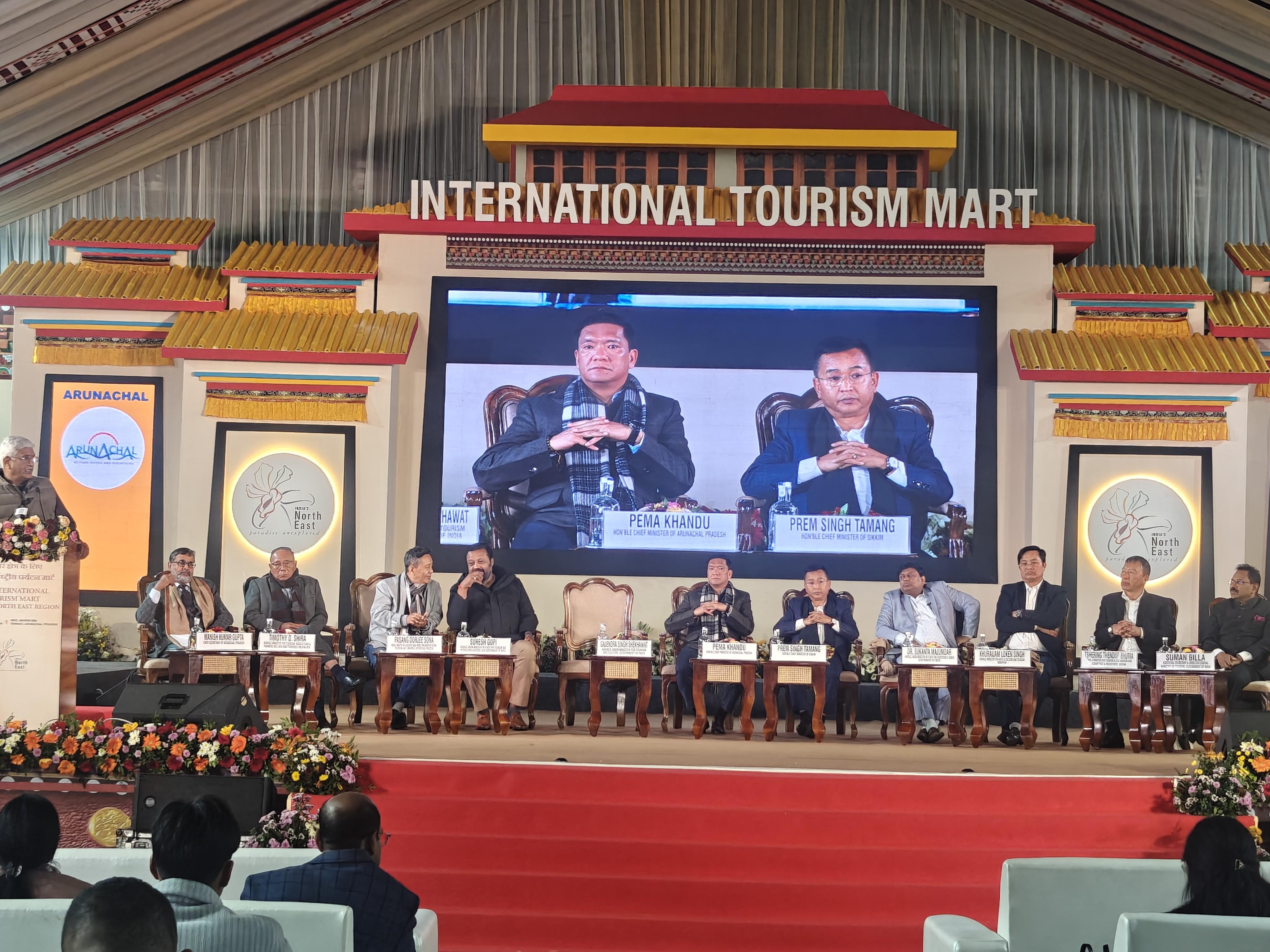
The event kicked off on October 29 with an inaugural session attended by Union Tourism & Culture Minister Gajendra Singh Shekhawat; Pema Khandu, Chief Minister of Arunachal Pradesh; Prem Singh Tamang, Chief Minister of Sikkim; Dr Sukanta Majumdar, Union Minister of State for Education and DoNER; Suresh Gopi, Union Minister of State for Tourism Government of India; Timothy D. Shira Minister of Agriculture and Farmers' Welfare, Fisheries & Tourism, Meghalaya; Pasang Dorjee Sona, Minister of Tourism, Arunachal Pradesh; Tourism Minister of Manipur, Khuraijam Loken Singh; Tshering Thendup Bhutia, Tourism Minister of Sikkim & Suman Billa, AS & DG, Ministry of Tourism, Govt of India.
The business interactions at ITM, including B2B meetings, are expected to facilitate new tourism partnerships among tour operators, hotels, travel managers and other industry stakeholders. Besides meetings, familiarisation opportunities for trade and media are also part of the effort to improve the visibility of Arunachal’s lesser-known and traditional attractions.