

India’s tourism bottleneck is supply, not visas, says Tourism Minister Shekhawat
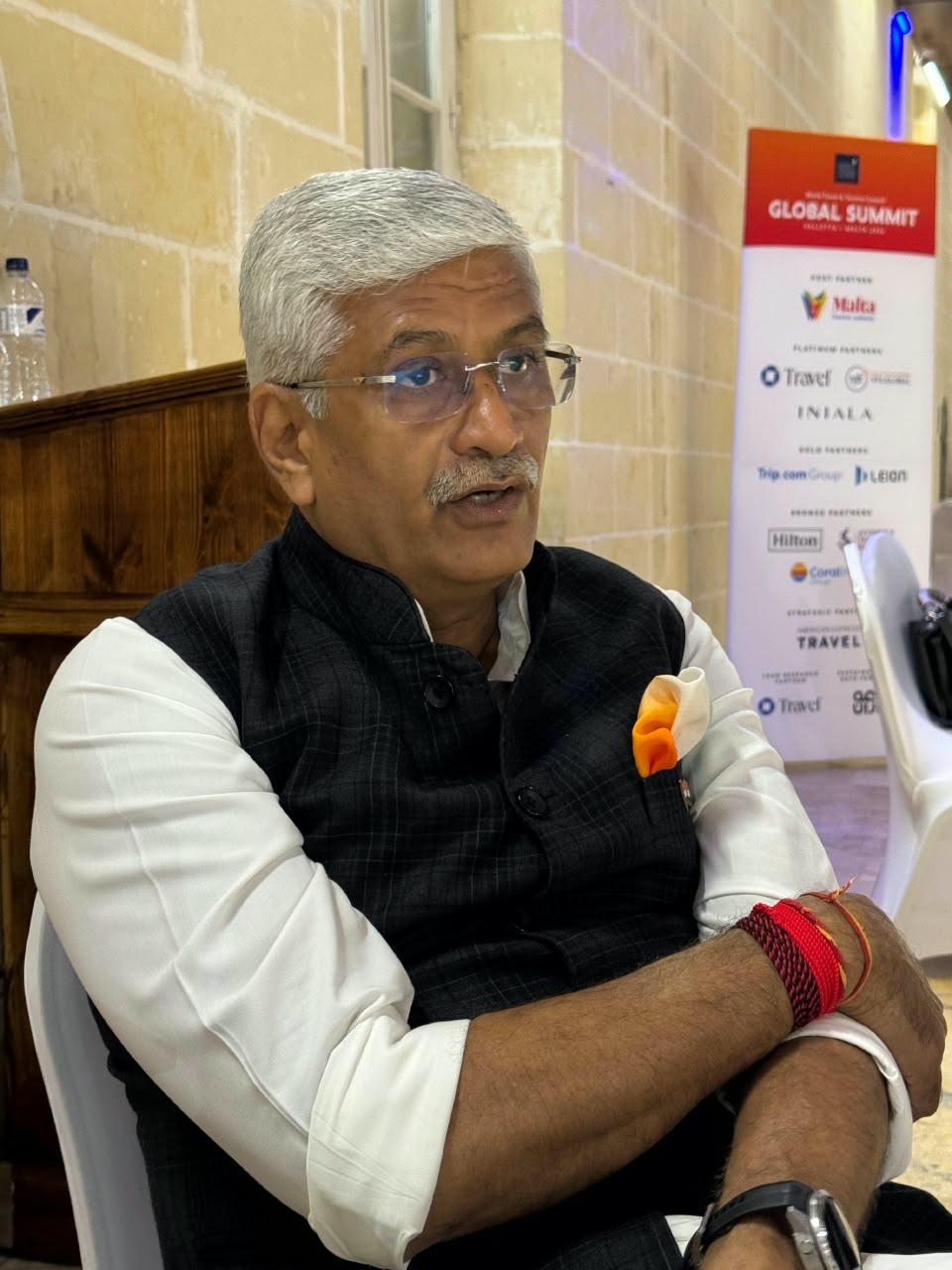 Gajendra Singh Shekhawat-4
According to figures cited by Shekhawat, domestic tourism is growing at 11%, compared with 3.2% growth in international arrivals, a disparity that raises questions about India’s ability to convert its growing visibility and expanding travel market into a larger share of global tourism.
India’s ambition to emerge as a leading global tourism destination may be faced by a fundamental challenge: the country’s ability to expand supply in line with growing demand. Union Tourism & Culture Minister, Gajendra Singh Shekhawat, identified the demand-supply mismatch as a key bottleneck to tourism growth, arguing that visa access for India is not the principal constraint holding back inbound travel.
“The supplies are comparatively short,” Shekhawat said in an exclusive interaction with the Indian media during the WTTC Global Summit. “Because of the gap in demand and supply, the cost of travel has increased for the budget-class travellers, and that is what works as a bottleneck for the growth of international travel.”
While domestic demand is expanding rapidly, the country must ensure accommodation and supporting infrastructure keep pace if it is to translate its tourism potential into stronger international arrivals. According to figures cited by Shekhawat, domestic tourism is growing at 11%, compared with 3.2% growth in international arrivals, a disparity that raises questions about India’s ability to convert its growing visibility and expanding travel market into a larger share of global tourism.
Underlining the scale of domestic travel, Shekhawat said more than 4.7 billion journeys and hotel stays had taken place in India over the past year. He attributed the expansion in domestic tourism to economic growth, infrastructure development and government initiatives that have helped unlock the country’s tourism potential. However, he acknowledged that supply has not kept pace with demand and that efforts to expand hospitality infrastructure would take time to yield results.
“The way infrastructure, hospitality infrastructure runs, this demand, this imbalance is being cured,” he said, expressing confidence that the gap would begin to ease over the next three years.
Visa access not a primary deterrent
The Minister also pushed back against the claim that visas were a major impediment to inbound tourism, pointing to India’s e-visa system.
“80% plus visas which we grant are being offered through e-visas,” he said, adding that 88 international gateways accept e-visas. He further stated that 98% of the e-visas granted were processed within 72 hours.

Shekhawat said the government was nevertheless working to further simplify the visa application form by removing repetitive information. However, he maintained that visa access was not the primary obstacle to travel to India, placing greater emphasis on the availability and cost of tourism infrastructure.
The figures cited by the minister underline the reach of India’s e-visa system, although they do not, by themselves, establish that visa procedures are no longer a constraint across all source markets. For inbound operators, ease of application remains one part of a broader set of considerations that also includes flight connectivity, pricing, destination access and the quality of the visitor experience.
Alongside infrastructure, Shekhawat identified the development of digital tourism stack as another priority for improving the travel experience. The proposed system is intended to provide travellers with authentic information about destinations, helping them discover places, plan visits and navigate their journeys in a digi-friendly environment increasingly crowded with information and misinformation.
The initiative is intended to serve both domestic and international travellers by making reliable destination information more accessible. Its effectiveness, however, will depend on the quality, coverage and regular updating of the information available, as well as its practical integration into the traveller’s journey.
Overseas offices lost the value
When asked about the renewed Incredible India campaign and promotions post shutting down of overseas offices, Shekhawat said the government was changing its approach to international tourism promotion, with greater reliance on digital platforms and India’s diplomatic network rather than independently operated overseas tourism offices that were shut long ago.
“Earlier, it used to be done through the offices we had around the world, especially in key markets like Europe and America. But in today’s digital world, I think physical offices are not much required. They have lost their value,” he said.
The Ministry is now using the network of Indian embassies and high commissions to promote the country as a tourism destination, alongside participation in major international travel trade fairs in the key source markets, he said.
Sustained investment in skills needed; event-led tourism on rise
Shekhawat said tourism currently contributes slightly less than 6% to India’s economy, with the government aiming to raise the share to 10% by 2047. The sector already generates close to nine crore jobs in India, he said, adding that its employment potential would expand as demand for travel and hospitality services increased.
“The day we reach the pace we have envisaged for 2047, the tourism sector will be the second-largest employer after agriculture,” he said.
Meeting that demand would require sustained investment in training and skills development. Shekhawat said the government was upgrading its network of 22 institutes to prepare workers for opportunities in hospitality and tourism, both in India and overseas.
He pointed to the presence of Indian trained professionals in international hotels and cruise lines as evidence of the country’s contribution to the global tourism workforce. Shekhawat also pointed to the potential of MICE in driving tourism growth.
He identified Hyderabad’s convention model as an example for other cities, adding that Mumbai, Delhi and Kolkata were also working to attract more events.
Citing the Coldplay concerts in Mumbai and Ahmedabad, he said the concerts held there had generated an estimated US$300 million in economic impact. Several states, including Meghalaya, Assam, and Madhya Pradesh, are also increasingly pursuing entertainment-led tourism, he added.
50 identified destinations to address overcrowding
With overtourism and climate change emerging as concerns for destinations worldwide, Shekhawat said India’s approach would increasingly focus on high-value tourism, niche segments and experience-led travel, alongside sustainability.
He said sustainability had been incorporated into the criteria used to assess projects submitted by state governments for support under the Ministry’s schemes. The government’s plan to develop 50 iconic destinations to global standards would also help address pressure on established tourist hotspots, he said. The destinations would include both greenfield projects and brownfield interventions aimed at improving existing attractions and easing congestion.