

Govt. of India eases visa rules by cutting categories & paperwork; industry welcomes the move
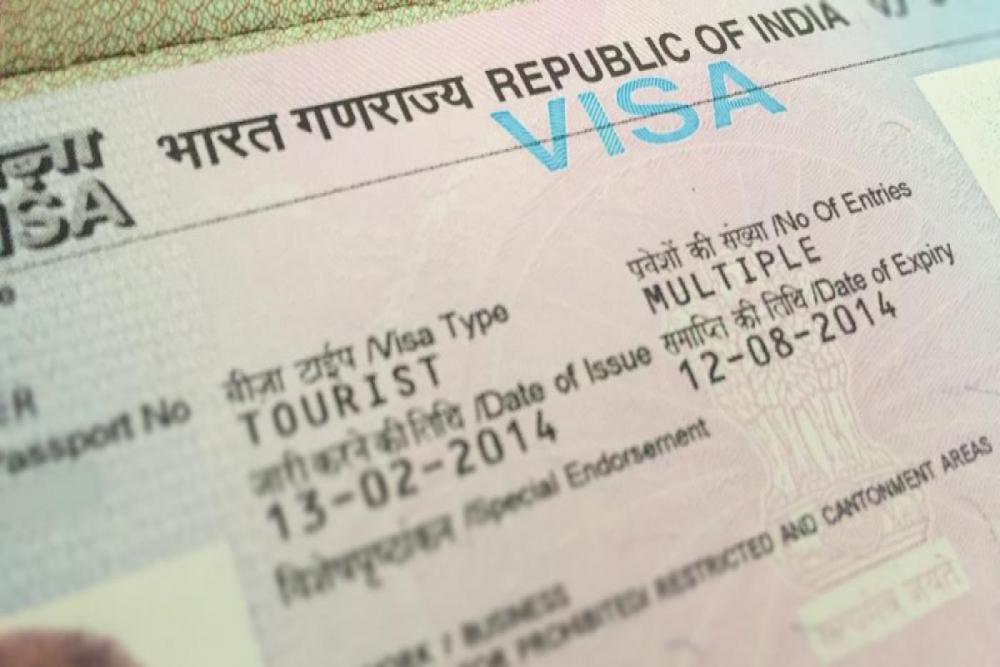 Representative image_ Visa
Rationalisation intends to boost legitimate travel, foreign tourist arrivals, education, healthcare and economic engagement with India through clearer, purpose-based visa options. New changes reduce overlap between visa categories and make framework easier to navigate for visitors.
The Government of India has simplified its visa regime, making it more responsive to the requirements of foreign nationals visiting India. On August 27, 2026, the Ministry of Home Affairs reduced the number of main visa categories from 13 to 9 and the number of sub-categories from 49 to 23.
This follows the earlier rationalisation undertaken in October 2025, when the main visa categories were reduced from 22 to 13 and sub-categories from 63 to 49. To simplify the Indian Visa regime, the Government of India studied the visa systems of developed countries and global standards.
The Ministry of Home Affairs has undertaken this exercise to simplify and rationalise visa application forms across 23 categories/sub-categories of Visas. The required filed/column for all 23 categories/sub-categories of Visas have been reduced 65%-70%. The initiative aims to significantly reduce the information required from foreign national, simplify visa form while retaining essential details necessary for visa processing. This will reduce time and effort required to complete application by the applicant as well as it will enhance administrative efficiency by facilitating more focused scrutiny and processing of visa application.
To implement all changes made in the Indian Visa Regime, the MHA is updating the IT systems and by year-end, visas will be granted as per the new rationalisation.
Consolidating similar travel purposes aims to provide greater clarity and ease in identifying the appropriate visa category while facilitating legitimate foreign arrivals.
Currently, e-visa is processed by electronic travel authorisation under 13 subcategories. The facility of e-visa is presently available to the nationals of 172 countries.
According to the government, the erstwhile Tourist Visa has been renamed Visitor Visa, reflecting a broader range of permitted purposes beyond conventional tourism. The category has been organised into two sub-categories, V-1 and V-2, so that applicants may select a visa suited to the nature and duration of their proposed visit.
V-1 Visa: In addition to other eligible visitor activities, it covers short-term activities such as business meetings, medical consultations, wellness retreats, short-duration medical treatment and short-term courses in Indian languages, music, art and craft. It is granted for 30 days with multiple entries.
V-2 Visa: Intended for longer-duration visits, with validity of 1, 5 or 10 years, as specified. It covers the activities permissible under V-1 and mountaineering. For mountaineering, a visa of six months, with multiple entries, will be granted.
By bringing a wider range of short visits under a clearly identified category, the new arrangement makes visa selection simpler for travellers who may combine leisure with business meetings, medical consultations, wellness retreats or cultural learning, including short-duration yoga programme. The longer-duration V-2 option provides continuity and convenience for eligible repeat visitors, while the specific mountaineering provision addresses the distinct needs of such travel.
Medical Visa
As per the government notification, the Medical Visa framework retains separate provisions for treatment under conventional and AYUSH systems. M-1 Visa covers medical treatment other than treatment under AYUSH systems, while M-3 Visa covers treatment under AYUSH systems. M-1 and M-3 Visas, including their e-Visa variants, will be granted for one year as a default option with multiple entries. Corresponding medical attendant visa provisions are also available accordingly M-2 and M-4 Visas will be granted for attendant of M-1 and M-3 visa holders respectively.
The government believes that the Multiple-entry validity can reduce the need for repeated visa applications during a course of care, while the distinct AYUSH provision helps applicants identify the appropriate treatment route. The availability of attendant visas also facilitates support by accompanying persons. This will encourage the Medical Value Tourism in India as per the Prime Minister’s Vision of Heal in India.
Student Visa
The Student Visa category has been consolidated into two broad sub-categories. S-1 Visa covers school, graduate and post-graduate education. S-2 Visa covers PhD and research scholars in Indian universities, visiting faculty, foreign research students visiting India for research, scientific and anthropological expeditions, internships and exchange students, among other specified academic activities.
For foreign students enrolled in Indian educational institutions through the Study in India portal, the e-S1 Visa may be granted for up to five years or for the duration of the academic course, whichever is less, with multiple entries. These provisions offer students a more readily identifiable visa pathway and greater certainty for academic planning. Longer validity linked to the course duration can also minimise procedural interruptions and make it easier for eligible students to travel during their studies.
Business Visa
The Business Visa category has been consolidated into B-1 and B-2. B-1 Visa covers long-term, licence-based business activities, including foreign nationals seeking to establish industrial or business ventures in India. B-2 Visa covers short-term, contract-based business activities, including Production Investment Business, conferences, sports, performative arts and films.
A specific provision has also been made for foreign subject-matter specialists, engineers and technical personnel engaged by Indian companies in activities such as installation and commissioning, quality checks and essential maintenance, production, IT and ERP ramp-up, training, supply-chain development, plant design and bring-up, senior management and technical support, including transfer of know-how, technology and services. Such personnel may be granted a Production Investment Business Visa under the B-2 category through the e-Visa platform. This was earlier granted under e-B4 visa nomenclature.
Taken together, the changes reduce overlap between visa categories and make the framework easier to navigate for visitors, patients, students, researchers, investors and business professionals. The rationalisation is intended to support legitimate travel, education, healthcare and economic engagement with India through clearer, purpose-based visa options, subject to applicable eligibility criteria and conditions.
IATO calls the move significant, looks forward to more international visitations
The Indian Association of Tour Operators (IATO) has welcomed the announcement, describing it as a significant and much-needed step towards making India a more accessible and visitor-friendly destination for international tourists.
IATO has expressed its sincere appreciation to the Ministry of Home Affairs and the Ministry of Tourism for this positive initiative, and considering IATO suggestions/feedback, which addresses one of the long-standing concerns of the inbound tourism industry.
Commenting on the announcement, Ravi Gosain, President, IATO, said, “We sincerely thank both the Ministry of Home Affairs and the Ministry of Tourism for their efforts in bringing about this much-needed simplification of India's visa procedures. IATO has been consistently raising this issue at various government forums and meetings, as cumbersome visa procedures have often been a concern for international travellers and overseas tour operators. We have been pursuing this matter through regular interactions and follow-ups with both Ministries, and it is encouraging to see these efforts translating into a positive outcome.”
IATO believes that these changes will help reduce procedural complexities, improve the overall visa application experience and encourage more international visitors to consider India for holidays, cultural experiences, business and other eligible purposes.
Gosain further stated, “Ease of obtaining a visa is an important factor in destination selection. In today's competitive international tourism market, every step that makes travel easier can make a meaningful difference. We hope that the revised framework will be implemented smoothly and within the announced timeline so that its benefits reach international travellers at the earliest.”