
Exhibition industry needs more skilled workforce, capable service partners to scale up: Dhawan
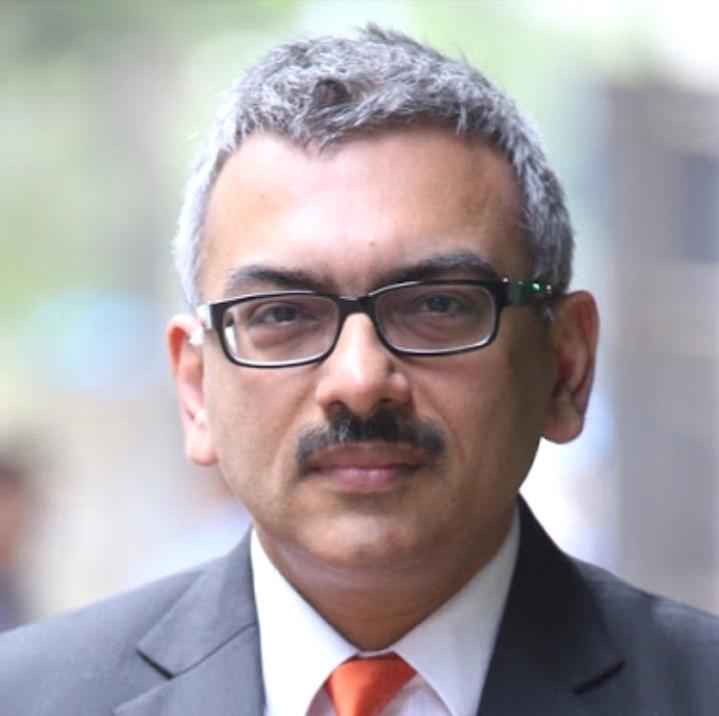 Sooraj Dhawan
With a 40% post-pandemic growth, India is emerging as the fastest-growing exhibition market globally. India is a key MICE destination with over 70 world-class convention centres. The exhibition industry in India is a crucial economic driver, valued at approximately INR 55,000 crore, and is expected to grow at a 12% CAGR to reach approximately USD 4.4 billion by 2028.
Against this backdrop of rapid expansion, the 15th edition of IEIA Open Seminar 2026, is set to take place from May 8 to 9, 2026 at India Expo Centre & Mart, Greater Noida, India. T3 spoke to Sooraj Dhawan, President, IEIA & Founder Director, Falcon Exhibitions Pvt. Ltd, where he outlined the urgent need for skilled service partners and why embracing AI is no longer optional.
Discussing India’s current position as an exhibition destination globally, Dhawan highlighted that the country’s standing on the global exhibition map is undergoing a paradigm shift. The nation has some of the best venues with ample capacity and significant purchasing power. He added, “India is the largest demand market in the world.”
Amid global geopolitical tensions that have forced the cancellation or postponement of several international shows, India is emerging as a stable and ‘safe haven’ for overseas organisers and associations. Dhawan noted, “People who are looking towards organising shows in this financial year could consider India as well.”
IEIA is also actively inviting overseas associations and delegations and participating in international events to showcase India’s readiness. The association is leveraging its growing member base as brand ambassadors. Looking ahead, a core focus for 2026 will be working closely with the Ministry of Tourism and state tourism boards to develop exhibition ecosystems in tier 2 and 3 cities, shared Dhawan.
While India currently commands 1.4% of total global venue space, the strategy to not only sustain this growth but also capture a larger share of the MICE sector is not simply about building more convention centres, Dhawan emphasised. Advocating for maximising utilisation of existing infrastructure, he said, “For the exhibition industry to remain healthy, all our venues should get enough business.”
However, he supports developing worldclass MICE venues in India’s tourism capitals. “Cities like Goa, Varanasi, and those in South India deserve more MICE venues. A good exhibition centre in Kerala or Bhubaneswar can add great value,” he explained, adding that synergy between trade exhibitions and leisure tourism drives significant footfall.
Dhawan also pointed out that when comparing India to established exhibition markets like Dubai or Singapore, the immediate challenges do not lie in venue availability or event organisation.
“The real challenge lies in skill gaps within the services sector and overstretched service partners,” he emphasised. Dhawan added that while the exhibition footprint is expanding rapidly, backend service providers are struggling to keep pace. The industry requires a more skilled workforce and more service partners capable of scaling into global players, rather than relying on a limited pool travelling nationwide to deliver shows.
Speaking of how AI continues to dominate industry conversations, Dhawan said, “When young professionals become AI-native and integrate it into their daily lives, that is when transformation happens.” For modern exhibition professionals, the mandate should be to evaluate every core daily task against available AI tools to enhance efficiency and output quality.
This forward-looking approach is reflected in the reimagined agenda for IEIA Open Seminar 2026. Moving away from a standard industry showcase, the conference track has been redesigned for greater relevance and impact.
Dhawan shared insights into key sessions, including strategies, where veterans will offer practical approaches, will address the importance of a harmonious work culture to combat burnout among young professionals living away from home, show how premium F&B investments elevate exhibition experiences, the “Vacuum Principle,” focusing on identifying gaps in the industry to launch new trade shows; and tech playbooks for events and exhibitions, among others.
While Dhawan’s primary expectation for this year’s show is that it’s a “must-attend”, his parting message was a direct call to action: “Transformation is now. Change yourself to change your future.”