

Emirates records USD 1.1 bn profit for first 6 months of 2026-27 but revenue down by 12%
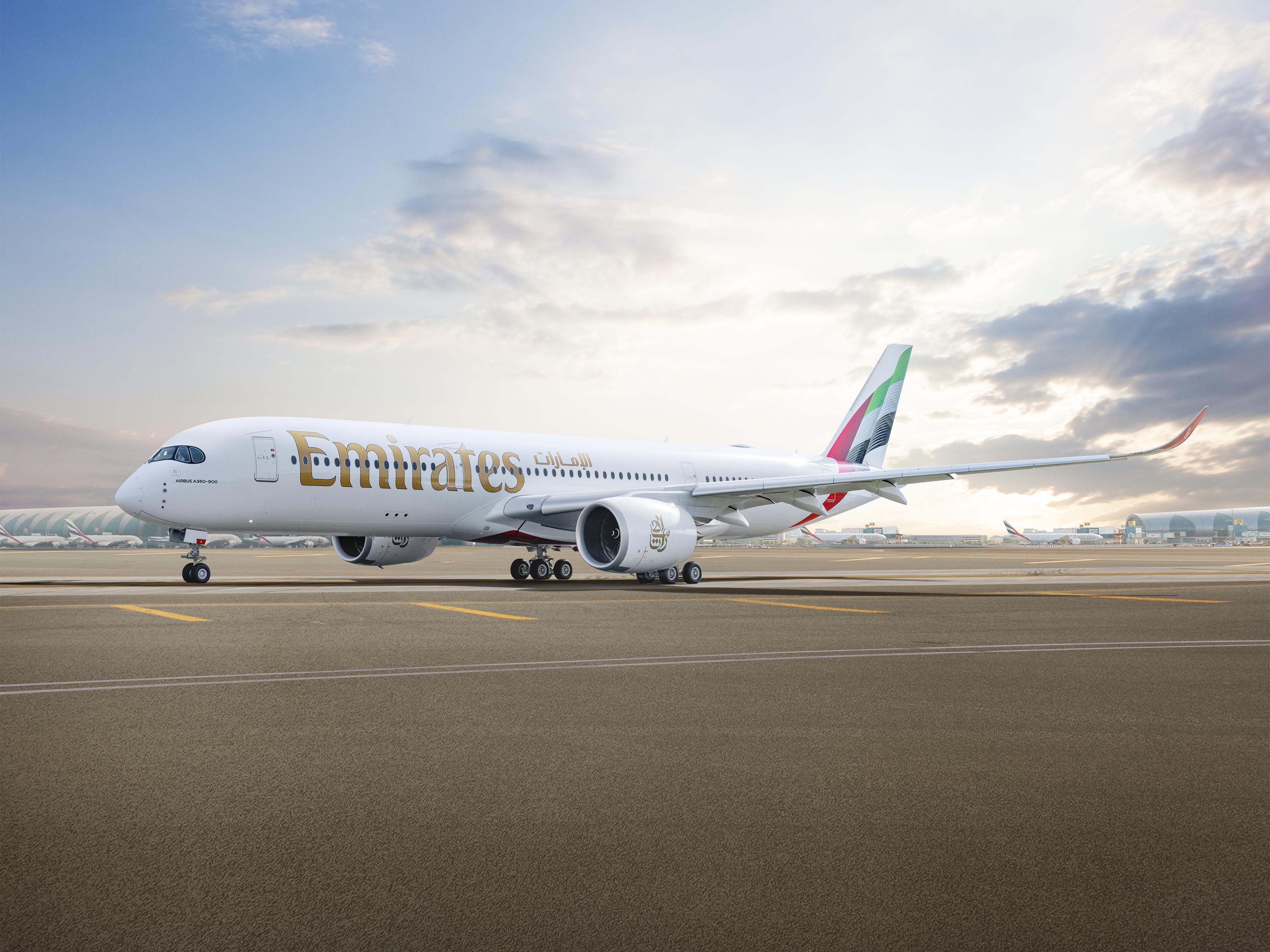 Emirates Representative Image-1
The first six months of 2026-27 brought significant challenges to the group’s operations as intermittent airspace restrictions and closures across the region tested the airline’s operational agility, while government travel advisories reshaped consumer choices and travel flows.
Emirates has published its half-year financial results for 2026-27, demonstrating operational resilience amidst regional conflict and surging jet fuel costs. The group posted a profit before tax (PBT) of AED 4.1 billion (USD 1.1 billion), while group revenue contracted 12% year-on-year to AED 66.2 billion (USD 18.0 billion).
Profit after tax stood at AED 3.6 billion (USD 1.0 billion), down 66% compared to the record-setting baseline of the previous year. EBITDA was recorded at AED 12.5 billion (USD 3.4 billion), a 41% decrease from AED 21.1 billion (USD 5.7 billion) in H1 2025-26.
The group recorded revenue of AED 66.2 billion (USD 18.0 billion) for the first six months of 2026-27, down 12% from AED 75.4 billion (USD 20.6 billion) last year.
Sheikh Ahmed bin Saeed Al Maktoum, Chairman and Chief Executive, Emirates Airline and Group said: “It has been a demanding six months, and once again our business model and our people stood up to the test. Against unprecedented regional challenges and high fuel prices, the Group has delivered a profit before tax of AED 4.1 billion (USD 1.1 billion). Customer demand held firm and our cargo operations made a strong contribution, keeping revenue and cash levels healthy even as global jet fuel prices doubled against the same period last year, impacting our costs and profitability.
Ahmed added, “We enter the second half of our 2026-27 financial year with measured optimism. While keeping a close watch on costs and geopolitical developments, we remain focused on delivering what Emirates and dnata are known for – safety, quality, and customer satisfaction. We’ve weathered challenges before, and with our strong cash position and solid foundation built up over the years, the Group is well-placed to navigate the headwinds of volatility and high fuel prices.”
Compared to March 31, 2026, the Emirates Group’s employee base dropped by 2% to an overall count of 128, 237 on September 30, 2026. However, both Emirates and dnata maintain ongoing recruitment drives to support business requirements.
The first six months of 2026-27 brought significant challenges to the group’s operations as intermittent airspace restrictions and closures across the region tested the airline’s operational agility, while government travel advisories reshaped consumer choices and travel flows.
During this period, the airline focused on restoring its network and connectivity options through its Dubai hub. On September 30, Emirates was operating 91% of its pre-disruption network, with its passenger spanning 150 airports in 78 countries and territories.
The airline also launched a series of initiatives to boost customer confidence, including an industry-first comprehensive travel cover that is unrestricted by government travel advisories, free date changes on booked tickets, and generous refund policies.
Between April 1 and September 30, the airline expanded its inventory of Premium Economy seats and brought its latest cabin products to customers in even more markets, as it received delivery of 9 new A350 aircraft and completed the full cabin refurbishment of 12 aircraft (9 A380s, 3 Boeing 777s). Emirates’ retrofit programme represents a planned investment of over USD 7.0 billion to bring Emirates’ latest cabin products across its fleet. The airline’s Starlink installation programme also continued at pace, equipping 36 more aircraft with high-speed Wi-Fi in the sky during the first six months of the year, and bringing Emirates’ total Starlink-installed fleet to 57 aircraft as of 30 September.
To support its future fleet requirements, in May, Emirates broke ground on its USD 5.1 billion engineering and Maintenance, Repair, and Overhaul (MRO) facility at Al Maktoum International Airport, with completion expected in the mid-2030s.
Overall capacity during the first six months of the year decreased by 10% to 28.2 billion Available Tonne Kilometres (ATKM) due to a reduced flying schedule. Capacity measured in Available Seat Kilometres (ASKM), decreased by 17%, whilst passenger traffic carried measured in Revenue Passenger Kilometres (RPKM) was down by 25% with an average Passenger Seat Factor of 72.0%, compared with 79.5% during the same period last year. Emirates carried 21.8 million passengers between April 1 and September 30, 2026, down 22% from the same period last year.
Emirates revenue, including other operating income, of AED 56.9 billion (USD 15.5 billion) was down 13% compared with AED 65.6 billion (USD 17.9 billion) last year. The airline’s revenue performance can be attributed to enduring travel demand across its markets, particularly for Emirates’ premium cabins, and a solid contribution from the airline’s cargo business.
Emirates’ operating costs (including fuel) dropped by 2% in line with operations. Despite a 12% reduction in fuel uplift due to lower operations, Emirates’ fuel costs, before hedging gains, rose by 60% compared with the previous half-year. Gains of AED 7.1 billion from its fuel price risk management strategy significantly offset the impact of higher fuel prices, reducing the net fuel cost increase to 13%. Fuel remains the largest component of the airline’s operating cost at 34%.
Emirates’ EBITDA of AED 11.5 billion (USD 3.1 billion) remained healthy, down 41% compared to AED 19.7 billion (USD 5.4 billion) for the same period last year.
Air services provider dnata posted H1 revenue of AED 11.0 billion (USD 3.0 billion), down 7% year-on-year. PBT declined 51% to AED 410 million (USD 112 million), while EBITDA reached AED 939 million (USD 256 million). Strategic expansion in international markets helped mitigate reduced flight activity across Gulf gateways.
Airport Operations remained dnata’s top revenue driver at AED 5.4 billion (USD 1.5 billion, down 3%), handling 414,012 aircraft turns (-8%). Flight Catering & Retail generated AED 4.2 billion (USD 1.1 billion, +1%), supported by growth in inflight retail partnerships, despite a 10% decrease in meals uplifted (54.0 million) due to contract adjustments in the UK. Travel Services revenue fell 31% to AED 1.4 billion (USD 373 million) with a total transactional value (TTV) of AED 3.8 billion (USD 1.0 billion, -22%), primarily reflecting the divestment of UK brands Travel Republic and Netflights.