

Delhi-Taipei launch first step as EVA Air continues to weigh India expansion on demand
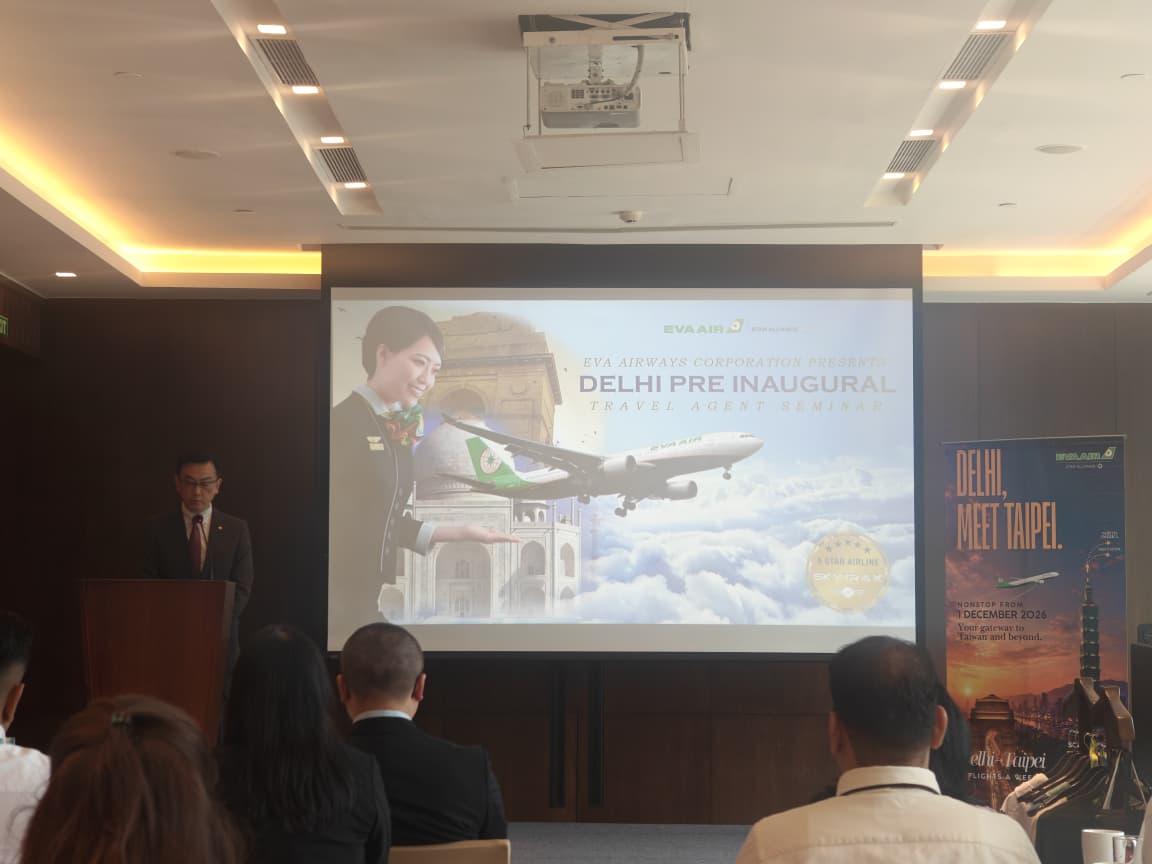 Terry Ma, EVA Air, General Manager
Eyes North America traffic through Taipei; sees business, leisure, student & VFR segments as key demand drivers
As the Taiwanese carrier EVA Air prepares to launch nonstop services between Delhi and Taipei from December 1, 2026, it is positioning the capital as a strategic gateway to India, and Taipei as a springboard for Indian travellers heading beyond Taiwan, particularly to North America.
Speaking to Travel Trends Today on the sidelines of EVA Air’s pre-launch engagement with the Indian travel trade, Terry Ma, the airline’s General Manager, said that EVA Air sees the timing was right to strengthen its presence in India, driven by growing demand across various travel segments.
“India is one of the world’s fastest-growing and most promising aviation markets. With continued economic growth and increasing demand for business travel, education, leisure and VFR travel, we believe this is the right time to strengthen our presence in India,” Ma said.
“Delhi is an important political, commercial and aviation hub, with a large local and connecting passenger market. Through the Delhi–Taipei service, EVA Air aims to establish a stronger direct connection between India and Taiwan, while leveraging Taipei as a gateway to North America, Northeast Asia, Oceania and other destinations across our network,” he added.
That also makes the Air India partnership particularly significant, as per Ma. Rather than relying solely on Delhi’s local catchment, EVA Air intends to use its partnership with the Indian carrier to bring passengers from other Indian cities onto the new service via Delhi. Ma said the partnership would help the airline broaden its customer base and build a more sustainable passenger mix.
“We will continue to monitor market demand and the development of our partnership with Air India and will evaluate opportunities to further deepen the cooperation when appropriate.”
The airline, however, is keeping its next move in India deliberately open. While Delhi is the starting point for its India expansion, EVA Air has not committed to a second Indian city or additional frequencies yet. When asked, Ma said future expansion would depend on market demand, route performance and overall operating conditions.
The immediate priority, he said, is to “successfully launch and develop” the Delhi–Taipei service. The route will initially be operated with the Airbus A330-300, offering a full-service cabin proposition. EVA Air will operate the service five times a week and will become the only Taiwan-based carrier offering nonstop services between India and Taiwan.
More broadly, EVA Air is continuing its fleet renewal programme, with Boeing 777 and 787 aircraft as well as Airbus A330 and A321 aircraft forming part of its fleet. Ma said newer aircraft would support improvements in passenger comfort, while the airline would continue to enhance dining, entertainment and service offerings.
The India launch comes as EVA Air also evaluates growth opportunities elsewhere across its global network, including Boston in North America and Barcelona, Helsinki and Istanbul in Europe, alongside selected destinations in Asia. Any new routes, Ma reiterated, would be assessed against demand, fleet availability and operational efficiency.
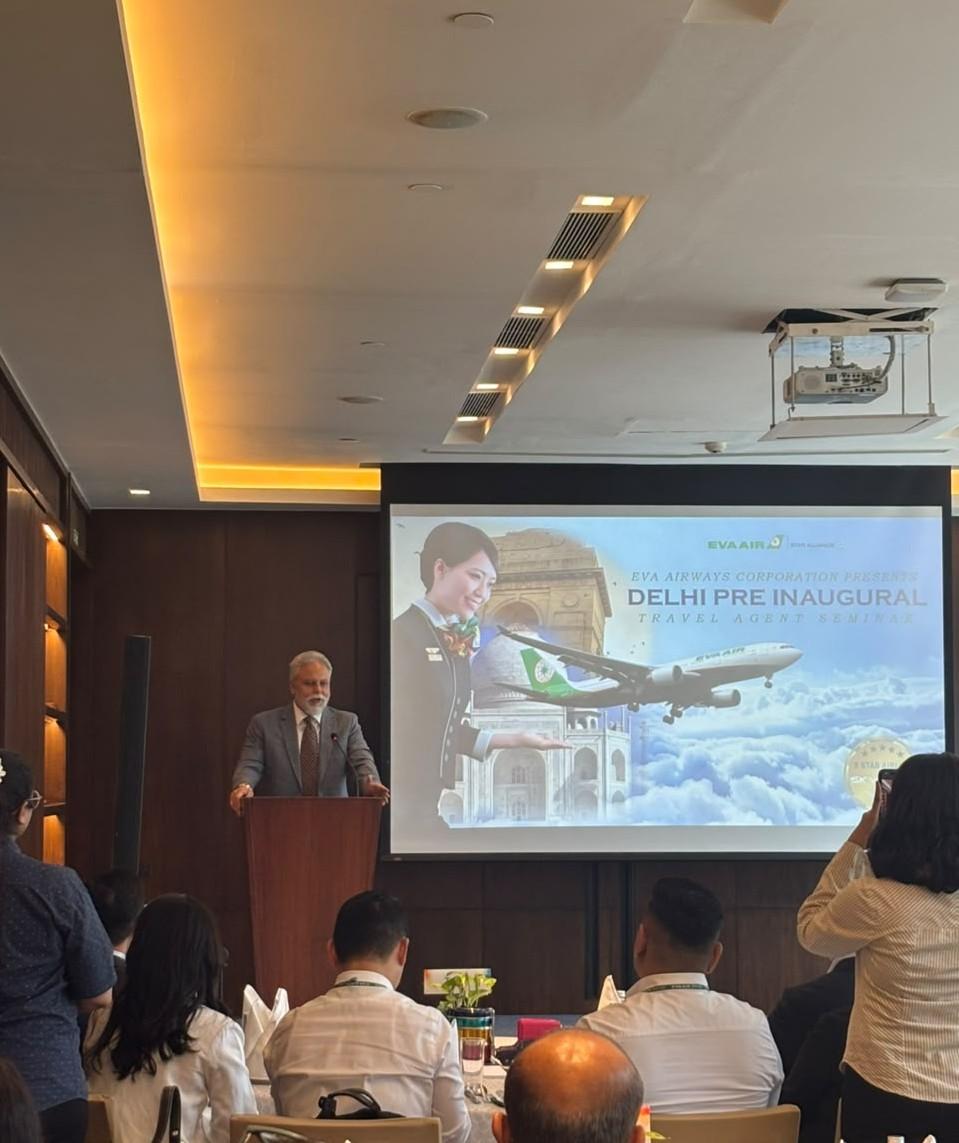
Besides Ma, Vikramjit Singh Ahluwalia, Managing Director, World Connect (EVA Air’s General Sales Agent in India), also spoke at the sidelines of the pre-launch event. Seeking trade’s support, he asserted, “With EVA Air starting five flights a week between Delhi and Taipei from December 1, operated by the A330 with 30 business-class and 279 economy seats, the opportunity for the Indian travel trade is significant. EVA Air offers connectivity to 10 destinations in North America, with 98 weekly flights from Taipei, as well as strong connections to Japan, Korea, mainland China, and Australia.”
“As a Star Alliance member and a Skytrax five-star-rated airline, EVA Air offers a strong proposition in both connectivity and service. We are already seeing good traction from our partners, with bookings reflecting the interest. Ultimately, the success of any new flight depends significantly on how well the trade promotes it, and we look forward to their support in building this market.”