

The Ajit Group eyes upto 20% revenue growth in 2026; more Rajasthan properties in 5 years
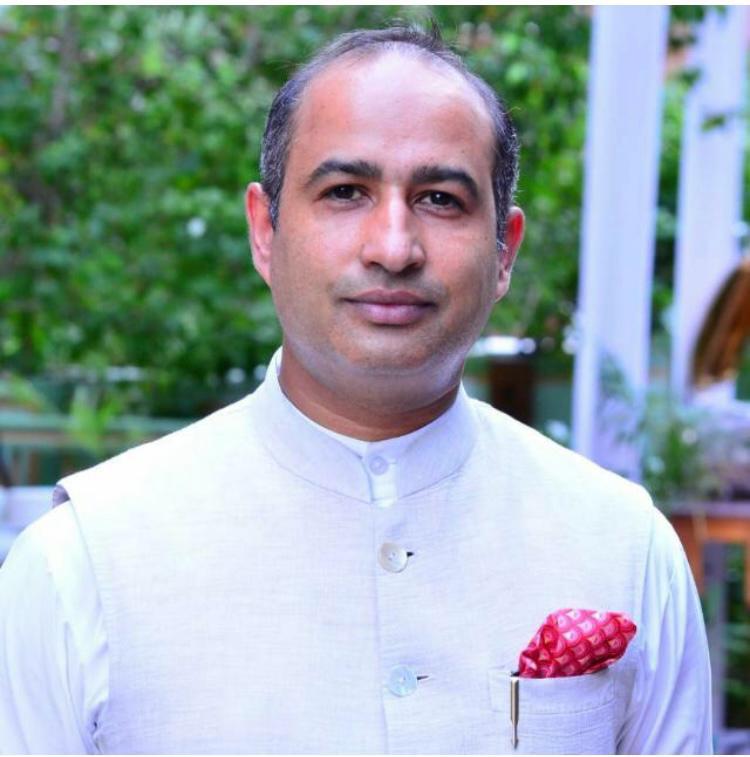 Nitin Sud, Cluster General Manager, The Ajit Group
For the remaining year, Nitin Sud, Group’s Cluster General Manager, confirmed some modest enhancements within its properties, followed by expansion pipeline in Rajasthan in next three to five years.
Built in 1927 in the royal, regal ‘Blue City’ of Rajasthan, Jodhpur, Ajit Bhawan, a property operating under the umbrella of The Ajit Group, was originally established as the grand residence of Major-General Maharaj-Dhiraj Ajit Singh. In 1971, the palace was converted into a heritage hotel, laying the foundation for The Ajit Group. Today, Ajit Bhawan operates alongside its sister property, Rawla Narlai, under the same umbrella.
T3 spoke exclusively with Nitin Sud, Group’s Cluster General Manager and a hospitality veteran, to discuss the evolution of these properties, changing market shifts, and the group’s ambitious expansion plans. Following a strong 2025, the group is targeting a 15–20% revenue growth for 2026 over the previous year, as per Sud.
As Sud claims, Ajit Bhawan, India's first heritage hotel, started with just five rooms and has now grown to an inventory of 64 rooms. The property offers dining options including Garden Restaurant, Dhani Restaurant, Jodhpur Café, J’ Bar, along with curated experiences like Sapphire Stroll, Dhani Delight, Eco-Cultural Bishnoi Expedition, and others. Catering to the wedding and MICE segments, the hotel features two key outdoor venues, the Zanana Garden, which can accommodate up to 400 guests, and the Garden Restaurant, with a capacity of 250 guests. Its positioning in Jodhpur is highly specific, as Sud described it as the first preference for transit guests from Umaid Bhawan weddings, given the absence of a comparable luxury competitor in the city.
The group’s second property, Rawla Narlai, is located in Desuri, around two and a half hours from both Udaipur and Jodhpur. Originally built as a hunting lodge for the royal family, the property now offers 30 rooms along with leopard safaris, an experiential F&B option, and a village tour experience. The surrounding region is also home to more than 300 Jain temples.
The properties are owned and managed by the royal family’s second generation, Maharaja Raghavendra Rathore and his brother Maharaja Suryaveer Singh.
Inbound & domestic: Equally significant growth engines
For most of the group’s history, international inbound travel served as the primary revenue engine for both properties. At Ajit Bhawan, that figure stood at around 70%, with domestic business at 30%, with most domestic business coming from weddings. Amid geopolitical uncertainty, the numbers seem to be changing for the group. The gap created by the West Asia crisis is being filled by Indian domestic premium travellers with a strong appetite for heritage and experiential stays, which Sud pointed, has grown sharply in the post-COVID period. “Since last year, we have seen a shift; domestic has increased over inbound in both properties,” he said. “What used to be domestic less and inbound more, it is now 50-50.”
Within the domestic segment, weddings carry much weight. He reiterated his previous statement on how Ajit Bhawan stands as the sole competitor catering to the luxury stay segment in Jodhpur.
Trend map for 2026: Niche travel, locally driven stays
On the sidelines, keeping the wider travel landscape in mind, Sud also talked about the trends that will dominate 2026. He pointed out that 2026 aligns with what the domestic premium segment has been signalling for some time.
“2026 would be dedicated to small niche travel like heritage properties,” he added. Pointing towards the growing appetite of Indian travellers he said, “People will move towards places less travelled by. They want to explore new places, new culture, the history that has been preserved.” He stressed a structural shift away from branded chain hotels, as travellers with rising disposable incomes are increasingly seeking experiences rooted in local culture and heritage rather than standardised hospitality offerings.
Talking about the expansion, The Ajit Group is planning to undertake modest upgrades and capacity enhancements across both properties in 2026. On a three-five-year horizon, the group is planning to expand its portfolio first within Rajasthan and then pan-India, Sud told T3.