

Sterling bets big on scale as portfolio nears 80 properties; 35 more in pipeline
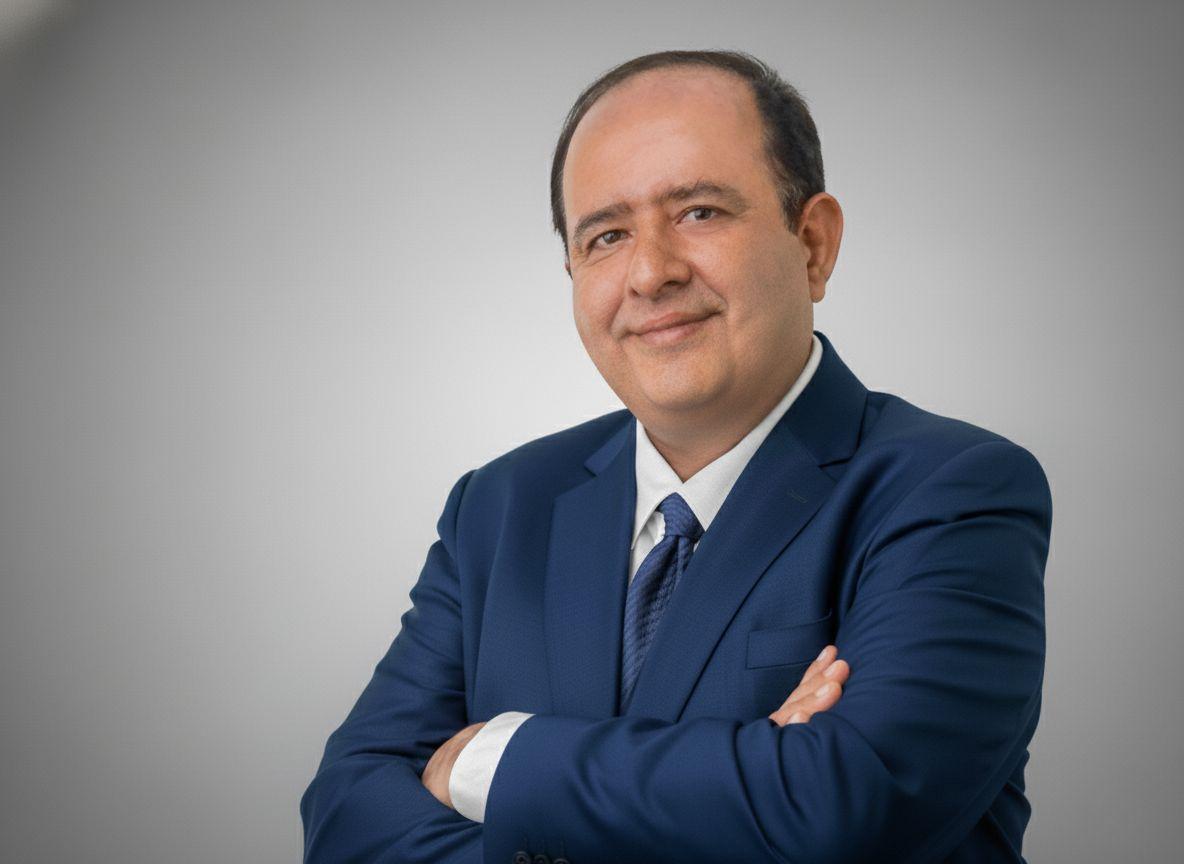 Vikram Lalvani Managing Director CEO, SHRL
The Managing Director & CEO of Sterling Holiday Resorts Limited, Vikram Lalvani, in an exclusive conversation with T3.
Sterling Holiday Resorts is making a decisive transition from its traditional vacation-ownership roots into a broader hospitality play, with close to 80 resorts, hotels and retreats currently in its portfolio and another 35 properties in the pipeline, Managing Director & CEO of Sterling Holiday Resorts Limited, Vikram Lalvani, told T3.
The company, which had around 27 resorts when it emerged from the COVID-19 period in 2020, has nearly tripled its portfolio since then. Lalvani said the expansion reflects a fundamental repositioning of the business. “We’ve repositioned ourselves from a vacation ownership company into a leisure hospitality company... and now from a leisure hospitality company, we are positioning ourselves as a full-fledged hospitality company,” Lalvani said.
Notably, the company has also recently announced its entry into Chhattisgarh with the launch of Sterling Naman Bastar, Jagdalpur as well as another property in Uttarakhand, Sterling Lake View Sattal.
Sterling’s portfolio strategy, however, is not about simply increasing its property count. Lalvani said the company is deliberately building a connected network across leisure, business and hybrid markets, with individual properties designed to complement one another.
“We just don’t put a dot on the map for the sake of it,” he said, adding that new properties are evaluated for their ability to link with existing resorts, hotels and retreats and “form a circuit” that gives travellers a reason to visit multiple destinations.
That circuit-led approach is also driving one of Sterling’s more distinctive new products: an online solution that allows travellers to book an entire multi-destination journey rather than arranging each hotel and transfer separately.
The concept brings together accommodation across multiple Sterling properties, airport transfers, inter-resort transportation and sightseeing under one booking and confirmation. The company said the platform can effectively manage a circuit from the time a traveller lands at an airport until the return journey.
The company subsequently built the backend capability to check availability across multiple resorts and generate a single confirmation covering the entire circuit. For Lalvani, that is precisely where Sterling sees differentiation.
When asked about the 2025-26 revenue, Lalvani quoted it as a “phenomenal year”. He shared that the company crossed approximately INR 550 crore in revenue, recorded EBITDA of around INR 170 crore and PBT of approximately INR 115 crore, while remaining completely debt-free. The performance, he said, came despite a succession of disruptions during the year, including geopolitical tensions, the impact of Operation Sindoor on northern travel during the summer, an air crash that affected long-haul travel sentiment and more.
Lalvani said Sterling responded by shifting demand between markets and between short- and long-haul travel depending on where disruptions were occurring.
Tier-II, III demand reshapes distribution
While Sterling has resorts at some of India’s best- loved holiday destinations, including Alleppey, Amritsar, Ayodhya, Chail, Coorg, Corbett, Darjeeling, Dehradun, Dharamshala, Goa, Godavari, Guruvayur, Haridwar, Puri, Srinagar & more, it is also seeing a significant opportunity in smaller cities, where post-COVID travel demand has risen sharply.
During the pandemic, the company built Sterling One, its proprietary distribution platform, which now gives nearly 7,000-8,000 travel agents in smaller towns across India real-time access to Sterling’s inventory and rates. The platform has also expanded into the corporate market, with nearly 450 corporates using it to allow employees to directly access agreed corporate rates and availability, as per Lalvani.
The thinking behind the system is rooted in the changing behaviour of travellers in tier-II and tier-III markets, where offline travel agents remain influential. Sterling has sought to digitally empower these agents rather than bypass them. The company says blockchain technology is used to keep transactions secure while allowing agents access to its inventory.
“Technology has been a big differentiator as far as Sterling goes in terms of providing solutions and helping us to scale fast.”
Sterling is also seeing new demand emerging around destination weddings, heritage travel and wildlife. Lalvani said destinations such as Puri and Udaipur are seeing wedding demand, while heritage-based weddings are becoming increasingly relevant. The company is also seeing an interesting crossover between weddings and wildlife.
Sterling has around 17-18 wildlife resorts, according to Lalvani, and the segment is moving beyond the conventional tiger-safari proposition towards what he calls “tiger and beyond.”
One unexpected trend has been the growing number of pre-wedding shoots at wildlife destinations. The company began looking into the trend after receiving one of its first such bookings and discovering that the couple had specifically chosen Kanha for the shoot.
“Nothing wrong with booming domestic tourism”
Lalvani, who is also the President for the All India Resort Development Association (AIRDA), is equally bullish about the strength of India’s domestic tourism market, arguing that the industry should not regard its dependence on domestic travellers as a weakness.
“There’s nothing wrong with that,” he said, pointing to his estimate of nearly 80 lakh domestic tourist journeys a day, based on roughly 250 crore domestic visits annually. He said the market is growing at around 20-25%.
Lalvani said Sterling had identified the potential of domestic tourism long before the current boom. Inbound tourism, in his view, should be treated as an additional opportunity rather than compared directly with domestic demand.
“Foreign tourist arrivals can only be a force multiplier. It cannot be a comparator.”
He believes the larger issue for India is destination positioning. The country, he argued, has yet to establish itself as a 365-day destination, with seasonal closures and weather-related limitations restricting demand in several tourism markets.
“If you’re starting to position India as a 365-day destination even before easing visa regulations or anything else, I think that’s the first trick.”
His pitch is simple: “Leverage what already works. Play your strengths.”
Build bigger hotels
He also believes India has an abundance of tourism assets, from wildlife, deserts, beaches to hills and heritage, but does not have enough large-scale accommodation capacity to fully exploit them. The industry, he argued, needs to move away from the traditional 50-60-room model towards 200-plus-room properties, wherever destination economics and infrastructure permit.
Sterling’s Puri project, currently at around 220 rooms, is its largest, but Lalvani said his ultimate ambition is to build a 500-room hotel or resort that can generate sufficient scale and eventually “feed for itself” without requiring excessive capital.