

SIA records revenue surge of USD 5,714 mn at 19.3%; plans more frequencies by 2026 end
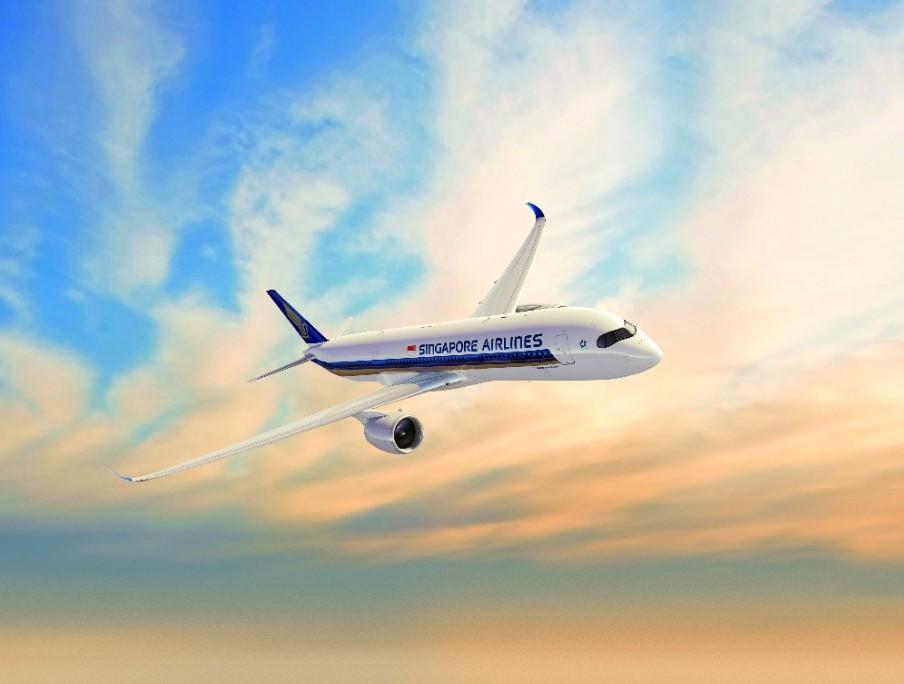 Singapore Airlines-3
The group’s operating profit fell USD 299 mn to USD 106 mn, driven by the sharp jump of USD 991 mn in net fuel costs due to the Middle East conflict. SIA and Scoot carried a record 10.9 million passengers, up 6.3% from a year ago.
The Singapore Airlines (SIA) Group released the financial performance for the first quarter FY2026/27. The group recorded a record revenue of USD 5,714 million during the first quarter of FY2026/27, an increase of USD 924 million (+19.3%) year-on-year.
The group continued to benefit from the robust demand for air travel, with passenger revenue up 18.6% to USD 4,582 million. SIA and Scoot carried a record 10.9 million passengers, up 6.3% from a year ago. Group passenger load factor (PLF) stood at 87.1%, 0.5 percentage points lower year-on-year, as capacity expansion of 5.9% outpaced traffic growth of 5.3%. Passenger yields rose 12.0% to 11.2 cents per revenue passenger-kilometre.
Group expenditure rose 27.9% to USD 5,609 million, mainly due to a USD 991 million (+78.5%) increase in net fuel cost to USD 2,253 million. Jet fuel prices, which are typically priced on a lagged basis, experienced a surge arising from the Middle East conflict that started on 28 February 2026. As a result, fuel cost before hedging more than doubled (+118.7%) this quarter on elevated fuel prices (+USD 1,459 million) and higher consumption (+USD 42 million). The increase in gross fuel cost was partially reduced by a swing from a fuel hedging loss of USD 60 million last year to a gain of USD 376 million this year. Non-fuel expenditure rose 7.4% driven by overall capacity expansion and inflation pressure.
Given the sharp rise in fuel costs, the Group recorded an operating profit of USD 106 million, down USD 299 million (-73.8%) from a year ago.
For the quarter ended June 30, 2026, the Group reported a net loss of USD 76 million, a deterioration of USD 262 million year-on-year, due to the drop in operating profit (-USD 299 million) and a higher share of losses from Air India (-USD 42 million), partially offset by lower tax expense (+USD 85 million).
In the first quarter, the group took delivery of one Airbus A320neo and three Boeing 737-8 aircraft. As of June 30, 2026, the group’s operating fleet stood at 220 passenger and freighter aircraft with an average age of seven years and 11 months. This comprised SIA’s 150 passenger aircraft and seven freighters, and Scoot’s 63 passenger aircraft. The Group has 62 aircraft on order.
Scoot continued to grow its footprint in Indonesia with the launch of new services to Belitung (May 2026) and Pontianak (June 2026). Both routes are new direct links from Singapore Changi Airport. SIA also commenced daily services to Hangzhou in June 2026, further strengthening the Group’s connectivity into mainland China.
As of June 30, 2026, the group’s passenger network covered 137 destinations in 36 countries and territories. SIA served 78 destinations and Scoot served 85. Of these, 59 points are operated exclusively by Scoot, expanding the group's reach in emerging growth markets in the Asia-Pacific region.
Looking ahead
In the United Kingdom, SIA will increase its London Gatwick services from 10-times weekly to twice-daily between July 2 and August 29, 2026, to meet peak summer demand, and return to twice-daily from October 25, 2026. This will give SIA six-times daily flights to the United Kingdom’s capital, including its four-times daily services to London Heathrow. Services to Manchester have been stepped up from five-times weekly to daily from July 13, 2026. From August 1 to October 22, 2026, SIA will increase frequencies to Amsterdam (the Netherlands) from daily to 10-times weekly.
During the Northern Winter 2026 operating season (October 25, 2026, to March 27, 2027), SIA will increase capacity on selected European routes, including Milan (Italy) and Munich (Germany). SIA will also launch five-times weekly services to Madrid (Spain) via Barcelona from October 26, 2026, making it SIA’s 15th destination in Europe and the group’s 17th destination.
SIA will strengthen its presence in Australia with additional frequencies to Adelaide from October 25, 2026, and commence daily services to the new Western Sydney International Airport (WSI) from November 2026. This brings the total number of SIA services to Sydney to five-times daily. Under its partnership with Air New Zealand, the two airlines will increase total joint capacity to New Zealand through additional seats to Auckland, as well as new non-stop Christchurch services operated by Air New Zealand, complementing SIA’s existing services.
Scoot resumed passenger services to Jeddah in Saudi Arabia on June 22, 2026, but subsequently suspended flights from July 14, 2026, following the escalation of the conflict in the Middle East. SIA’s services to Dubai in the United Arab Emirates remain suspended and the launch of SIA’s services to Riyadh, Saudi Arabia has been deferred to December 2026. The group will monitor the situation closely and adjust its flight schedules as appropriate.
Partnerships
The group’s 25.1% strategic stake in the Air India Group is a key pillar of its multi-hub strategy. SIA and its partner Tata Sons are committed to Air India’s long-term success, and to working together to support its multi-year transformation programme. Tangible progress has been made in Air India’s fleet renewal and aircraft retrofit programmes, on-ground and in-flight service enhancements, and operational performance.
Following final regulatory approval for SIA’s commercial joint business with Malaysia Airlines in January 2026, the two airlines introduced new joint fare products for travel between Singapore and Kuala Lumpur in June 2026. Other customer benefits will follow, including reciprocal lounge access, coordinated flight schedules, and enhancements to deliver a more seamless and flexible travel experience.
On June 29, 2026, SIA and Air China signed a Memorandum of Understanding to establish a commercial joint venture partnership. Subject to regulatory approvals, potential initiatives include expanded codeshare arrangements, coordinated flight schedules, joint fare products, and revenue-sharing arrangements.