

Selling India by Sea: Insights on why India must become more than a point of embarkation
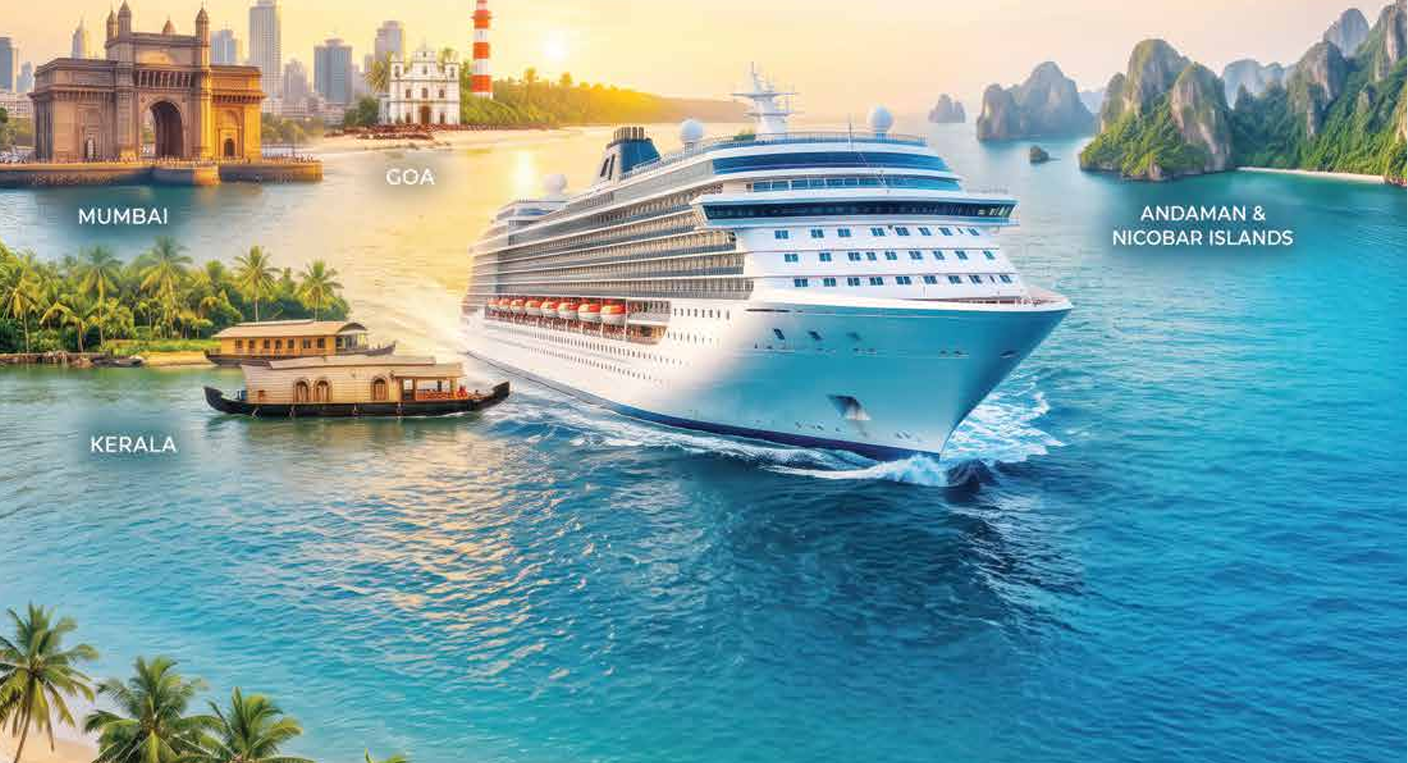 Cover story image
India handled 4,92,362 sea-cruise passengers in FY2024-25, while FY2025-26 recorded 3,42,631 passengers up to December 2025. Globally, ocean cruising reached 37.2 million passengers in 2025, with Asia accounting for 3.082 million, up 17.1% year on year. Against this scale, India remains a relatively small participant as a cruise destination, underlining the headroom for growth.
India is steadily building the ports, writing the policies and opening the doors, but is India ready to persuade cruise lines to sail through them?
The country undountedly has the geography to make a cruise story work. 12 major and nearly 200 minor ports along a 7,500-km coastline, almost 1,300 islands and a growing list of cruise terminals. The infrastructure is coming together, signalling that the policy push needs to be equally clear.
The government has set its sights on bigger numbers. The Cruise Bharat Mission targets a doubling of sea-cruise traffic by 2029, while Maritime India Vision 2030 places cruise tourism within the larger ambition of establishing India as a significant global cruise player.
But building terminals is only one part of the story. Cruise lines also need straightforward processes, easy access, efficient turnaround and a reason to bring their ships to India. The introduction of the e-Group Visit Visa for cruise passengers is one step in that direction, helping make group arrivals easier for international cruise operators.
But on a larger scale, how is India realistically trying to become easier for cruise lines to sell, operate and scale?
From building terminals to ecosystem
Rajiv Jalota, Member, Executive Council of IMU and Independent Director at Dredging Corporation of India and Former Chairman, Mumbai Port Authority and Former, DG, Shipping GoI., shared with T3 that when the Cruise Bharat Mission was conceived, the objective was to move India from isolated terminal projects towards a whole-of-government cruise ecosystem.
The Mission was built around five pillars: sustainable infrastructure, technology-enabled operations, circuit integration, regulatory and fiscal reform, and skills. Several measures have already been introduced, including QR-based immigration, digital customs and self-declaration, cabotage relaxation, direct and indirect tax reform, the e-Group Visit Visa and workable ship-leasing arrangements.
But Jalota pointed to consistency as the next test, with one national operating code, a digital single window, predictable port charges and common service standards. “The policy test is therefore not simply whether reforms have been introduced, but whether they can convert transit calls into homeport turnarounds.”
Jalota noted that cruise lines need to be sold connected circuits rather than individual terminals. Mumbai - Goa - Kochi - Lakshadweep and Chennai – Puducherry - Sri Lanka/Southeast Asia could be developed as connected circuits, bringing together heritage, coast, islands and, where relevant, river journeys.
The commercial logic is straightforward. Cruise lines deploy ships where regulation, demand and a marketable multi-port experience come together.
The terminal is only the beginning
Jalota pointed out that the development of the Mumbai and Goa terminals, along with plans in Kochi, has shifted the conversation towards how efficiently these assets can actually be used.
He shared that Mumbai’s terminal has been designed to handle 1.2 million passengers and 200 ships annually, while international facilities have also been opened or upgraded at Visakhapatnam, New Mangalore, Goa and Chennai.
But the infrastructure itself is not what cruise lines ultimately buy. Jalota noted, for a port to work at international cruise standards, operators need guaranteed berths, 24/7 marine services, bunkering, water and waste reception, rapid baggage handling and provisioning, pre-cleared manifests, fast immigration, customs and security procedures, organised ground transport, airport connectivity and shore excursions capable of handling thousands of passengers without queues.
Jalota suggested that every homeport should have a command centre bringing together the port, Immigration, customs, CISF, tourism authorities, police, airlines, handlers and the cruise line. Processing time, baggage delivery, coach dispatch and ship clearance, as well as on-time departure, should be monitored through clearly tracked KPIs. “The infrastructure wins the first call; reliability and destination quality secure repeat deployment,” he said.
The homeport imperative
Nalini Gupta, MD, ClickMyCruise & Lotus Destinations, observed that India has already built very good terminals. “The hardware is catching up. What separates us from Singapore or Miami is how regularly it's tested,” Gupta said. In mature homeports, ships turn around every week and agencies know precisely what their roles are. In India, where only a few ships are homeported, each turnaround still feels like a special event, Gupta expressed.
Gupta said cruise lines are looking for predictability: dependable berth windows, immigration teams ready on turnaround day, smooth airport transfers, proper provisioning and waste management. On the shore side, guests need a reason to step off, with good guides, well-run excursions and clean, safe surroundings, shared Gupta.
Nishith Saxena, Founder & Director, Cruise Professionals, shared the progress is encouraging, but port readiness remain uneven. “Some ports are better equipped to handle international cruise operations, while others still struggle to deliver a consistent experience for both cruise lines and passengers,” Saxena said.
For Saxena, the next step is to establish consistent service standards across ports rather than develop each port in isolation. He noted, “The geographical position which India enjoys being treated like a Port-of-call in a longer itinerary soon diminishes when you start considering homeporting a ship in India. There are limited options for ships to go when homeported in Mumbai, Goa, Kochi or Chennai.” India would also need to create stronger tourist interest beyond the main cities and create places of tourist interest.
Naresh Rawal, SVP Sales India & Middle East, StarDream Cruises, said the progress in investments, terminal and port infrastructure has made meaningful progress, but the terminal is only one part of the journey. “From arrival and immigration to baggage, provisioning, ground transport and the airport or city experience, the entire journey has to be seamless and consistent,” Rawal said.
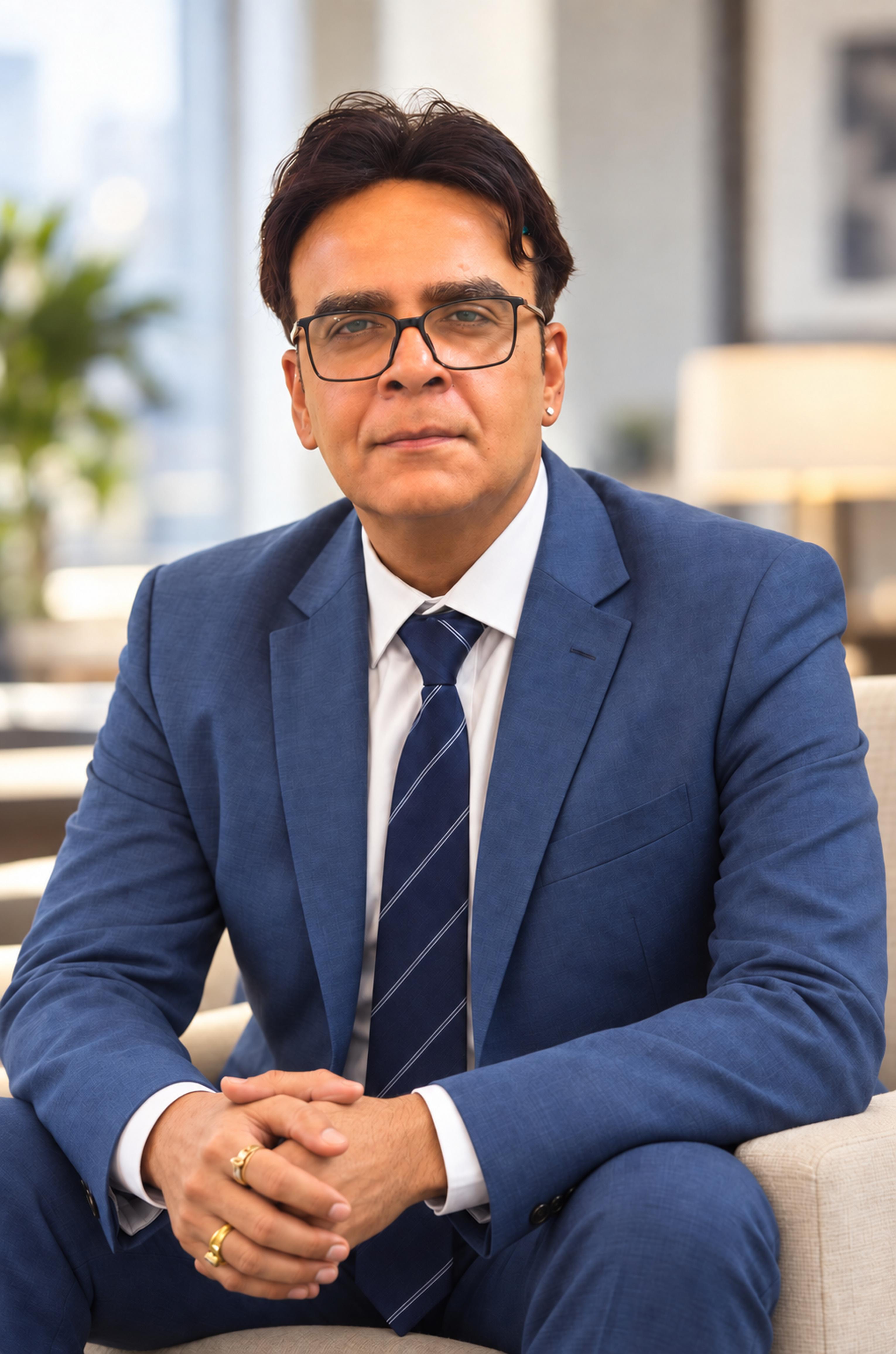
According to Rawal, cruise lines also need confidence that turnaround operations can be handled efficiently, as this directly affects guest experience, schedules and operating costs. Better connectivity and closer coordination between ports, government agencies, airports and the wider tourism ecosystem are important as India develops its homeporting proposition.
Varun Chadha, CEO, TIRUN Travel Marketing, similarly pointed out that India had made considerable progress on physical infrastructure. A cruise terminal, he noted, does not necessarily need to be elaborate; it needs to be functional and efficient because it is the passenger’s first touchpoint with the destination.
The larger opportunity, he added, lies in making the entire journey work. The ambition has to move beyond being a port-of-call destination towards becoming a homeporting market. “The objective should be for India to become not only a destination that cruise lines visit, but a market from which they can confidently operate,” Chadha said.
Neeraj Sharma, Director, Cruise Carrot, said the next phase needs to focus on the complete passenger and operational experience. Efficient immigration and customs, reliable ground handling, smooth baggage movement, quality excursions, competitive port costs and strong connectivity are among the requirements he identified.
“Consistency and predictability will be critical,” Sharma said, pointing to turnaround times, documentation, port procedures and service standards as areas that need to become seamless and consistent. He also highlighted stronger homeporting capabilities, airport connectivity and fly-cruise infrastructure as priorities.
For Isha Goyal, Executive Director & CEO, STIC Travel Group, the central issue is not hardware, describing regulation as the more difficult challenge, including clearance systems, taxation and India’s complex tax regime. A cruise ship is simultaneously a form of transport, a hotel, a restaurant and an F&B operation, including alcohol, bringing several layers of regulatory implications.
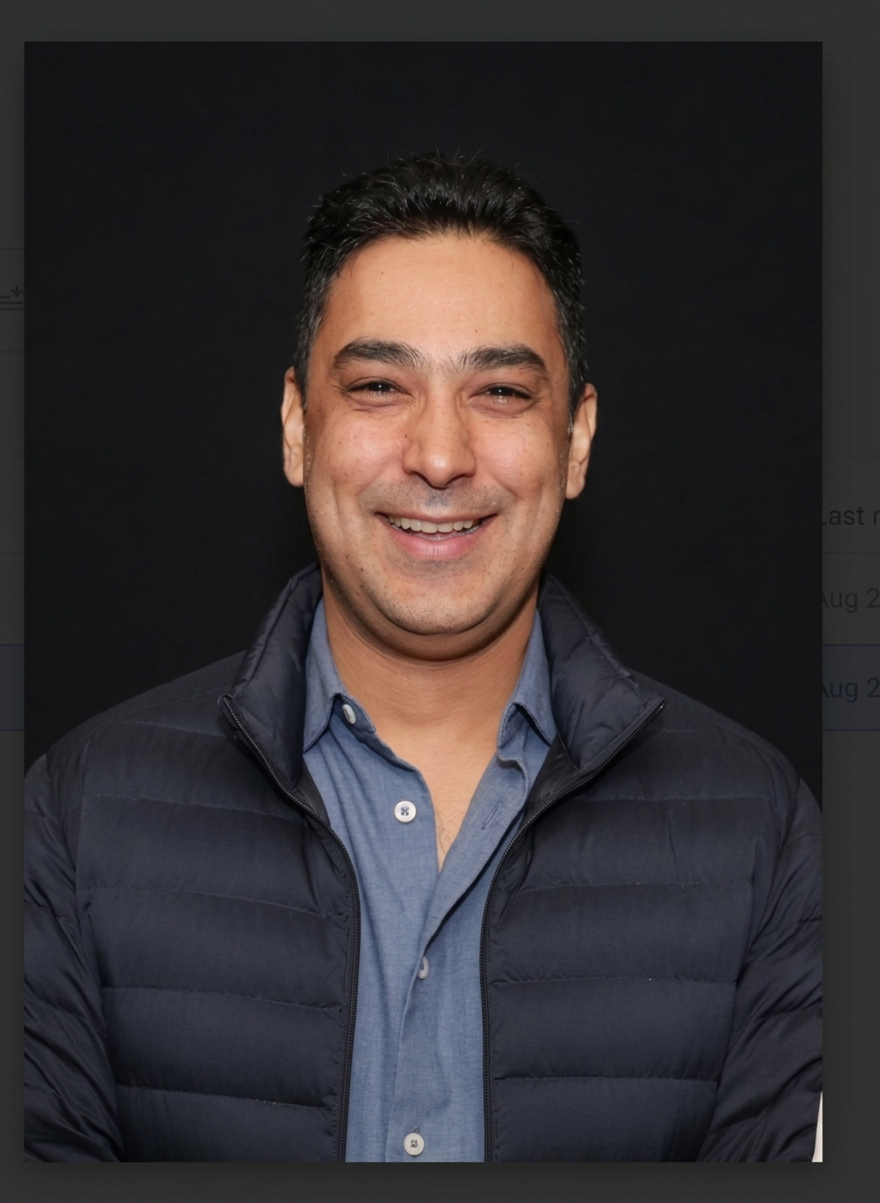
Goyal noted that several measures are already in the works, but immigration systems at ports also need reform. “A more elaborate terminal would not determine whether a cruise ship chose India. You do not need a Leela or Oberoi standard for a cruise terminal,” Goyal said, stressing that the objective is functional efficiency rather than luxury infrastructure. The point is not to replicate hotel standards at the port, but to make the process work.
Amit Thadani, Director, NIK N AMI Travels, said the progress is visible but cautioned that a terminal alone cannot make a destination. India recorded around 4.92 lakh cruise passengers across 272 calls in FY2024-25, underlining both the existing activity and the available scale.
The next requirement, he said, is operational efficiency, faster immigration and customs, efficient baggage handling, ground transport, airport-port connectivity and quicker turnaround. “The entire passenger journey is what cruise lines look at,” Thadani said. For him, moving from transit calls towards homeporting represent the real game changer.
How big India’s cruise dream can be?
Jalota said India can reach the Cruise Bharat Mission’s target of one million sea-cruise passengers by 2029. With regular homeported capacity, he sees the possibility of India reaching 2-3 million passengers annually in the 2040s.
There are also signs that domestic demand can support committed capacity. Jalota identified rising incomes, short 2-5 night holidays, family and multigenerational travel, weddings and MICE, Indian food and entertainment, and regional circuits as key demand drivers.

The constraints, however, remain significant, like monsoon seasonality, insufficient homeported tonnage, fragmented regulation, uncertainty around operating costs, weak last-mile connectivity and uneven shore experiences. “Success should be measured not merely by calls, but by homeport turnarounds, passenger spend, jobs, repeat deployments and ships based here,” Jalota said.
Chadha noted that India has one of the youngest cruising populations globally, with the average Indian cruiser around 37 years old. “Cruising is becoming part of the wider international holiday consideration for Indian travellers,” Chadha said. The destination opportunity is equally significant. “The opportunity sits at the intersection of ports, aviation, hospitality, visas, ground transport and destination experiences,” Chadha explained.
Gupta shared that at around 1.3% of the global cruise market, the contribution remains small but implies considerable room to grow. Indian travellers are already cruising from Singapore and Europe, she pointed out, “a good first cruise usually brings people back, giving India an opportunity to develop a stronger domestic source market.”
Gupta highlighted, “The bigger opportunity is bringing international travellers to experience India through its coast. At the same time, limited itineraries, monsoon and the small number of homeported ships remain constraints. Gupta stressed that perceptions around cleanliness and safety cannot be solved through marketing alone.
Saxena stated that he has heard large projections for the market over the past two decades, but said the industry first needs to move beyond broad claims and define what a successful cruise ecosystem would look like. India has the ingredients for growth: a rising middle and affluent class, increasing international travel, a young population, greater consumer awareness, better infrastructure, government attention and the presence of international brands. But he identified a lack of clarity and a unified long-term strategy as one of the biggest gaps.
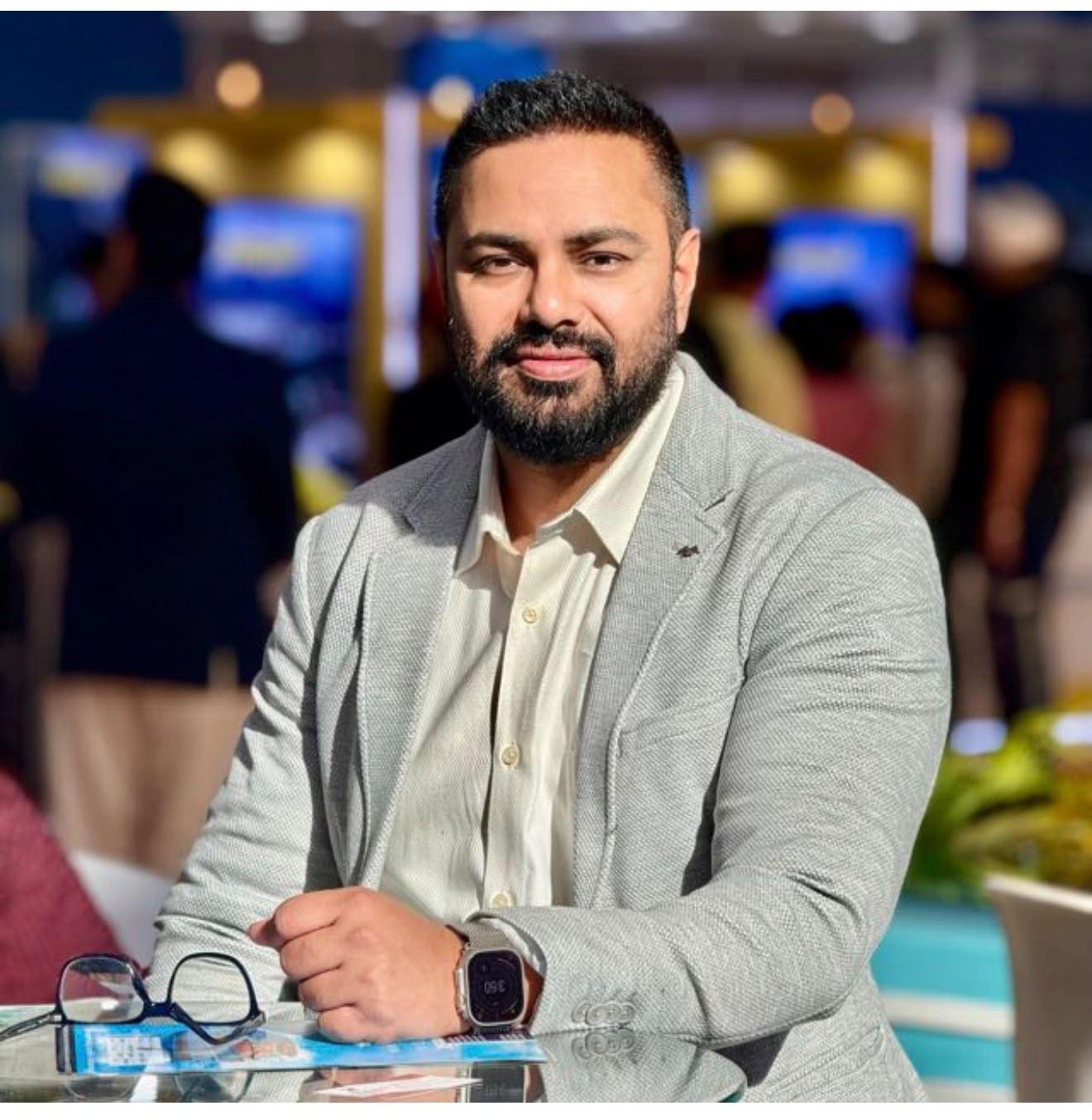
Sharma also sees the potential for India to become one of Asia’s major cruise markets, driven by its large travel population, rising disposable incomes, international travel and demand for experiential holidays. Infrastructure and government initiatives have created momentum, but gaps remain in port efficiency, excursions, ground handling, trained manpower, connectivity and consumer awareness.
Thadani pointed out that the gap itself shows the opportunity. With global ocean cruising reaching 37.2 million passengers in 2025 and almost 90% of cruisers intending to cruise again, India’s current volume remains a very small share of the global market. India, he said, has the traveller base, coastline and demand for experiences to support a much larger cruise market, spanning luxury, family, MICE, weddings and fly-cruise.
Selling India as a cruise product
“Selling India as a cruise destination is harder than it should be,” Gupta said. India competes with established markets such as Southeast Asia, the Mediterranean and the Caribbean, where itineraries, pricing and logistics are easy to understand.
The introduction of the e-Group Visit Visa is therefore a welcome step, she said, particularly because an operator can make a group application instead of every passenger going through the process individually. But the measure is still in its early days.
Saxena stressed that cruise products compete on the total holiday rather than simply the attractiveness of the destination. “Indian travellers will spend overseas when they see better service, safety, convenience and value. The same applies to international travellers considering India,” he said. Port charges and taxes need to be benchmarked against competing Asian destinations.
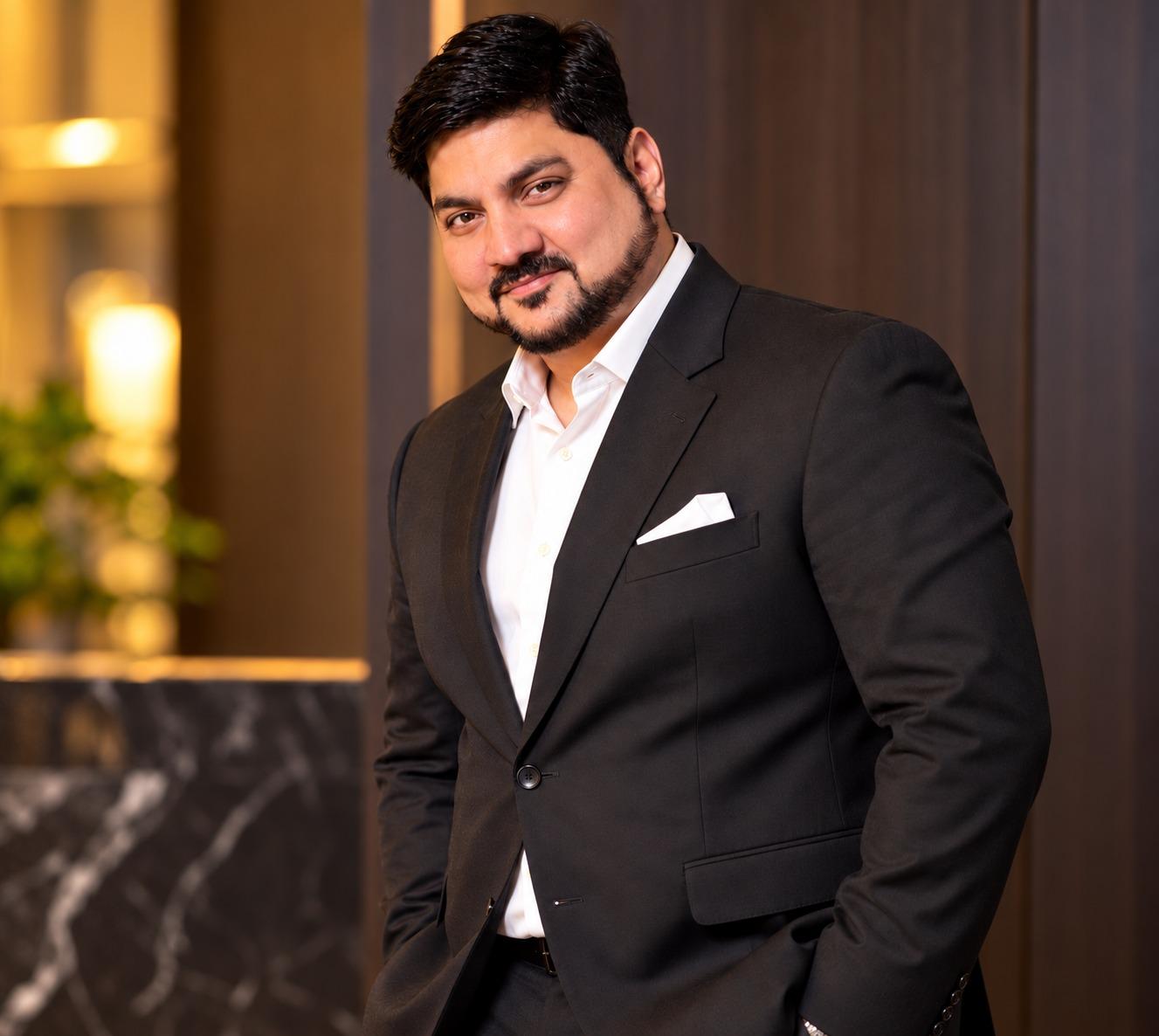
Sharma said the product is attractive, but selling needs consumer education. He added, “Many first-time Indian customers still need to understand what is included in a cruise, how excursions work and why cruising offers value compared with a conventional holiday.” International travellers will similarly judge India on pricing, air connectivity, visas and immigration, excursions and transport. “The trade’s objective should be simple: make India easier to buy, easier to reach and easier to operate,” Sharma said.
Rawal also identified awareness and education as important to selling India cruises. The key is to make the overall journey simple and good value- from competitive airfares, flight connections to attractive cruise itineraries, straightforward visa processes and seamless transfers between the airport and cruise terminal. Stronger partnerships between cruise lines, airlines and the travel trade can also help make Fly Cruise packages more accessible to Indian travellers.
Thadani said selling cruises has become easier than it was several years ago, but awareness and pricing remain challenges. Customers still compare the cruise fare with the cost of a hotel holiday without considering the total package value. “India’s biggest opportunity is to make the product simple to understand, simple to book and easy to access,” he said. The demand exists. The next task is converting that demand into repeatable and commercially viable business for both cruise lines and the trade.
Goyal pointed out that India is competing with ports across neighbouring ASEAN markets and Africa, where processes are easier and more familiar to cruise operators. “The e-Group Visa is helping, but there is still a long way to go,” she said. The Cruise Bharat Mission and the Ministry of Tourism’s mandate provide an institutional framework, but Goyal cautioned that this alone might not be enough to bring a large group of major international cruise names into India immediately.