

MoCA to invest INR 12,159 cr, develop 100 airports under next phase of UDAN
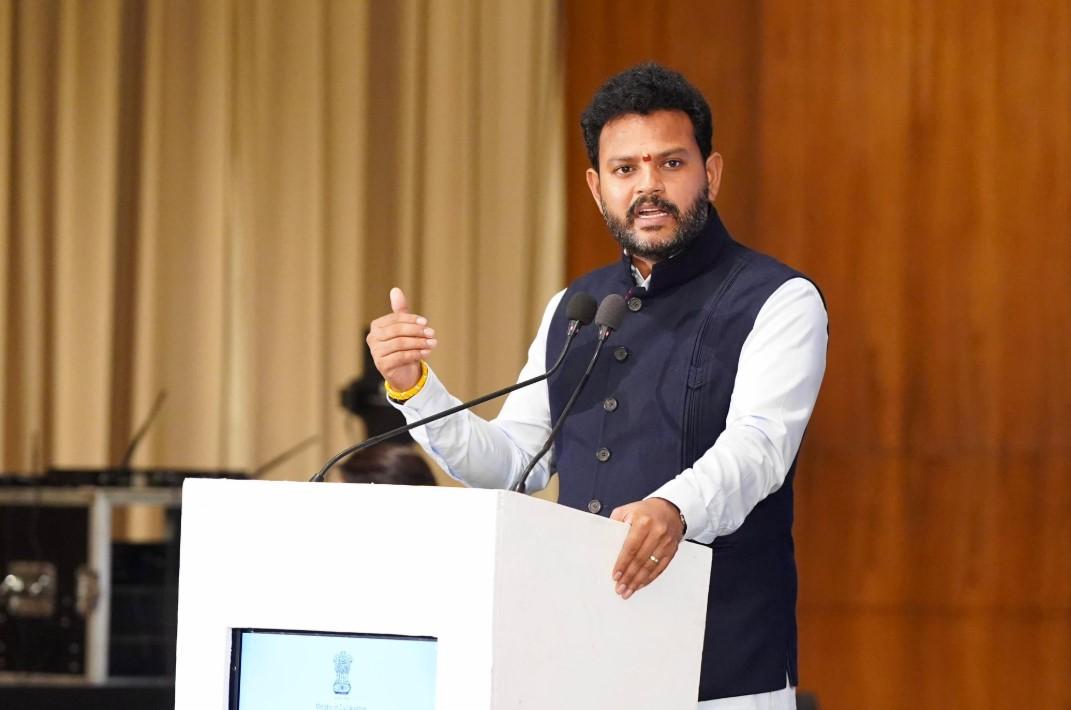 Ram Mohan Naidu_Union Minister of Civil Aviation
A key highlight of the workshop was the launch of the UDAN Scheme Document, outlining the vision, objectives and implementation framework for the next phase of the scheme.
The Ministry of Civil Aviation, Government of India, organised a workshop on the Next Phase of the UDAN Scheme at Vigyan Bhawan, New Delhi, bringing together key stakeholders from the aviation sector to deliberate on the future roadmap for regional air connectivity in the country. The ‘Modified UDAN’ scheme was launched by Prime Minister Narendra Modi on July 4, 2026, at Jodhpur Airport. Under the updated scheme the ministry announced that INR 12,159 cr budget for identified airports will be assigned to develop 100 airports in the next 10 years.
The workshop was inaugurated by Rammohan Naidu Kinjarapu, Union Minister of Civil Aviation; in the presence of Murlidhar Mohol, Minister of State for Civil Aviation; Samir Kumar Sinha, Secretary, Ministry of Civil Aviation; and Vipin Kumar, Chairman, Airports Authority of India (AAI).
Minister Naidu explained the provisions of the Modified UDAN Scheme to the stakeholders. Under the modified UDAN scheme, the provisions include the RCS airfare caps on 50% seats with removal of the maximum seat cap for larger aircraft (> 80 seats); for Aatmanirbhar Bharat Aircraft Acquisition under UDAN 2 HAL Dhruv helicopters for PHL and 2 HAL Dornier aircraft for Alliance Air; the extension of VGF support to airline operators for 4th and 5th year (Year 3 – 75% of awarded VGF, Year 4 – 50% of awarded VGF, Year 5 – 25% of awarded VGF); Aerodromes will be prioritised for development and inclusion in the Scheme for bidding post challenge mode and airlines to follow a market-based approach to select aerodromes & create routes.
Budgetary support for identified airports includes INR 12,159 cr (inflation-adjusted) to develop 100 airports @100 cr per airport in the next 10 years, aligned with Viksit Bharat by 2047. The vision is to develop 200 modern helipads in HINER States and Aspirational districts at 15 cr per modern helipad; INR 3,661 cr (inflation-adjusted) is required to develop 200 helipads. 3 Year Operation and management support for manpower salary costs at Aerodromes developed under RCS @ up to 3.06 cr per year per airport & @ up to 0.9 cr for Heliport/Water Aerodrome; Efforts will be made to allocate slots in metro/major airports for RCS operations at viable times; MoCA will include a list of State-recommended routes in the scheme that will be prioritised during award. Airlines to integrate these routes in their networks to holistically enhance regional connectivity;
Airlines not holding an AOP will not be allowed to bid on routes. Award of routes will be based upon the business plan and aircraft availability with the airline. If the airline fails to commence the route within the stipulated timeframe, re-bidding of the route will be conducted, while barring the original bidder. Aerodromes, in the last 1 year before Scheme publishing, with more than 14 scheduled actual departures per week on average, connectivity to over 2 city pairs on average, and more than 40,000 total passengers (in the last 1 year) shall be considered as “Served”.
Naidu added, “In 2001, India had 65 airports. By 2014, the number had increased to 74 airports – 9 added in 13 years. And in the last 12 years, we have added 90 airports. From 9 to 90. 55 unutilised and unserved airstrips have been revived and converted into operational airports. This transformatory growth, with India rising to be the 3rd biggest domestic civil aviation market, has been possible with PM’s farsighted UDAN vision! 10 years ago, traffic was mostly concentrated on the top six airports, leaving Tier-II and Tier-III cities underserved or unserved. But then, the National Civil Aviation Policy 2016 announced under the visionary leadership of the Prime Minister, completely transformed the picture of our civil aviation landscape.”
A key highlight of the workshop was the launch of the UDAN Scheme Document, outlining the vision, objectives and implementation framework for the next phase of the scheme. The document provides a strategic roadmap for strengthening regional connectivity, enhancing airport infrastructure and unlocking new growth opportunities across the aviation ecosystem.