

Meghalaya targets USD 16 bn economy through sustainable tourism & infrastructure expansion
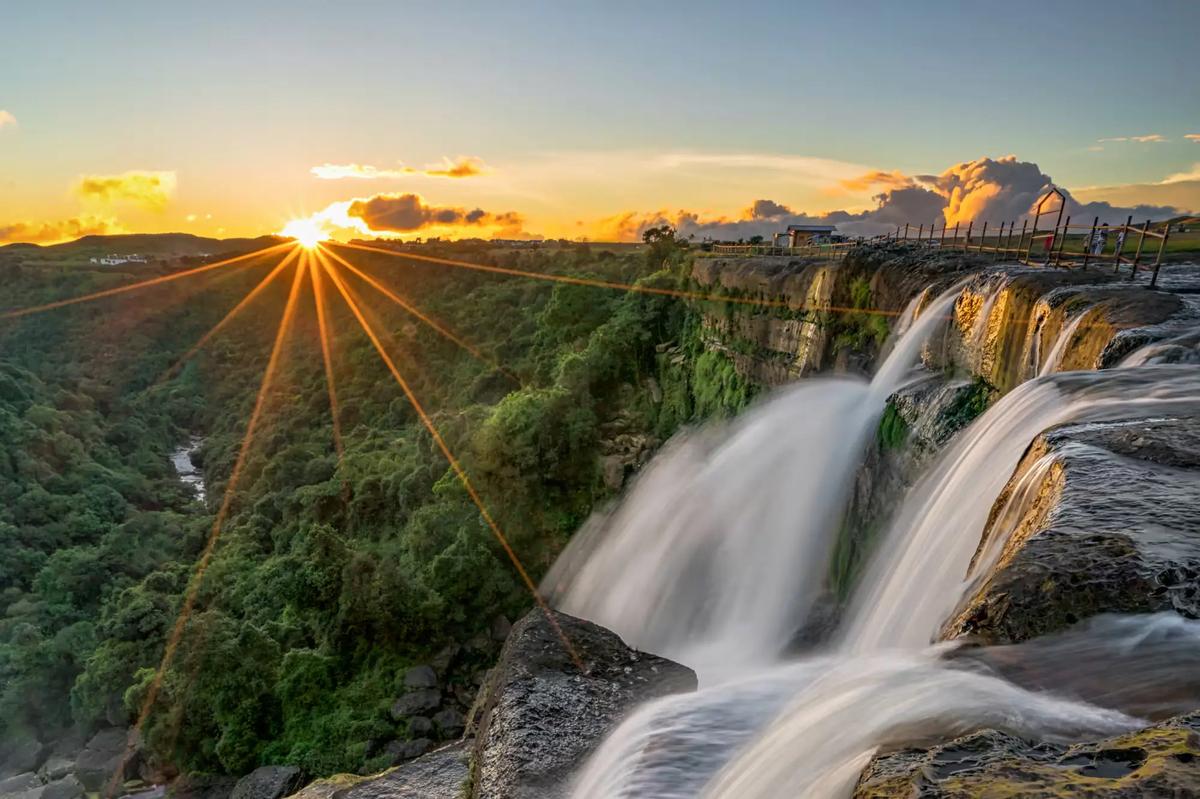 Meghalaya tourism representative image
Tourism-linked livelihoods in Meghalaya expanded to over 75,000 in 2025, with annual tourist footfalls reaching nearly 18.55 lakh in 2025. The state has also sanctioned 877 homestay applications, with over INR 120 crore disbursed, generating more than 6,000 jobs through local hospitality enterprises to support community engagement.
Moving beyond traditional tourist-volume metrics, Meghalaya is establishing a sustainable, community-led, climate-resilient tourism model to position the state as a year-round global attraction. Supported by public and private investments across more than 150 active projects, tourism has become a primary driver of local economic growth and regional development as the state advances toward its vision of becoming a USD 16 billion economy.
Tourism-linked livelihoods in Meghalaya expanded from approximately 50,000 in 2022 to over 75,000 in 2025, with annual tourist footfalls reaching nearly 18.55 lakh in 2025. With over 76% of its land under forest cover, Meghalaya’s rivers, caves, waterfalls, and Living Root Bridges form an irreplaceable ecological and cultural framework. Rooted in the traditional land and forest governance systems of the Khasi, Jaintia, and Garo communities, the State’s Tourism Policy 2023 emphasises high-value, low-volume tourism centred on carrying capacity, right pricing, and zero-waste management.
Community participation remains central to Meghalaya’s tourism strategy. Homestays, local guides, tourism vehicles, community-run infrastructure and other local enterprises are creating opportunities for residents to participate directly in the tourism economy.
The state has sanctioned 877 homestay applications, with over INR 120 crore disbursed, generating more than 6,000 jobs through local hospitality enterprises. The Chief Minister’s Meghalaya Homestay Mission is targeting the creation and upgradation of 1,000 homestays in 2026–27, as part of a larger vision of 3,000 homestays.
Community-led tourism is also being strengthened through rural tourism cooperatives and the Community-Led Tourism Infrastructure Scheme, enabling communities to play a greater role in shaping destinations and developing local enterprises.
The Meghalaya Community-Led Landscape Management Project has supported more than 400 villages in restoring land, water and forests by combining traditional knowledge with scientific and data-driven approaches. Spring rejuvenation, mine-land restoration, Living Root Bridge conservation and Payment for Ecosystem Services demonstrate how environmental stewardship can also contribute to economic resilience.
To establish Meghalaya as a year-round global attraction and distribute economic benefits across all districts, the state has also proposed more than INR 162 crore allocation for tourism infrastructure, destination development, and community tourism. Four major hubs like Umiam, Sohra, Dawki-Shnongpdeng, and Nokrek have been designated for transformation into global-scale destinations.
Major infrastructure developments include the INR 233.75-crore PM-DevINE Sohra Tourism Circuit encompassing Nohkalikai Falls, Mawsmai Eco Park, and the Khasi Heritage Experiential Centre alongside key statewide projects such as the Shillong Peak Ropeway, Mawkdok Skywalk, Rain and Bamboo Interpretation Centre at Mawsynram, Living Root Bridge Museum, Tura Integrated Hospitality and Convention Centre, and the Umngot Riverfront Development at Dawki. Regional accommodations are also expanding with new guest houses in Nagargaon and Raksamgre, while the expansion of Shillong Airport and Public-Private Partnerships (PPP) for five-star hotels will significantly enhance high-end, year-round accessibility.
Notably, the Prime Tourism Vehicle Scheme, under the CM-ELEVATE programme, has not only emerged as a successful initiative making travel more seamless and comfortable for tourists, but also creating new livelihood and business opportunities for local entrepreneurs.
Through financial assistance, credit support, GPS-enabled vehicles, branding and mandatory tourism training, the scheme is helping more people participate in the state’s growing tourism economy while strengthening the overall tourist experience.
Aligning with the official World Tourism Day 2026 theme, “Digital Agenda and Artificial Intelligence to Redesign Tourism,” Meghalaya is integrating advanced digital tools to modernise destination management and environmental stewardship. Building on the state’s policy framework for real-time tracking of footfalls, traffic, and occupancy, Artificial Intelligence is being leveraged to forecast visitor demand, optimise traffic and crowd flows, manage carrying capacity, and guide infrastructure planning. Technology is thus serving not merely as a tool for discovery, but as an instrument of ecological and destination stewardship.
Technology is also enhancing travel transparency and visitor assistance, complementing human-centric ground operations such as the Tourist Buddy initiative. By deploying trained local youth across major destinations to guide visitors, provide local information, assist during emergencies, and monitor safety, the state merges digital intelligence with community hospitality to deliver a seamless visitor experience.
Meghalaya's creative economy is serving as a major catalyst for year-round visitor engagement. The Chief Minister’s Meghalaya Grassroots Music Programme (CM-MGMP) has supported over 7,000 local artists and generated more than 6,000 direct and indirect livelihoods. In 2025, the state's expanding event calendar, including the Me'gong Festival, Shillong Cherry Blossom Festival, and Shillong Literary Festival, recorded over 1.1 lakh combined footfalls, while niche events like Culinary Cascade and the Meghalaya Pineapple Festival drew around 10,000 visitors each. Furthermore, the Meghalaya Film Tourism Policy 2025 opens the state's picturesque landscapes to international and domestic media productions, creating new commercial opportunities for local service providers.
Heritage conservation and eco-friendly design remain core components of the state's tourism vision. The Pine Home Eco-Sustainable Model Project at Mawlangwir demonstrates low-impact architectural practices utilising local materials and community participation. Concurrently, the recently inaugurated Twahlongwar Open Air Museum in Mawsynram highlights Meghalaya’s rich history through an archaeological site featuring over 20 ancient structures, megaliths, a historical iron furnace, and ancient trade routes, transforming indigenous history into an immersive visitor attraction.