

India ranks among Israel's top 10 source markets; eyes 50,000 visitors
 Galit Hoffman
Israel is targeting around 50,000 visitor arrivals from India over the coming year, as the destination steps up efforts to rebuild tourism from one of its most important source markets through enhanced trade engagement, training initiatives and consumer outreach.
Speaking exclusively to T3, Galit Hoffman, Consul for Tourism Affairs in India, Israel Ministry of Tourism, said India continues to remain one of Israel's top inbound tourism markets and the country's leading source market from Asia.
India's strategic importance grows
"India has, for years, been one of Israel's major tourism markets and is consistently among our top 10 source markets. It is also the first Asian country for inbound tourism to Israel, and we definitely see tremendous potential. The United States remains our largest inbound market, followed by the United Kingdom and France. This is why we have maintained our office in India for so many years and continue to invest significant efforts in promoting Israel as a destination," Hoffman said.
Highlighting the long-standing relationship between the two countries, she said the strong people-to-people connect has played an important role in supporting tourism. "There is a very unique and special connection between India and Israel. We also see a large number of Israelis travelling to India every year, which further strengthens this relationship," she added.
Using 2019 as a benchmark, when Israel welcomed around 65,100 visitors from India, Hoffman said the destination is now focused on steadily rebuilding arrivals following recent disruptions.
"In 2025, we welcomed around 13,900 visitors from India. Looking ahead, and subject to favourable conditions, we are optimistic about steadily rebuilding momentum and are targeting around 50,000 Indian visitors in the coming year," she said.
Despite its modest size, Israel sees considerable opportunity to grow tourism from India. "Israel is a very small destination. Even welcoming around 3 million international visitors would be a huge achievement for us, although that would be a relatively small number for a market like India," Hoffman noted.
Reigniting the strategy
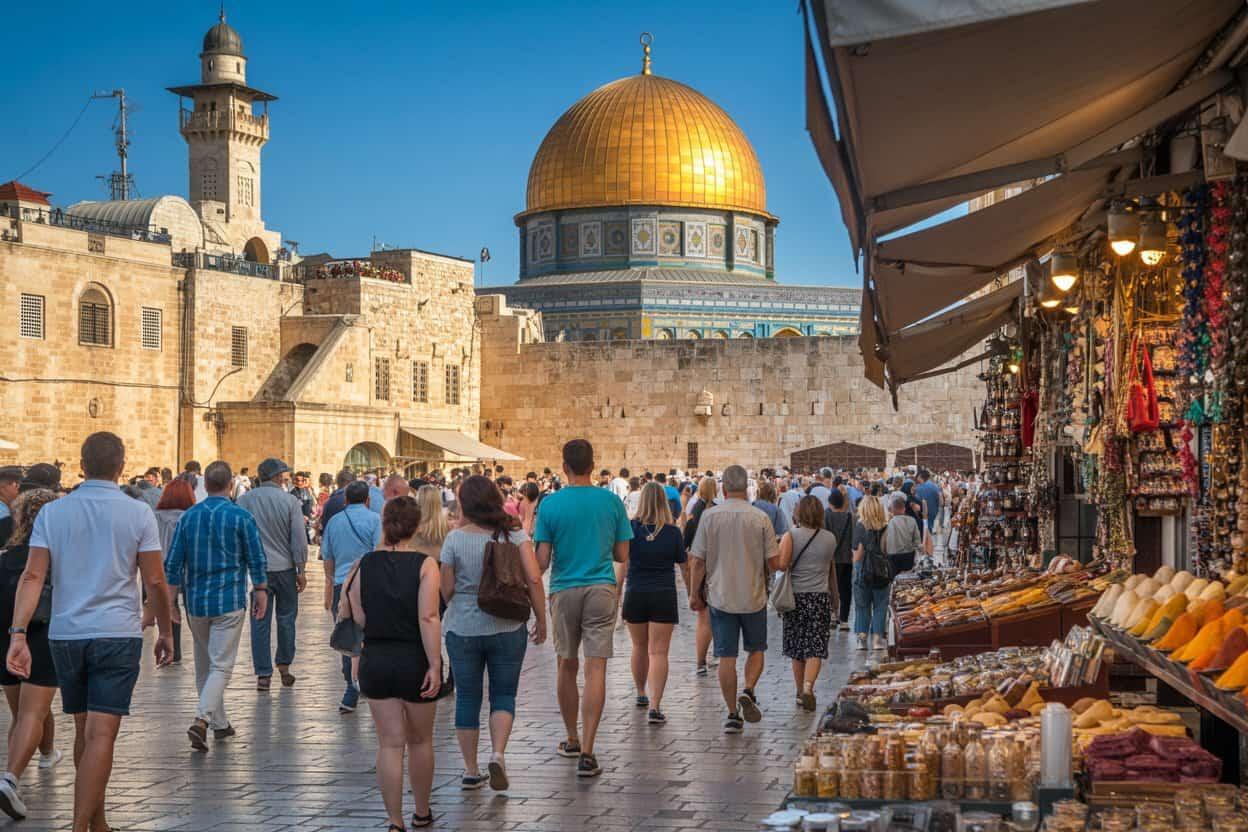
While many Indian travellers continue to associate Israel primarily with its religious significance, there is increasing awareness of the country's broader tourism offerings. "Many Indians know Israel for its holy places, which are significant for multiple religions. But we have much more to offer. The awareness is growing and the destination is gradually picking up," she said.
To accelerate recovery, Israel is focusing strongly on trade engagement across India through multiple initiatives aimed at rebuilding confidence among travel partners.
According to Hoffman, Israel has maintained regular engagement with leading travel companies and industry associations across various cities, enabling it to gather market feedback, identify collaboration opportunities and strengthen long-term partnerships.
"We are working in different ways. We organise familiarisation trips for the travel trade because we need to reignite the strategy. Travel agents have been selling Israel for many years, but now we need to bring that awareness back into focus," she explained.
The response from the travel trade, she said, has been overwhelmingly encouraging. "Travel trade sentiment remains positive, supported by ongoing engagement with leading travel agents across multiple cities and regular dialogue with industry associations. These interactions have provided valuable market feedback, helped identify collaboration opportunities, and strengthened trade partnerships. Every person who travels to Israel through our familiarisation trips returns with an amazing experience," Hoffman said.
Beyond FAM trips, Israel continues to conduct dedicated seminars for different travel segments, roadshows across major Indian cities, travel agent training programmes, e-learning initiatives and participation in key travel exhibitions, including MICE-focused events.
"Our approach combines digital engagement with personal interaction. We continue to meet people, participate in exhibitions and organise training programmes to ensure Israel remains top of mind for the travel trade," she said.
The shift towards leisure & MICE
She noted that the country's tourism profile in India has undergone a significant transformation over the past few years.
"Before the pandemic, nearly 80% of Indian visitors travelled to Israel primarily for pilgrimage. We successfully shifted that mix, bringing pilgrimage down to around 45% by expanding our focus on leisure and MICE tourism. That was a significant change," she said.
Addressing the perception of Israel as a premium destination, Hoffman acknowledged that the country has never positioned itself as a budget destination. "Israel is an expensive destination. When compared with Europe or the United States, travellers generally accept that those destinations come at a premium. Sometimes people assume Israel should be cheaper because of the regional situation, but that has never been our positioning," she said.
"We know our destination offers extraordinary experiences, and those experiences have value. Our philosophy has always been quality over quantity, and we believe quantity follows quality," Hoffman added.
She also highlighted Israel's compact geography as one of its strongest advantages, allowing visitors to experience diverse attractions within a relatively short holiday.
"Seven nights is the perfect duration to experience Israel. You can travel from the north to the south in a single day and experience completely different landscapes, climates and experiences. You can ski in the north and dive in the south on the very same day," she said.
"You can experience nature, history, tradition, beautiful beaches, culinary experiences, wineries and, of course, the holy places. Spirituality is something that connects both Indians and Israelis. Even if we are not religious, we are deeply spiritual, and I believe this is another reason why Indian travellers connect so well with Israel," she said.
Building future demand
Looking ahead, Hoffman believes the changing travel behaviour of Indian outbound travellers will further support Israel's recovery.
"Indian travellers today are far more confident and well-travelled than before. Many are now taking two or more international holidays every year instead of just one. We have also received an encouraging response to our consumer-focused media outreach and upcoming influencer familiarisation trips," she said.
She added that several consumer engagement initiatives are currently being planned to further strengthen destination awareness and reinforce confidence among Indian travellers considering Israel for their next international holiday.