

Disruptions becoming the ‘new normal’?
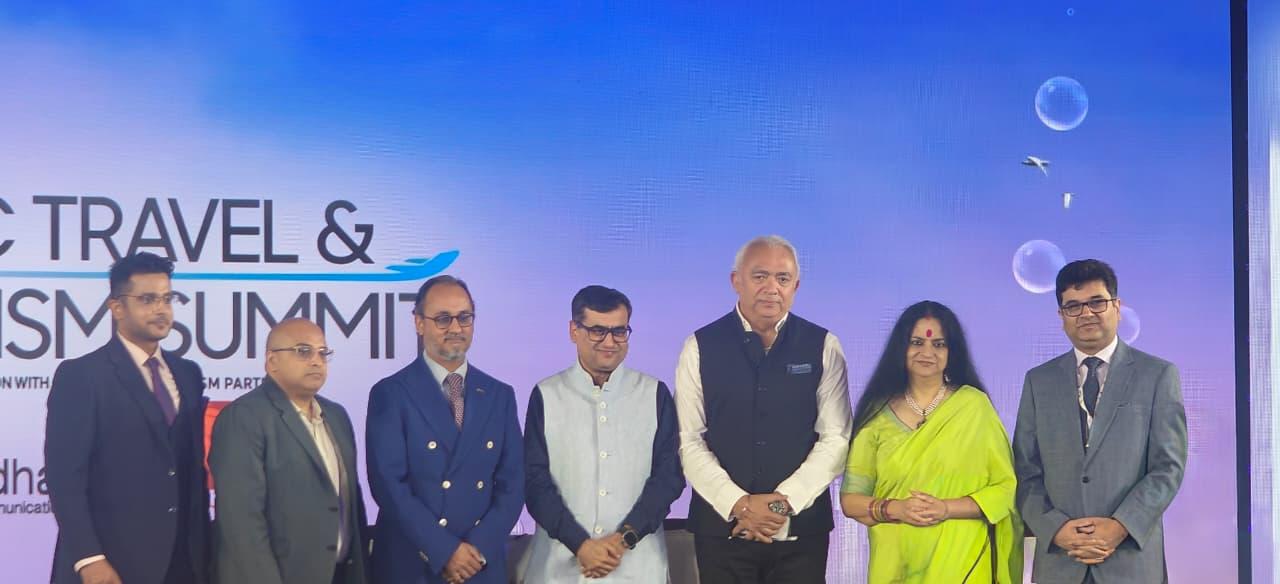 Representation Image-1
Despite the complexities and current crisis, the overarching sentiment is largely optimistic. With India’s travel and hospitality sector currently contributing around 5–6% to GDP and projected to reach 10% in the coming years, the industry is poised for significant expansion. The industry experts couldn’t agree more.
From geopolitical crisis, airspace shutting orders to exorbitant airfares and volatile fuel prices, disruptions have become a constant rather than an exception for the travel and hospitality industry. Yet, the underlying demand remains resilient, showing the industry is no longer reacting to disruption; it is learning to operate within it. This echoes the sentiments collated in T3’s recent where agents underscored how travel intent continues to endure despite ongoing crisis.
On the similar lines, a high-powered industry panel at the ICONIC Summit in Delhi was held, bringing together voices to decode how the sector is navigating an era of continuous disruption while recalibrating operations, pricing, and customer engagement.
Industry shown remarkable ability to bounce back
For Air India, the past two to three years have been marked by a chain of crisis, from geopolitical conflicts to airspace restrictions. These have significantly altered operational dynamics. “Flights to Europe and the US, once clocking 13 hours, are now stretching up to 17–18 hours, increasing fuel burn, complicating crew deployment, and forcing airlines to cut frequencies just to maintain schedule integrity,” said Manish Puri, Head of Global Sales- Air India & Air India Express.
“Disruptions today are multi-layered; they impact cost, crew, schedules and ultimately demand,” noted Puri, adding that uncertainty in key markets like India–US long-haul travel has further compounded the pressure. “But once this crisis passes, there’s hope that everyone who has limited their travel will return with renewed and pent-up demand,” he shared.
Yet, even as airlines struggle with operational headwinds, demand refuses to fade. Instead, it is morphing.
According to Sandeep Dwivedi, MD at Amadeus South Asia, booking data reveals a sharp behavioural shift rather than a decline. “Demand is not dissolving; it’s redistributing,” he said, citing a 189% surge in travel to Vietnam and a rapid pivot in search patterns within hours of disruptions. Air bookings may be down 27% in affected corridors, but alternate destinations are witnessing sharp upticks, he said, adding that Gen Z and millennial travellers are driving this resilience, often pivoting quickly rather than cancelling plans altogether.
JB Singh, Director at InterGlobe Air Transport & President & CEO at InterGlobe Hotels contextualised this within broader economic trends. Despite short-term shocks, the long-term outlook remains robust, with global tourism projected to contribute 11% to GDP and grow to USD 16 trillion by 2033. “The Indian economy is strong, demand fundamentals are intact, and the industry has shown remarkable ability to bounce back,” he said.
Domestic demand shows up strong
While aviation continues to bear the brunt due to regulatory constraints and high capital intensity, logistics has emerged as the most resilient sector, followed by hospitality. Singh further explained that logistics, being less regulated, adapts faster, while hospitality benefits from its ability to pivot to domestic demand and hyper-local markets.
This domestic strength is particularly evident in India’s tiered market structure. Nikhil Sharma, MD & COO South Asia at Radisson Hotel Group highlighted that Tier 2 and Tier 3 cities, where domestic travel accounts for as much as 95–97%, have remained largely insulated from global disruptions. In contrast, metro markets like Bengaluru and Hyderabad have seen occupancy declines of 25–27% year-on-year.
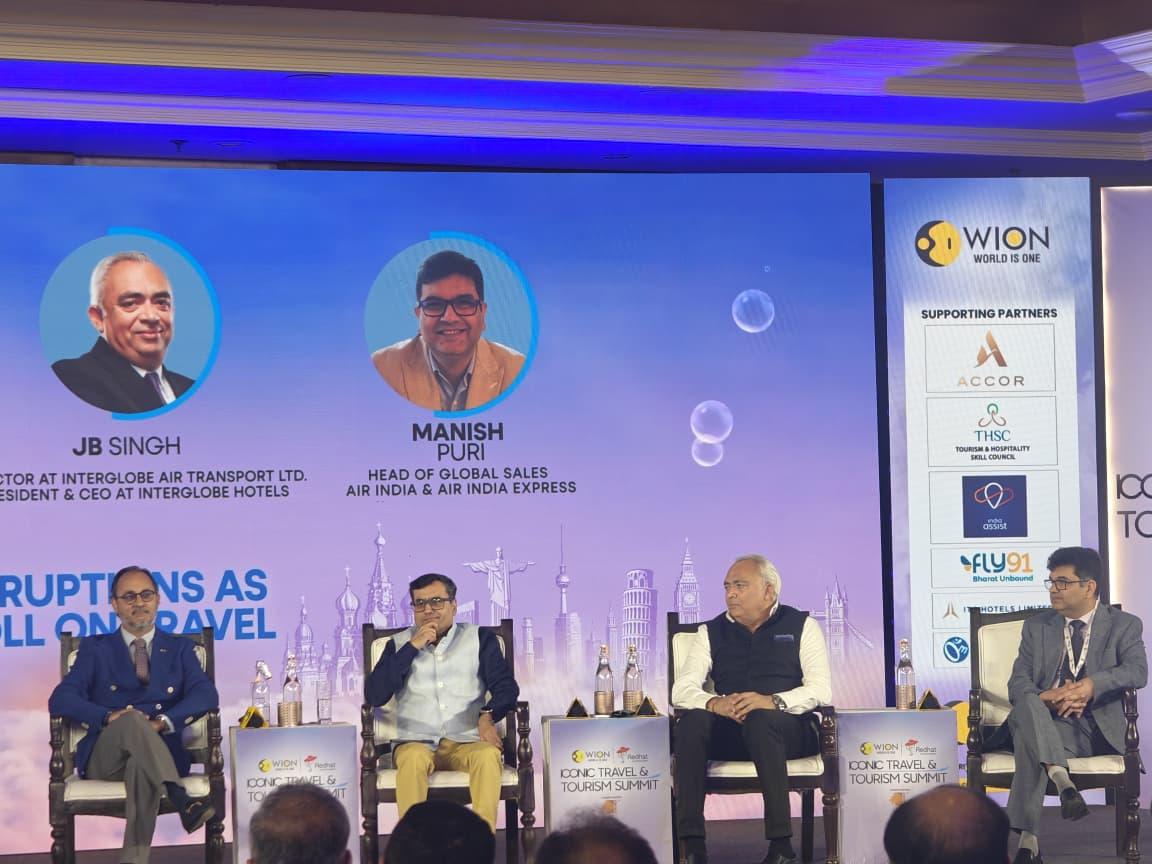
“The resilience of India lies in its domestic consumption,” Sharma said, adding that infrastructure expansion from highways to regional connectivity, is further fuelling this growth.
From places like Saputara attracting cross-border regional tourists to newer circuits such as Karjat and the Northeast gaining traction, his hotel group is witnessing a clear diversification of travel demand. “This push is further supported by the government’s focus on developing 50 new destinations, alongside a surge in hotel development, illustrated by aggressive expansion in global leisure hubs like Ayodhya.”
Also, improved road networks and expressways are not only opening new destinations but also reshaping travel patterns, with more travellers opting for road journeys and short-haul domestic trips as a hedge against air travel disruptions, he added.
Supply chain disruptions triggering a domino effect
With aviation fuel costs rising sharply, almost tripling in some cases—fares are expected to increase, potentially pushing travellers towards closer or more affordable destinations. “Someone planning Europe may shift to Vietnam; someone considering Vietnam may opt for Jaipur,” Puri explained, underlining the growing price sensitivity of the market.
Another critical fault line lies in supply chains. From delayed aircraft deliveries to shortages of critical components like seats, the ripple effects are being felt across the ecosystem. Puri revealed that despite large aircraft orders, delivery timelines have been severely impacted, constraining capacity expansion.
Singh further added that supply chain disruptions trigger a domino effect: escalating costs, labour shortages, and project delays, sometimes pushing timelines back by one to two years. “Preparedness and data-led decision-making are now essential to mitigate such shocks,” he stressed.
Amid these challenges, one area witnessing rapid evolution is customer behaviour and expectations. Travellers today are prioritising flexibility over price, increasingly opting for refundable fares, insurance-backed bookings, and flexible itineraries. Airlines, in turn, are introducing multiple fare families to cater to this shift, though industry players acknowledge that better communication of these options remains a gap, particularly among traditional travel agents.
Technology, especially AI, is expected to play a defining role in this transition. From predictive analytics to real-time disruption management, companies are investing in systems that can not only respond to crises but anticipate them. “You cannot prevent disruption, but you can design for failure,” Dwivedi emphasised, pointing to the growing importance of cloud-based, resilient architectures.
Yet, amid all the data and disruption narratives, one pointed question from the audience stood out: what about the customer and the struggling agents? With cancellations, delays and refund challenges still prevalent, the industry faces increasing pressure to balance operational constraints with customer trust. While airlines and hotels have introduced more lenient policies during disruptions, inconsistencies remain, highlighting the need for more standardised, transparent frameworks, suggested both Puri & Dwivedi.
“A key disconnect lies in communication, particularly among traditional agents who often push the lowest fares without adequately highlighting the value of flexibility. As disruptions become the norm, the focus is moving away from fault-finding to solution-oriented travel—where brands that offer transparency, adaptability, and quick resolution are likely to win long-term customer trust,” Dwivedi asserted.
Despite these complexities, the overarching sentiment is largely optimistic. With India’s travel and hospitality sector currently contributing around 5–6% to GDP and projected to reach 10% in the coming years, the industry is poised for significant expansion.
“This is a golden period,” Sharma noted, pointing to rapid hotel expansion and the potential to scale to one million rooms in the next five to seven years.
This panel discussion was part of the Iconic Summit and Awards organised under the leadership of Jyoti Mayal, Chief Executive-Red Hat Communications & Director- New Airways Travels (Delhi) Pvt Ltd.