
Delhi govt. hosts tourism stakeholders conference; preps for Master Tourism Policy 2026–2047
 DSC00972.JPG
The conference, attended by 200 stakeholders, was organised with an objective to present the Government of Delhi’s vision and to seek concrete policy pointers and actionable suggestions from stakeholders for strengthening tourism in the capital. To further strengthen Delhi’s positioning as a premier tourism destination, Delhi Tourism also signed four MoUs.
The Government of NCT of Delhi organised the Tourism Stakeholders Conference themed “Delhi: From Transit Hub to Destination City”, laying out a clear and forward-looking vision to transform Delhi from a transit city into a global tourism destination.
Held at The Ashok Hotel, the conference brought together key stakeholders and senior officers from government of India, Government of Delhi, industry, and allied sectors to align on this vision and to seek policy inputs for building a future-ready tourism ecosystem.
The conference marked a decisive step in repositioning Delhi, not merely as a gateway, but as a destination that offers depth, diversity and world-class experiences. The Chief Minister, Rekha Gupta emphasised that Delhi has always been a city that shapes culture, and through structured partnerships and policy support, it will now be positioned strongly on the global tourism map.
Minister for Tourism and Chairman, DTTDC, Kapil Mishra highlighted that while Delhi has long welcomed travellers, it must now be marketed, experienced and remembered as a destination in its own right. He underlined that tourism must equally serve both visitors and citizens, and that stakeholder collaboration will be central to this transformation.
The conference was organised with an objective to present the Government of Delhi’s vision and to seek concrete policy pointers and actionable suggestions from stakeholders for strengthening tourism in the capital.
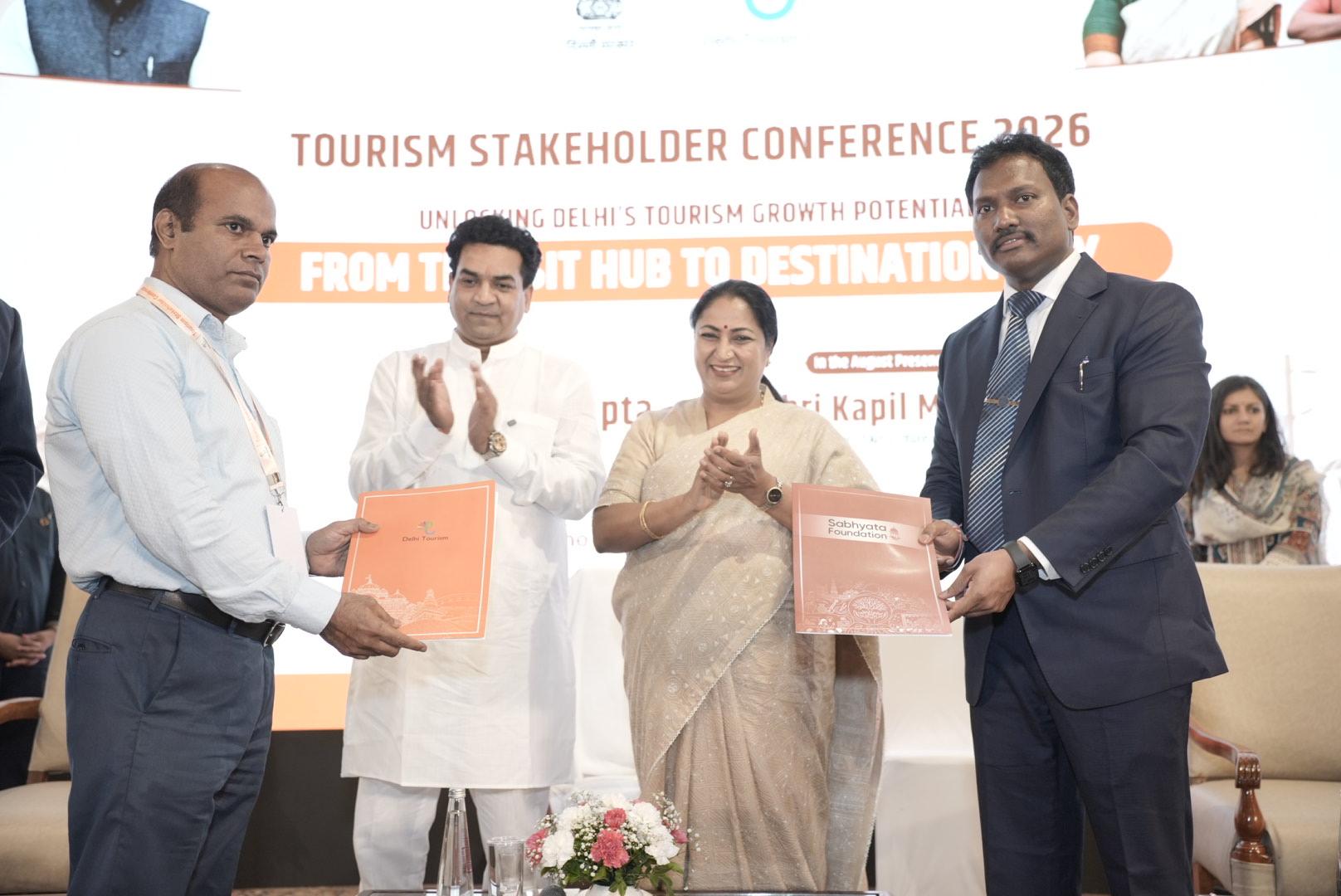
In a significant step towards strengthening Delhi’s position as a premier tourism destination, the Delhi Tourism & Transportation Development Corporation Ltd. (DTTDC) also signed four Memoranda of Understanding (MoUs) with Agoda Company Pte. Ltd., Sabhyata Foundation, MakeMyTrip (India) Pvt. Ltd., and MakeMyTrip Foundation.
These collaborations aim to enhance Delhi’s tourism ecosystem through digital innovation, cultural programming, infrastructure development, and sustainable tourism practices.
Managing Director, DTTDC, Suneel Anchipaka, IAS, stated that these partnerships are outcome-oriented with clearly defined deliverables and structured implementation frameworks. He emphasised that insights from stakeholders will directly feed into the upcoming Delhi Master Tourism Policy 2026–2047.
Delhi from a city of arrivals to destination of substance
As part of its strategic roadmap, Delhi Tourism outlined a series of focused initiatives including; MICE, Hospitality and Convention Infrastructure; Heritage, Spiritual and Experiential Tourism; Digital Platforms, Connectivity and Global Distribution; Concert economy and night tourism; Medical and wellness tourism and the Brand Positioning of Delhi.
These six focused conversations each led by the officials and industry leaders who actually shaped that domain in Delhi have been chosen as each is a major economy driver and are the levers that move Delhi from a city of arrivals to Destination of substance.
Delhi Tourism will also actively participate in national and international trade shows, providing dedicated space to Destination Management Companies (DMCs) and tour operators who contribute significantly to the city’s tourism economy.
To strengthen outreach and branding, an Information, Education and Communication (IEC) agency is being appointed to focus on key source markets and explore emerging markets, while the process of onboarding a dedicated PR agency is underway. The Government has also initiated steps to grant tourism the status of an industry, recognising its critical role in economic growth and employment generation.
At the experience level, Delhi Tourism is curating spiritual and heritage circuits in collaboration with industry partners. In addition, the Corporation will promote these circuits through two electric buses with branding, offering clean, accessible and curated tourism experiences across key routes.
The MoUs signed
The MoU with Agoda Company Pte. Ltd. focuses on leveraging Agoda’s global digital platforms, marketing outreach, and data-driven tools to promote Delhi across domestic and international markets. The partnership will enhance tourism visibility, support sustainable tourism initiatives, and empower local hospitality stakeholders through technology-led solutions.
DTTDC’s collaboration with Sabhyata Foundation is aimed at enriching Delhi’s cultural landscape by curating thematic experiences, heritage circuits, and cultural programmes at key monuments. The partnership will focus on enhancing visitor engagement, strengthening branding, and promoting sustainable tourism practices, thereby improving the overall tourist experience in the city.
The MoU with MakeMyTrip (India) Pvt. Ltd. establishes a collaborative framework to promote Delhi as a year-round destination through digital platforms and targeted outreach. Both parties will work together to develop curated tourism offerings, showcase Delhi’s rich heritage and cultural diversity, and strengthen the tourism ecosystem through digital enablement, on a non-financial, non-exclusive, and non-binding basis.
In addition, DTTDC has signed an MoU with MakeMyTrip Foundation for the development and enhancement of visitor infrastructure at Dilli Haat, INA. Under this no-cost arrangement, the Foundation will undertake key interventions including landscaping, improved lighting, waste management systems, and upgradation of washroom facilities.
The conference witnessed participation from over 200 stakeholders such as IATO, FHRAI, ICPB, FICCI, PHDCCI, GMR, Air BnB, IRCTC, Agoda, MakeMyTrip, BookMyShow, ITDC, Skill Council, Fortis, Apollo, FAITH, Akshardham including representatives from government bodies, hospitality and convention industry, heritage and cultural organisations, medical and wellness sector, digital platforms, and media. Deliberations were held across key themes such as MICE infrastructure, heritage and spiritual tourism, digital distribution, night tourism, medical tourism, and brand positioning.