Business travellers account for 20% of Germany’s total inbound tourism: Report
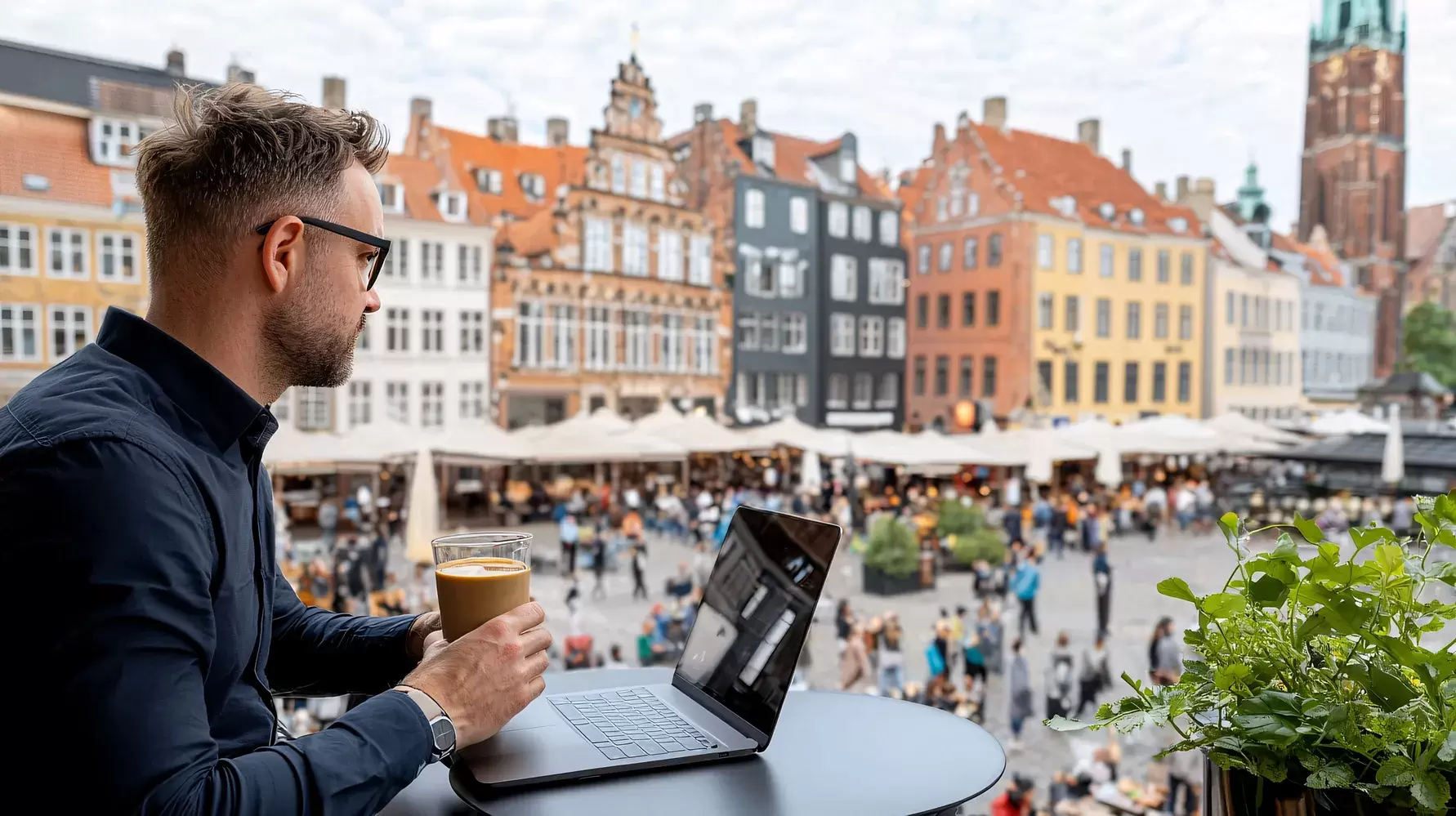 Image used for representation-10
According to the survey, travellers from US, China, the UK, France, Austria, and Poland, spend EUR 2.91 bn per year on leisure activities as part of bleisure trips in Germany
A recent joint study commissioned by the Germany National Tourist Board (GNTB) and the GCB German Convention Bureau and conducted by the IU International University of Applied Sciences found that business travellers account for 20% of Germany’s total inbound tourism. The study was conducted in the source markets of the US, China, the UK, France, Austria, and Poland. In these six source markets alone, travellers spend an estimated additional EUR 2.91 billion per year on leisure activities as part of bleisure trips. The combination of work-related travel paired with private stays (bleisure travel or workation), is a growing segment of Germany’s incoming tourism market, generating considerable additional economic value.
Petra Hedorfer, CEO of the GNTB, explains, “Germany is strongly positioned as a leading international business travel destination: according to IPK International, 17% of all outbound business trips by Europeans in 2025 were to Germany. At the same time, business travellers account for 20% of Germany’s total inbound tourism, a significantly higher share than in other countries. We are increasingly generating growth in the leisure segment, particularly in city and cultural tourism. Our latest study shows that two-thirds of international business travellers consider Germany an attractive destination for bleisure travel. 64% of business travellers from the source markets surveyed have already take bleisure trips to Germany.”
The study identifies ‘experiencing local culture, tradition and cuisine (36%), ‘Germany as an attractive travel destination / tourist attractions’ (35%) and ‘rest and relaxation’ (30%) as top reasons for privately extending a business trip to Germany. Growth in the bleisure travel segment could help offset the decline in the traditional business travel market over time, thereby strengthening Germany’s inbound tourism in the international competition among destinations.
Matthias Schultze, Managing Director of the GCB, adds: “64% of all business trips to Germany are so-called promotable business trips, i.e. trips to attend business events. The relevance of this segment is also evident in the context of bleisure travel: around half of all business trips that are extended for leisure purposes are prompted by attendance at a business event. Business evens therefore offer additional potential for inbound tourism, particularly as 74% of all respondents consider it likely or very likely that they will return to Germany for a private trip at a later date.”
The combination of business-related travel and private stays fall under the umbrella term “blended travel”, which encompasses bleisure travel and workations. Bleisure travel is defined as business travel combined with private time, for example through an early arrival, an extended stay, or being accompanied by of family, friends or a partner. Business travellers from China and the US make use of this option most frequently.
Traditional business appointments, trips to attend congresses/conferences or seminars/training courses get privately extended. Bleisure generally generates an additional 2,4 overnight stays, and on every fifth trip, the business travellers are accompanied by a partner, family member or friends. According to the study, additional leisure spending averages EUR 1.450 per bleisure trip.
With workations, work can be paired with a stay at a holiday destination. 43% of respondents have already had workation experience in Germany. Workation travellers from China and the US particularly value the opportunity to work remotely from places typically associated with holidays. More than three quarters of respondents consider it likely or very likely that they will return to Germany for another workation within the next 24 months. The most popular workation destinations in Germany are major cities and metropolitan areas as well as small or medium-sized cities, followed by rural areas and coastal regions.
In September and October 2026 the IU International University of Applied Sciences, on behalf of the GNTB and the GCB, surveyed nearly 2.600 people from the US, China, the UK, France, Austria and Poland who have stayed overnight in Germany on a business trip within the previous two years. The estimated annual private spending by bleisure travelers was calculate using the number of business trips from the six countries to Germany, based on data from the World Travel Monitor by IPK International 2025.